
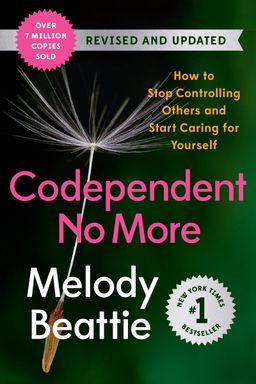
Codependent No More cover

Codependent No More

by Melody Beattie

Codependent No More by Melody Beattie provides transformative insights into breaking free from codependency. Learn to reclaim your life through self-responsibility, emotional independence, and self-care, fostering healthier relationships and personal growth along the way.

Recovering Your Self: The Journey from Control to Care

Have you ever felt responsible for everyone around you—constantly managing their problems, emotions, and chaos until you forget what your own peace feels like? In Codependent No More, Melody Beattie asks this unsettling question to open a radical conversation about healing from the exhausting cycle of codependency. She argues that countless people who love addicts, alcoholics, or chronically troubled partners and family members absorb their pain until they no longer know how to live for themselves. Beattie contends that recovery starts not by fixing others, but by radically reclaiming responsibility for one’s own emotional, mental, and spiritual health.

Codependency, Beattie explains, isn’t an obscure psychological term—it’s a widespread pattern of people who lose themselves trying to control another person’s behavior. The book grew out of her years of working with codependents in treatment centers and from her personal experience as a recovering addict. She shows how these caring, often heroic people are trapped in relationships where they give, rescue, enable, and over-function for others while abandoning their own needs. At its heart, her message is both compassionate and clarifying: you can stop controlling others and start caring for yourself.

The Origins and Depth of Codependency

Beattie traces the roots of codependency to families touched by alcoholism and other addictions, but she emphasizes that its reach is far broader. From caretaking spouses to overworked nurses to parents of rebellious teens, these behaviors often begin as survival strategies in dysfunctional systems where feelings, honesty, and boundaries are suppressed. In professions and relationships built around helping, people learn to take responsibility for others’ emotions and decisions, believing that love equals sacrifice. Yet this distorted caretaking eventually becomes self-destructive—it erodes health, self-worth, and peace of mind.

Her early chapters feature striking real-life stories like Jessica’s, a woman married to an alcoholic who has lost all motivation and hope. Jessica’s daily fatigue, bitterness, and anxiety reflect how deeply she’s internalized her partner’s illness until it consumes her. Through stories like these, Beattie demonstrates that codependency can become as debilitating as addiction itself, but unlike addictions to substances, codependency is an addiction to people—to managing, pleasing, and controlling them at any cost.

The Book’s Two-Part Structure

Beattie divides the book into two major sections. Part One, “What’s Codependency, and Who’s Got It?” defines the condition, explores its history, and outlines common characteristics—caretaking, low self-worth, denial, obsession, poor communication, and weak boundaries among others. These patterns, she explains, are neither random nor moral failings; they’re coping mechanisms that once helped, but now work against us. Part Two, “The Basics of Self-Care,” shifts the focus from identifying problems to practicing recovery. Each chapter is a self-contained guide for personal healing—learning to detach, set boundaries, stop controlling, feel feelings, release guilt, and rediscover joy.

If Part One is about awareness and acceptance—recognizing what’s wrong—Part Two is about transformation. Through vivid examples and gentle coaching, Beattie helps readers move from reacting and rescuing to living honestly and freely. She draws wisdom from Twelve Step recovery programs, spirituality, and practical psychology. The formula, she insists, is simple but profound: honesty, openness, and willingness.

Why This Journey Matters

This book’s ideas remain revolutionary because they challenge one of humanity’s most persistent myths—the belief that controlling others’ choices, feelings, or addictions can create peace. Beattie reframes control as a form of fear and begins teaching the art of detachment, the ability to care about people without taking responsibility for their outcomes. Only then, she insists, can you recover the capacity for authentic love—love that includes compassion for yourself.

At its deeper level, Codependent No More is not just about relationships; it’s about identity and spiritual awakening. For Beattie, the antidote to codependency isn’t learning new techniques—it’s learning that you are enough. You are not crazy for feeling exhausted by other people’s chaos. You are allowed to be happy even when others are suffering. Through letting go of control and guilt, you make room for serenity and genuine connection. Ultimately, her message invites you to replace frantic caretaking with calm self-respect, replacing “fixing” others with loving yourself. When you stop rescuing, you start living.

“We’ve been doing the wrong things for the right reasons,” Beattie reminds readers. “Now it’s time to start doing the right things—for us.”

Her call is simple yet transformative: to recover, stop trying to control others and begin caring for yourself. This conscious shift—from outer focus to inner truth—becomes a lifelong journey toward freedom, balance, and love.


Understanding Codependency

Beattie defines codependency as a condition that takes over when you let another person’s behavior dominate your emotions and decisions. You become obsessed with controlling their actions—whether they’re drinking, gambling, overeating, or simply making bad choices. Her definition is strikingly simple: a codependent is a person who has let someone else’s behavior affect them and who is obsessed with controlling that person’s behavior.

The Emotional Landscape

In the book’s introduction, Beattie recounts her early confusion when counseling alcoholic families. The addicts were drunk, but their sober spouses were equally miserable—anxious, controlling, and unable to relax. When she later became entangled with alcoholics in her own life, she realized she had become one of the very people she didn’t understand. This insight was pivotal: even though codependents don’t drink, they suffer from the same distorted thinking and compulsive behaviors rooted in fear and shame.

The Family Disease Model

Beattie situates codependency within the framework of family illness. Just as addiction affects the drinker’s body and mind, it infects everyone emotionally. Families operate on unwritten rules: don’t talk, don’t trust, don’t feel. These rules strip members of emotional honesty and teach them to control rather than connect. (She parallels these insights with family systems therapy, echoing authors like John Bradshaw and Anne Wilson Schaef.) The result is generations of people who confuse caretaking with love and guilt with responsibility.

A Learned, Progressive Disorder

Codependency is progressive—it deepens over time through repeated reactions and habits. What starts as concern morphs into obsession: checking phones, policing moods, staying awake at night worrying. Eventually it becomes a way of life. The fascinating paradox, Beattie notes, is that codependents appear to be self-sufficient and strong, yet they feel helpless and controlled. They look dependable but live in quiet despair.

Key Realization:

Codependency isn’t craziness—it’s a normal reaction to abnormal circumstances. But it becomes destructive when these habits override your sense of self.

By showing the history of the term (from “co-alcoholic” in the 1940s to “codependent” in the late 1970s Minnesota treatment centers), Beattie helps readers see that these behaviors are not shameful—they’re learned patterns we can unlearn. She redefines recovery as the courageous act of focusing on your own healing, regardless of what others are doing.


Traits of the Codependent Self

In one of the book’s longest sections, Beattie outlines the behavioral and emotional traits most codependents share. Her checklist reads like a mirror for anyone who’s ever felt consumed by another’s problems. These traits revolve around caretaking, low self-worth, denial, obsession, controlling, and poor boundaries.

Caretaking and Low Self-Worth

Caretaking seems virtuous—doing everything for others—but in codependency, it’s compulsive. You anticipate everyone’s needs, say yes when you mean no, and do for others what they can do for themselves. Underneath the giving lies guilt and fear. As one character says, “I schedule my day according to guilt.” This relentless helping doesn’t stem from love but from the belief that your worth depends on keeping others happy. Without a crisis to solve, you feel empty.

Denial and Obsession

Codependents excel at pretending everything’s fine while secretly falling apart. Denial fuels workaholism, over-spending, compulsive eating, and trying to look perfect while life collapses. Beattie compares obsession to mental chaos—a mind racing around an endless track. The more you worry, the more powerless you become. “When we’re obsessed,” she writes, “we are detached from ourselves.”

Control and Boundaries

If your world feels out of control, you grasp for it—through guilt, manipulation, or domination. Beattie describes how controlling others paradoxically makes you controlled by them. Many codependents begin with clear boundaries but gradually increase their tolerance for bad behavior until they’re trapped. At the extreme, they lose their identity.

The Hope Beyond Habits

Beattie is gentle but firm: these survival patterns were once heroic attempts to manage chaos. Now, they simply don’t work. Recovery begins with awareness, acceptance, and the decision to change. “We’ve been doing the wrong things for the right reasons,” she says. Growth means turning the same sensitivity and dedication inward—caring for yourself as fiercely as you’ve cared for others.


Detachment: The Art of Letting Go

Detachment, one of Beattie’s cornerstone concepts, isn’t cold withdrawal—it’s freeing yourself from the agony of involvement with another’s problems. Detachment means loving someone enough to step back from their chaos. In her words, “We mentally, emotionally, and sometimes physically disengage ourselves from unhealthy entanglements with another person’s life and responsibilities.”

Attachment vs. Detachment

Codependents are attached to people and problems like magnets—worrying, rescuing, controlling. When detached, you stop confusing love with control. Worry becomes wasted energy. Her image of obsession is vivid: a mind tossing and turning like a racecar stuck on repeat, gaining speed but going nowhere. Detachment untangles this chaos.

Detachment in Practice

This doesn’t mean indifference. Detachment is active love rooted in respect. You stop taking responsibility for other adults and start focusing on your part. “Who says you have to?” Beattie asks those afraid to let go. She recommends practicing mental mantras like “Let Go and Let God” and living in the present moment. Detachment returns peace, restores perspective, and paradoxically helps others take responsibility for themselves.

“Detachment,” Beattie writes, “is the art of releasing a person or problem in love. It’s how we stop controlling others and regain control of ourselves.”

Through stories of partners chasing drunk spouses down alleys or parents cleaning up children’s messes, she shows that letting go isn’t cruelty—it’s sanity. The journey may start in anger but ends in serenity. Detachment is learning that caring doesn’t mean saving.


Removing the Victim and Rescuer Roles

Using psychologist Stephen Karpman’s “Drama Triangle,” Beattie explains how codependents cycle through three destructive roles—rescuer, persecutor, and victim. This pattern drives all unhealthy relationships and keeps everyone stuck. You rescue by taking someone’s responsibilities, persecute when you resent them, and become victimized when they disappoint or exploit you. Then, the cycle starts again.

The Rescuer Trap

Rescuers believe it’s their duty to fix people. They say yes when they mean no, solve others’ problems, and suffer for them. It feels good temporarily—like a “hit” of self-worth—but leaves exhaustion and anger. As Beattie quips, rescuers become “great godmothers to the world.” She distinguishes authentic help from destructive caretaking: real help is asked for and freely given; rescuing is compulsive.

The Victim Story

Eventually, resentment kicks in and the rescuer turns persecutor—blaming others for wasting their efforts. Then comes despair: “Why does this always happen to me?” Victimhood is the emotional payoff, reaffirming powerlessness and guilt. The purpose of recovery, Beattie insists, is to remove the victim. Responsibility for yourself breaks the triangle’s spell.

Freedom Beyond the Drama

Caretaking can look generous but it’s poison disguised as kindness. Real love says, “You can do this.” Beattie urges readers to stop rescuing and let others experience their consequences. As one counselor told her, “We rescue by taking responsibility for anyone besides ourselves.” Ending the victim pattern transforms resentment into strength and empathy into healthy boundaries.

“Caretaking is an unhealthy parent-child relationship between adults,” Beattie writes. “It’s time to refuse rescuing and learn to take care of ourselves.”


Undependence and Self-Reliance

Most codependents live in emotional dependency—they believe they can’t live without certain people. Beattie calls the healthier alternative undependence: the balance of being able to connect with others while depending primarily on yourself and your Higher Power for stability.

The Fear of Being Alone

Many codependents carry deep childhood wounds of abandonment, neglect, or rejection. As adults, they cling to partners, even abusive ones, because the terror of solitude feels worse than pain. Citing authors like Colette Dowling (The Cinderella Complex), Beattie reveals how dependency keeps people trapped in destructive relationships—the mind insists, “I can’t take care of myself.”

Learning Undependence

Undependence isn’t isolation; it’s emotional maturity. You finish old business—grieving what was never given—and begin standing on your own. Beattie encourages nurturing the frightened child within, building self-trust, and developing faith in God as a source of support. “We can live without anyone,” she writes, “but we don’t have to.” Through examples of women who rediscover their freedom after years of caretaking, she shows that self-responsibility breeds self-respect.

Faith and Courage

Beattie portrays undependence as practicing courageous vulnerability—feeling fear but acting anyway. It’s living one day at a time rather than clinging to others for safety. Freedom begins with trusting your own instinct that says, “I can handle this.” In doing so, you exchange desperation for dignity.


Living Your Own Life and Self-Care

The turning point in recovery comes when you stop managing other people’s business and start minding your own. Beattie calls this the foundation of sanity: learning to live your own life. Self-care isn’t selfish—it’s responsibility. Every chapter in Part Two returns to this idea: I am responsible for myself.

The Practice of Self-Care

Beattie warns against distorted self-care—using the term to justify manipulation or avoidance (“I’m yelling at you for your own good because I’m taking care of myself”). True self-care is peaceful, adult, and respectful. It means tending to your emotional, spiritual, physical, and financial needs, setting boundaries, and acting in your best interest while respecting others’ rights to do the same.

Giving Yourself What You Need

She invites you to ask, “What do I need right now?” Maybe rest, solitude, play, or support. Often, codependents repress needs believing they’re wrong or selfish. Beattie reverses this belief: listening to your needs connects you to your true self and to God. From small actions—taking a walk, seeking help, buying something enjoyable—to confronting major truths, self-care restores equilibrium.

“Each person is responsible for him- or herself. Recovery lets us be who we are, love ourselves, and receive love.”

Ultimately, self-care leads to freedom: when you stop rescuing and start respecting yourself, relationships become honest, balanced, and fun. You rediscover life beyond survival—work, creativity, laughter, and peace become natural again.


Acceptance, Feelings, and Anger

Beattie devotes several chapters to emotional recovery: accepting reality, feeling feelings, and reclaiming anger as a healthy emotion. These are the core acts of healing—facing what hurts, expressing authentic emotion, and releasing the guilt attached to being human.

The Power of Acceptance

Acceptance means facing what is rather than what you wish could be. Borrowing from Elisabeth Kübler-Ross’s stages of grief, Beattie shows how denial, anger, bargaining, depression, and acceptance form a natural path through loss. “You can’t change what you haven’t accepted,” she writes. You must look at your reality—broken dreams, painful relationships, your own behaviors—and stop pretending they don’t exist. Acceptance isn’t resignation; it’s peace.

Feeling Feelings

Many codependents repress emotions because honesty was punished in childhood or relationships. Beattie reveals how burying feelings leads to exhaustion, illness, and compulsive behaviors. She teaches emotional freedom through simple honesty: feel the feeling, accept the thought, choose the action. Feelings are neither good nor bad—they’re data. Reconnection with emotion restores motivation and joy.

Reclaiming Anger

Anger, often demonized, is vital. As Beattie observes, anger signals violation. Her advice: acknowledge anger, examine its message, choose healthy expression, and let it go. Suppressed anger mutates into bitterness, but conscious anger builds boundaries. You have a right to be mad at injustice and to assert your needs. “Of course you’re angry,” she says. “Anyone would be.”

By mastering these three emotional arts—acceptance, feeling, and anger—you stop being ruled by guilt and fear, and start responding from clarity and compassion.


Living and Loving Again

The final chapters of Codependent No More bring the journey full circle: learning to live and love simultaneously without losing yourself. Beattie insists that recovery isn’t just survival—it’s rediscovering joy and balance. “We can learn to love without forfeiting love for ourselves,” she writes.

Balanced Living

After years of crisis, peace can feel boring. Beattie introduces the concept of balance: finding harmony between caring and detachment, giving and receiving, work and play. Recovery means letting go of drama addiction and discovering that serenity is actually exciting. Her own story—rising from despair, rebuilding after tragedy, and continuing to help others—embodies this balance.

Rediscovering Love

Healthy love is mutual respect, not rescue. It’s self-expression and trust, not sacrifice. When you live your own life, love grows stronger. Beattie dismantles the idea that love must hurt; love can heal when it’s rooted in truth and independence. In recovering relationships, she encourages patience: “Love and trust are fragile, living entities. They do not automatically regenerate upon command.”

“Learning to live and love again,” Beattie concludes, “means finding our balance and recovering our right to be happy.”

Freedom is not loneliness—it’s choosing connection from self-respect, not fear. When you stop managing others’ lives and start living your own, you become capable of genuine love. This is the quiet, powerful rebirth that Beattie’s work offers to every recovering codependent: peace, independence, and joy made possible through self-care and compassion.

Dig Deeper

Get personalized prompts to apply these lessons to your life and deepen your understanding.

Go Deeper

Get the Full Experience

Download Insight Books for AI-powered reflections, quizzes, and more.