
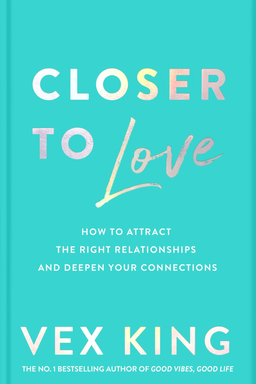
Closer to Love cover

Closer to Love

by Vex King

Closer to Love by Vex King dives into the art of building genuine connections, offering practical wisdom on self-love and romantic relationships. Through personal insights and expert theories, it guides readers in transforming their love lives by focusing on inner growth.

Love as the Foundation of Human Connection

Have you ever wondered why your relationships seem to fall into the same patterns, or why loving someone can feel both exhilarating and terrifying? In Closer to Love, Vex King argues that before you can love anyone fully, you must first learn to love yourself. His central claim is disarmingly simple yet deeply transformative: the love you share with others will always mirror the love you have for yourself.

King contends that real connection—the kind that feels safe, nourishing, and authentic—starts by mending the fractured relationship we often have with ourselves. Through personal experiences, philosophical insights, and lessons drawn from psychology and eastern spirituality, he guides readers toward mastering self-awareness, healing emotional wounds, and opening the heart to unconditional love.

The Journey from Heartbreak to Wholeness

King begins with an honest account of his own heartbreak, a wake-up call that forced him to sit with his ‘darkness’ and rediscover love from the inside out. He notes that most people attempt to fill emotional voids by jumping from one relationship to another, rather than pausing to ask what pain needs healing within. Like a spiritual mentor, he encourages readers to stop avoiding solitude and instead use heartbreak as a catalyst for transformation. Self-love, he writes, is not selfish but crucial; when you recognize that you are whole, you stop expecting someone else to complete you.

Love as a Mirror

Every romantic connection reflects back the emotional state of its participants. King reminds us that relationships act as mirrors—showing us both the depths we’ve healed and the wounds we still carry. Many people remain trapped in cycles of unhealthy attraction because they seek validation instead of understanding. (In psychology, this aligns with attachment theory: our early caregiver relationships shape how securely we attach to loved ones later on.) The book’s early chapters explore how these patterns manifest and how to break free through awareness and self-inquiry.

Building Bridges from Self to Others

Once we reconnect with ourselves, King argues, we can form healthier bonds with others. He divides the book into three parts—The Self, Together, and Love—each building on the last. Part One teaches self-awareness and the importance of identifying emotional baggage before entering relationships. Part Two explores how to cultivate trust, vulnerability, and compassion between partners, introducing practical frameworks such as ten relationship rules and insights on navigating personal demons. Part Three moves toward the spiritual dimension of love, redefining it not just as a feeling, but as a way of life—a vibration that connects us to the universe itself.

Why It Matters in the Modern World

In a culture saturated with dating apps, quick thrills, and disposable connections, King’s message is a necessary antidote. He invites readers to approach love as a conscious practice rather than a fleeting emotion. Healing your inner world, he says, automatically heals the way you connect with others. This is why he insists that love is not merely a reaction or reward—it is an act of creation. To love is to choose peace and presence daily, even when imperfection surfaces.

The Broader Implications

King’s philosophy aligns with spiritual thinkers like Eckhart Tolle and Gary Chapman, offering a bridge between mindfulness and emotional intelligence. By practicing compassion and self-honesty, you learn not only how to love better, but how to live more consciously. Closer to Love ultimately asks: what would happen if we viewed love not as possession, but as liberation? In answering, King offers readers a map—one that begins with self-awareness, leads through connection, and culminates in unconditional love as a way of being.

From heartbreak to healing, from self-discovery to cosmic unity, this book frames love as both the greatest human need and the greatest spiritual power. You don’t find love, Vex King says—you return to it, because it’s been within you all along.


Know Yourself Before You Love

King insists that the first relationship you need to nurture is the one with yourself. In Chapter 1, “Closer to Me, Closer to You,” he explains that most people seek external affection before establishing internal harmony. The result? Repeated heartbreaks and unfulfilled partnerships. He asks readers to pause and ask reflective questions: Who am I without another person? What do I truly value? What does love mean to me?

Attachment Styles and Childhood Conditioning

Your early experiences form emotional templates—what psychologists call attachment styles. Many people continue to reenact childhood wounds in adult relationships, hoping someone will ‘complete’ them. King identifies four major styles: secure, anxious, dismissive avoidant, and fearful avoidant. Knowing your own style helps you understand how you connect and what triggers you. Healing, he says, means meeting your attachment patterns with compassion rather than shame.

Common Blocks to Giving and Receiving Love

King lists emotional blockages that keep love from flowing freely—feelings of unworthiness, fear of rejection, discomfort with intimacy, or belief that love always ends. He invites readers to journal about these blocks and traces how hurt often leads to self-protection. Real love demands vulnerability, which can only come when you’ve learned to value yourself enough to take emotional risks.

Self-Discovery as a Love Practice

Through reflection and consistent self-care—journaling, meditation, physical wellness, and creative hobbies—you cultivate self-knowledge. This awareness becomes the cornerstone for empathy and communication. (He echoes Rumi’s teaching that “love is a bridge between you and everything.”) When you feel whole, you intuitively attract partners who are also whole. Your relationships then shift from survival-driven to spiritually enriching partnerships.

Ultimately, King’s message is simple: You teach others how to love you by how you love yourself. Self-awareness isn’t selfish—it’s the foundation for all enduring relationships.


Opening the Heart and Letting Go of Pain

In “Closed Heart, Open Heart,” King explores how emotional hoarding—clinging to resentment and heartbreak—blocks new love. Just like physical clutter suffocates space, unresolved pain clogs the heart. He describes Rory, a man burdened by abandonment and anger from childhood. Rory’s inability to connect wasn’t from lack of desire, but from the armor he built to protect himself from disappointment. King urges readers to dismantle this armor through forgiveness, compassion, and self-reflection.

Understanding Attachments

Using attachment theory (John Bowlby and Mary Ainsworth), King helps people diagnose their emotional patterns. He illustrates secure attachment through Shah and Laura—partners who balance independence with closeness—and contrasts them with Sam and Keisha, who represent avoidant and anxious styles respectively. He emphasizes that awareness is not blame: each style can be healed through self-compassion and honest communication.

Healing from Heartbreak

Heartbreak is universal, yet often misunderstood. King says it’s not the end of love but an invitation to deeper healing. He likens it to a storm that clears the air, urging readers to process grief consciously—cry, journal, breathe, and practice forgiveness. He refers to ancient teachings that locate wisdom and intuition in the heart (from Vedantic, Christian, and Chinese traditions) to show that emotional healing restores both your physical and spiritual center.

The Courage to Reopen

When you keep your heart closed, fear wins. But when you open it, vulnerability becomes liberation. King’s message: “Free yourself from attachments.” Draw a line (“cut‑off line”) between past pain and present possibility. Learning to distinguish old wounds from current challenges prevents repeating the same relationship mistakes. Let love, not fear, set your emotional compass.

Healing, King concludes, doesn’t erase the past—it transforms it into wisdom. The open heart beats for connection, not protection.


Making Space for Healthy Love

The chapter “Making Space” reframes love as a process of clearing emotional clutter. King likens the heart to a sacred vessel—what you store inside determines what you experience. Clinging to fear or resentment blocks intimacy. To make room for genuine connection, you must first understand what occupies your emotional space and create boundaries that protect your peace.

The Three Spheres of Love

King divides love into three “spheres”: pure (universal energy), personal (your emotional experiences), and practical (love as daily action). Healthy relationships unite all three—connecting spiritual energy with mindful choices. He encourages cultivating the practical sphere through compassion, acts of service, and daily affection to sustain emotional bonds.

Healing, Grieving, and Neural Pathways

King emphasizes taking time to heal between relationships. Borrowing from psychological models like Bowlby’s Four Phases of Grief, he guides readers through shock, yearning, despair, and reorganization. Healing isn’t linear but neurobiological—our brains rewire through repetition and gratitude. He cites Norman Doidge’s work (The Brain That Changes Itself) to show how new thought patterns cultivate peace and love.

Communication: The Architecture of Space

Relationships crumble not because of lack of love, but lack of communication. King outlines destructive patterns—passive aggression, avoidance, sarcasm—and teaches respectful dialogue methods: listen deeply, mirror words, and practice compassionate pauses. He recounts personal lessons with his wife Kaushal, revealing how mindful conflict resolution helped both grow together. Self-love becomes a shared practice when partners witness each other's evolution.

By creating emotional space—through healing, boundaries, empathy, and curiosity—you transform relationships from reactive battlegrounds into sacred gardens where love can truly unfold.


Decoding Attraction and Relationship Balance

In “Decoding Attraction,” King navigates modern dating culture, showing that attraction is not the same as love. Physical chemistry may ignite passion, but sustained relationships require alignment in values, empathy, and maturity. As he quips, “Immature love says: I love you because I need you; mature love says: I need you because I love you.”

Understanding Types of Attraction

King categorizes attraction into sexual, physical, emotional, romantic, intellectual, aesthetic, and spiritual forms. He invites readers to notice which types dominate their life. For example, sexual attraction alone fades, while emotional and spiritual attraction deepen over time. The goal isn’t to reject desire but to integrate it with shared purpose. (This echoes Erich Fromm’s distinction between immature and mature love in The Art of Loving.)

Modern Freedom and Liquid Love

Borrowing sociologist Zygmunt Bauman’s concept of “liquid love,” King warns that abundance of choice can make people fear commitment. Social media, dating apps, and consumerist culture have turned relationships into temporary transactions. He suggests countering this trend with emotional intelligence—using empathy, forgiveness, and honest communication as stabilizing forces.

Emotional Intelligence in Practice

King defines emotional intelligence (EQ) as self-awareness, empathy, and disciplined reaction to conflict. In everyday terms, EQ means observing your emotions before responding. For instance, instead of lashing out when hurt, express your feelings calmly and listen to your partner’s side. Emotional intelligence turns love from impulse into wisdom.

In short, attraction brings people together, but intelligence keeps them aligned. King challenges readers to rise in love, not fall—transforming chemistry into conscious choice.


Ten Rules for Conscious Relationships

King’s “Ten Relationship Rules” act as a handbook for maintaining closeness without losing individuality. He compares couples to binary stars—each shining on its own orbit yet sharing gravitational harmony. When partners merge with awareness and respect, they burn brighter together rather than colliding destructively.

Balancing Intimacy and Independence

Healthy love means connection without control. King recounts examples of couples who lose themselves in each other or constantly compete for dominance. Whether it’s George and Stella’s communication struggles or Kaushal and his lessons on listening, King emphasizes equilibrium—hold space for your partner’s individuality while nurturing union.

Key Principles

  • Keep doing small acts of love—compliments, gratitude, curiosity.
  • Disagree fairly; don’t manipulate or gaslight.
  • Honour intimacy in all forms—physical, emotional, intellectual.
  • Discuss hard topics frequently instead of letting resentment grow.
  • Never compare your partner to others—love flourishes in uniqueness.
  • Prioritize personal growth; both should evolve independently and together.

Forgiveness and Holding Space

Compassion and forgiveness are his ultimate rules. To love consciously is to create a safe emotional environment for healing. When mistakes happen, don’t tally wrongs—offer empathy. Transformation arises from humility, not blame. King’s poetic takeaway: “Every little thing you do creates more love.”

His ten rules redefine success in relationships—not longevity but growth, equality, and presence as ongoing acts of love.


Facing Demons Together

In “Your Demons Versus Their Demons,” King dives into the emotional conflicts that surface once the honeymoon phase fades. Relationships, he says, often become arenas where past wounds play out in real time. Arguing with your partner is rarely about the dishes—it reveals hidden fears like neglect or rejection. He calls this the battle between two people's inner demons.

From Reactivity to Responsiveness

The key shift King teaches is moving from reactive to responsive love. Instead of reflexively defending or attacking, pause and examine your primary emotions beneath anger—hurt, fear, or disappointment. By naming emotions, you regain clarity. He draws from Emotion-Focused Therapy (Leslie Greenberg) to show how awareness, regulation, and transformation bring couples back to harmony.

Romantic Competence and Communication

Borrowing from psychologist Joanne Davilla’s concept of Romantic Competence (IME—insight, mutuality, emotion regulation), King explains that maturity lies in understanding your triggers, honoring both partners’ needs, and managing emotions constructively. “Love talks” replace arguments with dialogue, allowing vulnerability. Avoid emotional blackmail or manipulation—these, he warns, destroy trust and turn love into fear.

Reconnection and Healing

Reconnecting requires empathy and patience. When demons collide—insecurities, addictions, mistrust—create “a caring waltz” instead of a war dance. Compassion defuses conflict and invites healing. Real maturity, King notes, means confronting pain rather than escaping it. By understanding that partners mirror unresolved parts of ourselves, relationships become catalysts for transformation, not destruction.

To truly love, you must face both your shadows and theirs—together. Growth, not perfection, is the measure of emotional success.


The Strength in Vulnerability

“Being Vulnerable” flips the cultural script that sees openness as weakness. King defines vulnerability as allowing yourself to be seen and trusting someone not to hurt you. He reminds us that we are born vulnerable—dependent, trusting, receptive—and that healing means remembering this innocence. True intimacy begins when fear dissolves.

Why We Fear Vulnerability

Fear of rejection and shame keep most people guarded. King references researcher Brené Brown’s idea that vulnerability is the birthplace of love and creativity. Without it, connection stays superficial. When individuals hide flaws or avoid opening up, they trade authenticity for safety. But love demands the courage to be transparent.

Practices of Courage

Adopting Naikan introspection, King encourages asking three questions: What have I received from my partner? What have I given? What difficulties have I caused? This exercise transforms guilt into awareness and gratitude. Vulnerability also means discussing pain, setting boundaries kindly, forgiving mistakes, and daring to love again after betrayal.

Trust and Boundaries

Trust doesn't arise from control but self-trust—confidence in your own worth. When both partners build inner safety, mutual trust blossoms naturally. Vulnerability opens the door to forgiveness, intimacy, and growth. “I prefer to believe we rise in love,” King concludes, signaling that courage—not perfection—is what sustains relationships.

The paradox is clear: to be strong in love, you must first be willing to be seen in your weakness.


Knowing When to Walk Away

King’s chapter “When to Walk Away” offers compassionate guidance for anyone uncertain about staying in or leaving a relationship. He reframes departure not as failure, but as fidelity to truth. Love means honoring your emotional and spiritual needs—even if doing so means ending a relationship.

Love versus Attachment

Often people stay for the wrong reasons: fear of loneliness, habit, financial dependency, or nostalgia. King explains how attachment disguises itself as love. True love liberates; attachment confines. He shares stories of couples clinging to “fantasy bonds” where emotional connection has been replaced by routine or codependency. Recognizing this illusion is the first step toward freedom.

Unconditional Love and Boundaries

Unconditional love doesn’t mean tolerating harm. King insists it comes with boundaries that preserve dignity. When values are repeatedly violated or growth becomes impossible, departure may be the most loving act. He quotes Yasmin Mogahed: “Love without attachment is the purest love.” Walking away, then, becomes a radical act of self-love and compassion for both parties.

Love That Remains

Even when relationships end, love doesn’t vanish—it evolves. Breakups can catalyze spiritual awakening, teaching that authentic love transcends possession. Every ending is a lesson in eternal love’s capacity to expand beyond personal circumstance. You don’t lose love when someone leaves; you simply redirect its flow toward self‑growth and new horizons.

In King’s philosophy, walking away is never abandonment—it’s returning home to yourself, where love has always lived.


Love as a Way of Life

The book’s final chapters reveal King’s ultimate thesis: love isn’t just an emotion—it’s a lifestyle, a universal energy that permeates every interaction. When love becomes a way of life, compassion replaces judgment, boundaries replace fear, and grace replaces control. “If there was no love in life,” he writes, “there would be no life.”

Choosing Love Daily

King invites readers to practice love as a conscious decision, much like mindfulness. Validate people, accept differences, seek the best in others, and show genuine interest. These habits transform ordinary relationships into sacred exchanges. He calls this “working the love muscle”—a daily strengthening of empathy and forgiveness.

RICH Relationships

True relationships, he says, are RICH: built on Respect, Intimacy, Communication, and Honesty. When practiced consistently, these principles dissolve drama and sustain love. Love doesn’t demand perfection; it thrives on sincerity and growth. Boundaries, paradoxically, preserve closeness by protecting individuality.

Unconditional and Wholehearted Love

Unconditional love means giving freely without expectation, but with discernment. It’s not tolerance of harm; it’s active compassion that honors truth. King’s imagery of loving like the sun—radiant, generous, self‑renewing—summarizes this philosophy. “We rise in love,” he concludes, inviting readers to transform love from a fleeting feeling into an enduring expression of who they are.

When love becomes your way of life, every thought, word, and action becomes part of the endless light that warms the world.

Dig Deeper

Get personalized prompts to apply these lessons to your life and deepen your understanding.

Go Deeper

Get the Full Experience

Download Insight Books for AI-powered reflections, quizzes, and more.