
Idea 1
Clients First: A Two-Word Miracle for Lasting Success
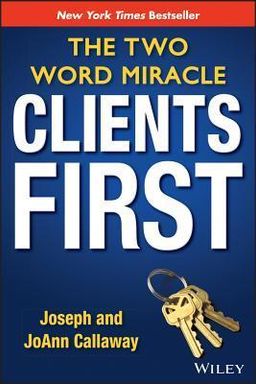
Have you ever wondered what separates ordinary businesses from those that inspire fierce loyalty and exponential growth? In Clients First, Joseph and JoAnn Callaway answer that question with disarming simplicity: lasting success flows from two words—Clients First. These Arizona real estate veterans discovered, through remarkable experience and painful trial, that putting clients’ needs above personal gain unlocks what they call a “two-word miracle.”
Discovering a Simple but Revolutionary Idea
The book begins with a scene at the Mustang Library in Phoenix. A fellow real-estate agent, immaculately dressed in blue, asks JoAnn Callaway the question that haunts this entire narrative: “What’s the real reason for your fabulous success?” JoAnn answers, almost offhandedly, “We put our clients first.” But her inquisitor dismisses the response—it sounds too simple, too obvious. This moment ignites a seven-year quest for the Callaways to truly explain and codify what “Clients First” means. They eventually realize it is not a slogan or customer-service tactic but a profound way of living and doing business.
As they recount their journey—from struggling newcomers to selling more than $250 million in one year—the authors revisit pivotal moments: their late-night decision to undo a lucrative real estate deal that wasn’t right for their clients; the contagious energy that spread through their team; and their eventual discovery of the three keys that make Clients First possible—honesty, competence, and caring.
Why It Matters Beyond Real Estate
Joseph and JoAnn insist that this is not simply a manual for real estate success. They describe how the principle of Clients First applies universally—to CEOs, doctors, salespeople, teachers, and even parents. In their telling, Clients First is a transformational philosophy that alters relationships, team dynamics, and even one’s sense of purpose. Like Stephen Covey’s notion of serving others to achieve true leadership or Dale Carnegie’s emphasis on empathy in How to Win Friends and Influence People, the Callaways argue that when your focus shifts outward—toward clients, colleagues, and community—success naturally follows.
They remind readers that many people chase complex “secrets”: marketing strategies, referral hacks, pyramid models. But most neglect the very heart of their profession—the person they serve. The truth, they argue, is uncomfortable yet freeing: the customer’s wellbeing must always come before your paycheck, reputation, or convenience. The paradox is that doing so inevitably generates both moral and material rewards.
The Three Keys: Unlocking the Miracle
After years of reflection and testing, the Callaways distill the practical essence of Clients First into three interlocking keys:
- Honesty: Tell clients what they need to hear, not what they want to hear—especially when it costs you. Their defining example is rejecting a deal that wasn’t in a client’s best interest, even though they desperately needed the commission. Honesty liberates both client and agent from fear and mistrust.
- Competence: Learn enough to serve your clients exceptionally well. Their obsession with mastery turned Those Callaways into the top-selling Arizona team. Like Peter Drucker’s view of professionalism, competence isn’t just knowing—it’s caring enough to get it right.
- Caring: Treat each client’s goals as your own. Caring creates connection, loyalty, and energy that marketing money can’t buy.
When these keys are combined, the authors describe a powerful “synergy,” a multiplication effect where one plus one plus one equals far more than three. Honesty builds trust; competence builds confidence; caring builds lasting loyalty—the result is effortless growth.
Surviving the Crash and Proving the Principle
The second half of the book becomes a dramatic business case study. During the 2007–2008 real-estate crash, when most competitors collapsed, Those Callaways not only survived but thrived—with revenues dropping only 20 percent in a market down 70 percent. Why? Because their clients stayed loyal. They told the truth about pricing, endured painful decisions, and cared through chaos. As JoAnn puts it, “We owed it to our clients.” This period becomes empirical proof that Clients First works—even under pressure.
A Path to Transformation
Finally, the Callaways offer a step-by-step Path to Clients First: make the commitment, speak it aloud, keep it daily, get yourself out of the way, set your burdens down, trust others, trust the truth, love the work, love people, see through others’ eyes, and give to get. Each step deepens the transformation from “me-centered” to “client-centered,” echoing servant leadership principles from authors like Ken Blanchard and Simon Sinek.
In essence, Clients First transforms the reader’s relationship with success itself. You stop chasing techniques and start cultivating integrity. You measure wealth not by money, but by the trust you earn and the lives you help. It’s a simple, timeless promise: when you put others first, everything else follows.