
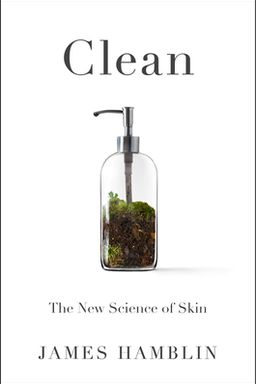
Clean cover

Clean

by James Hamblin

Clean by James Hamblin unveils the hidden science behind our skin''s microbiome, questioning the necessity of daily hygiene rituals. Explore the historical roots of our cleanliness obsession and discover how a balanced approach to skin care can enhance health and well-being.

Rethinking Clean: The Skin, Microbes, and Modern Culture

When you walk into a store aisle lined with shampoos, soaps, and body washes, have you ever wondered whether all those products are really helping you? In Clean: The New Science of Skin, preventive medicine specialist and journalist James Hamblin raises a provocative question: what if the modern rituals of cleanliness are not keeping us healthy, but are instead damaging our skin, wasting resources, and feeding an industry built on insecurity?

Hamblin’s own story—he stopped showering for five years—becomes the springboard for a deeper investigation into how our concept of clean has evolved. He discovered that his skin adjusted, becoming less oily and less prone to eczema, and he began to smell, as his girlfriend put it, “like a person.” This led him to explore how microbes living on our skin influence not only our health but how we view ourselves in relation to society, status, and science.

The Core Argument: Cleanliness Is Cultural, Not Just Biological

The book’s central claim is that our modern understanding of cleanliness has drifted far from its biological purpose of disease prevention. While hygiene once aimed simply to ward off infections, today it largely serves cultural, psychological, and economic functions. We use products not because they protect us from disease but because they make us feel acceptable, respectable, and beautiful. Much of what we think is essential cleaning—hot showers, soaps, deodorants, moisturizers—may actually strip away beneficial microbes and natural oils that our bodies evolved to maintain.

Hamblin argues that this obsession with cleanliness is more about identity and belonging than about health. Our standards of appearance and grooming are reinforced by history, industry, and social privilege. His reflections, as a white male able to get away with not showering without losing credibility, underscore how cleanliness functions as a form of social compliance and class signaling.

The Skin Microbiome: A Revolution in Understanding

One of Hamblin’s most fascinating threads explores the new science of the skin microbiome—the trillions of bacteria, fungi, and even mites that live on our skin, in our pores, and within our sweat. These microbes are not contaminants but collaborators, helping to preserve the skin’s barrier, prevent inflammation, and train our immune systems. Overuse of antibacterial soaps and harsh detergents can disrupt this delicate ecosystem, leaving us prone to irritation, allergies, and autoimmune conditions. Dermatologists like Sandy Skotnicki and immunologists such as Graham Rook appear throughout the book to support the finding that balance, not sterility, is the hallmark of healthy skin.

This research reframes cleanliness entirely. Instead of scrubbing ourselves free of the microscopic world, Hamblin urges us to see the skin as a living habitat, a microbial garden that thrives on diversity. This insight has begun reshaping medicine and the beauty industry, which is now turning toward probiotics, prebiotics, and “microbiome-friendly” products. Ironically, these new products may be another form of consumption built on the desire to do less.

Culture and Economy of Clean

Hamblin traces how Western culture merged cleanliness with morality and beauty—from ancient Aztec purification rituals and Roman baths to modern soap empires like Lever Brothers and Procter & Gamble. He documents how the nineteenth-century “hygiene revolution,” born out of industrial urbanization and the discovery of germ theory, transformed soap from a luxury into a moral necessity. Marketers promulgated the myth that cleanliness equaled purity, civility, and virtue. The result was an industry worth trillions that equates self-care with purchasing power.

Many of today’s health and beauty practices, Hamblin explains, continue that legacy. Cleanliness remains a marker of status and identity, often excluding those without access to abundant water, soap, or time. Yet, paradoxically, over-cleaning may be fueling the rise of eczema, allergies, and autoimmune disorders in wealthy societies—while lack of clean water still kills millions in impoverished ones. The problem is not cleanliness itself but our uneven application of it.

A New Philosophy of Clean

Ultimately, Hamblin redefines “clean” as a dynamic state of balance—between exposure and protection, between microbes and immunity, and between individual well-being and global sustainability. He champions a minimalist approach that respects the body’s resilience and the planet’s limits. The healthiest skin, he suggests, often belongs to people who interact with nature, move, sweat, touch, and share microbes; people who neither sterilize themselves nor isolate from their environment.

In essence, Clean is not a manual for hygiene but a guide to reconsidering what it means to live well. It asks you to question the invisible systems—cultural, economic, and biological—that define what you wash away and what you keep. The takeaway is both radical and practical: maybe being clean isn’t about being spotless, but about being in harmony with the living world on and around you.


The Skin Microbiome Revolution

Hamblin’s second major idea is that we are not single organisms but superorganisms—a blend of human cells and trillions of microbial cells working together. The skin microbiome, largely ignored until the past decade, is central to immune function and health. Our bodies, in his view, evolved in partnership with these microbes, not in opposition to them.

Your Skin as an Ecosystem

Imagine your skin as a twenty-square-foot rainforest. It’s alive with bacteria, fungi, and microscopic mites. Each region—forehead, armpit, elbow crease—hosts distinct microbial communities shaped by oil, moisture, and exposure. This living network communicates with your immune system and wards off pathogens. When you over-wash, you strip away protective oils and disrupt this equilibrium, making room for irritants and inflammation to take hold. Hamblin compares the ecosystem collapse on your skin to deforestation—well intentioned but devastating to biodiversity.

From Dirt to Discovery

Through DNA sequencing advances, scientists have uncovered that microbes living on your skin are essential, not optional. Dermatologist Richard Gallo even found that certain skin bacteria protect against cancers by producing DNA-stabilizing compounds. Similarly, mites that burrow into pores—once seen as parasites—may help exfoliate dead skin. These discoveries are reshaping dermatology and public health, reminding us that cleanliness is not synonymous with health.

Balance Over Eradication

Hamblin urges readers to think like ecologists. The goal is not to exterminate microbes but to maintain balance. He calls out the irony that for centuries, soap companies sold products to remove microbes only to now sell probiotic creams to bring them back. Just as ecosystems thrive with diversity, so does your skin. Healthy exposure—to soil, plants, and people—can strengthen immunity. Overuse of antibiotics and antibacterial soaps, on the other hand, can lead to allergies and autoimmune diseases.

Key Idea from Hamblin

“The vast majority of our skin microbes seem to be not simply harmless but important to the skin’s function and, so, to the functioning of our immune systems.”

Hamblin’s perspective positions the skin microbiome as a reminder of interconnection. Cleanliness, he concludes, should involve respect for these organisms, not warfare against them.


The Cultural History of Clean

To understand why cleanliness became a moral virtue, Hamblin takes you on a journey through centuries of cultural practice. He shows how ritual purity evolved from ancient religions to industrial capitalism, transforming soap from sacred offering to consumer necessity.

From Ritual to Religion to Commerce

Ancient civilizations, from the Aztecs to the Egyptians, cleansed to appease gods or prepare for birth and death—not to kill bacteria. The Romans built luxurious bathhouses as social spaces, while early Christians turned away from bodily washing, privileging spiritual purity over physical. Later, the Industrial Revolution and the germ theory of disease redefined cleanliness as survival. When Levers and Procter & Gamble rose, soap became moral insurance: to be clean was to be civilized.

Cleanliness as Respectability

By the twentieth century, appearing clean signaled class. Soap ads depicted colonial conquest and whiteness as cleanliness (“The first step toward lightening the White Man’s Burden,” one Pears ad proclaimed). Being dirty became equated with being poor or foreign. This racialized narrative endured, embedding social worth into hygiene. Even today, Hamblin notes, poverty and lack of access to water limit who can appear “respectably clean.”

The Industry’s Emotional Engineering

Through marketing mastery, cleanliness morphed into beauty and status. Ivory soap claimed “99 44/100% pure”; Palmolive promised you could “Keep That Schoolgirl Complexion.” These phrases were more theology than chemistry. Soap sellers mastered emotional persuasion long before Instagram influencers existed. They shifted from cleanliness as absence of disease to cleanliness as signifier of desirability and health. In doing so, they built an empire—and set the stage for the trillion-dollar skin-care boom Hamblin critiques.


Minimalism and the Modern Skin-Care Industry

The beauty industry today, Hamblin observes, has pushed our pursuit of perfection to absurd extremes. From facials containing snail mucus to ten-step Korean skin routines, we live in an era of maximalist self-maintenance. Yet research and personal experimentation suggest that less may, in fact, be more.

The Rise of Skin Care as a Belief System

Hamblin visits Glossier’s flagship store, a temple of minimalist beauty founded by Emily Weiss, whose mantra “skin first, makeup second” encapsulates a cultural shift. The products appear scientific—labels read “pH-balanced,” “dermatologist-tested”—but many are repackaged basics at luxury prices. The appeal lies in community and narrative, not science. Like faith, skin care provides ritual and reassurance.

Doing Less to Heal More

Dermatologists Hamblin interviews, such as Sandy Skotnicki and Leslie Baumann, recommend what might sound radical in a consumerist world: stop using products altogether for a time. They propose a “product cleanse” to reset overtaxed skin. Hamblin highlights stories like those of Rachel Winard, who cured her eczema by making her own natural deodorant, and Adina Grigore, who founded S.W. Basics around the idea of selling as little as possible. In each case, simplicity became salvation.

Lesson from Minimalists

"Leave your skin the fuck alone." —Adina Grigore, S.W. Basics founder

Hamblin’s conclusion resonates: as with diets and wellness trends, intentional moderation matters. Clean may no longer mean covered in chemicals, but consciously pared down—respecting what your body already knows how to do.


The Hygiene Hypothesis and the Science of Exposure

Why are diseases of inflammation and allergy surging in wealthy nations while declining elsewhere? Hamblin connects this paradox to a phenomenon called the hygiene hypothesis—the idea that excessive cleanliness deprives the immune system of microbial training. In short, we are too clean for our own good.

Too Little Dirt, Too Much Disease

Through studies of Amish and Hutterite farming communities, Hamblin shows how early exposure to farm microbes correlates with dramatically fewer allergies and asthma. Amish children inhale dust rich in bacterial endotoxins that seem to bolster their immune systems. Their urban counterparts, he notes, live sanitized lives that confuse immune cells into attacking benign things—like peanuts or pollen.

Targeted Hygiene, Not Total Sterility

Hamblin draws on scholars like Sally Bloomfield and Graham Rook, who advocate “targeted hygiene”—washing hands before meals but not sterilizing whole environments. This balanced approach lets microbes teach your body discernment. Modern germ phobia, fueled by antibacterial marketing, wipes out both harmful pathogens and beneficial bacteria, destabilizing immunity. His comparison to antibiotics—life-saving yet overused—is apt.

Exposure as Health

The lesson is clear: reconnecting with the microbial world restores balance. Hamblin encourages behaviors once seen as dirty—gardening, outdoor play, cohabiting with pets—as acts of health. Reclaiming exposure means reclaiming our evolutionary context, where our microbes and our bodies learn together what clean truly means.


Industry, Regulation, and the Problem of Safety

Despite its scientific veneer, the beauty and hygiene industry remains largely unregulated. Hamblin’s experiment making a mock skin cream, “Brunson + Sterling Gentleman’s Cream,” reveals how easily anyone can market a product promising miracles without oversight.

No Real Guards in Place

The U.S. Food and Drug Administration, he notes, cannot force recalls or pre-approve cosmetics. Companies can sell potions containing lead, asbestos, or endocrine disruptors like parabens and triclosan, and only act if public harm becomes undeniable. The 1938 Federal Food, Drug, and Cosmetic Act—the principal law governing the industry—has barely changed in eighty years. Compared to Europe’s 1,500 banned substances, the U.S. restricts eleven.

The Case for Transparency

Senators Dianne Feinstein and Susan Collins proposed the Personal Care Products Safety Act to require ingredient disclosure and mandatory reporting, but lobbying stalled reform. Hamblin’s critique isn’t anti-business—it’s about informed choice. Consumers deserve to know what they’re putting on their bodies. His own experiment demonstrated that starting a “luxury” brand requires only a website and labels, not safety evidence.

From Regulation to Revolution

Hamblin’s call is pragmatic: we don’t need to demonize products, but we must demand transparency and education. Understanding what “clean” labeling really means—usually nothing—can help consumers practice real care instead of buying false promises.


Probiotics and the Future of Skin

As our understanding of microbes deepens, Hamblin explores the race to harness them. The emerging frontier of “probiotic skin care” could redefine treatment for chronic conditions from eczema to acne—but it also risks becoming another marketing gold rush.

The Promise of Living Medicines

Scientists like Julie Segre and Julia Oh are studying ways to engineer bacteria to deliver therapeutic proteins directly through the skin. At companies such as Azitra, microbes are modified to secrete molecules that restore the skin’s barrier or calm inflammation. Others, like AOBiome, sell sprays meant to recolonize skin with beneficial bacteria lost through hygiene. These breakthroughs raise hope for safe, targeted biologic therapies—and ethical questions about manipulating living organisms.

Cautious Optimism

Hamblin’s tone is balanced. He sees the potential of microbiome-based medicine, but warns of hype. Probiotic creams may one day help eczema sufferers, yet quick commercialization without scientific rigor could repeat history’s mistakes. The real revolution, he suggests, may not be in bottles but in behavior: acknowledging that our health depends on coexistence with microbes, not conquest.

A New Definition of Clean

In this vision of the future, “clean” means microbial harmony, not sterility. When soap giants like Dove rebrand around microbiome care, it symbolizes a cultural shift—one Hamblin views with both humor and hope. Cleanliness may finally come full circle, returning to its original meaning: connection, not erasure.


Cleanliness, Community, and Global Health

Hamblin widens the lens from the personal to the planetary. The distribution of cleanliness reveals global inequality: over-cleaning harms wealthy populations, while insufficient hygiene kills millions in poor nations.

Too Clean or Not Clean Enough

Through initiatives like Clean the World, which recycles unused hotel soap for disaster zones, he illustrates the gap between abundance and absence. UNICEF reports that a third of humanity lacks means to wash hands with clean water; 90% of child deaths from diarrhea or pneumonia are preventable. Hamblin contrasts this with consumer overuse of “detoxifying” routines and luxury cleansers. Our world shows both diseases of deprivation and diseases of excess.

Public Health vs. Personal Care

Revisiting Frederick Law Olmsted—the visionary behind Central Park—Hamblin underscores that true clean living lies in community infrastructure: clean air, water, social interaction, and green spaces. These public systems provided more health benefits than any soap ever sold. He contrasts 21st-century isolationism and billion-dollar wellness housing with Olmsted’s egalitarian parks, showing how shared environments promote both physical and microbial health.

Clean as Connection

The book ends on a unifying message: genuine cleanliness is inseparable from connection—to other people, to nature, and to the microbial life that sustains us. Whether opening windows, touching loved ones, or walking in the park, we participate in the ecological reciprocity that defines health. Clean, in the truest sense, is not the absence of dirt—it’s the presence of balance.

Dig Deeper

Get personalized prompts to apply these lessons to your life and deepen your understanding.

Go Deeper

Get the Full Experience

Download Insight Books for AI-powered reflections, quizzes, and more.