
Idea 1
How the West Became the Modern World
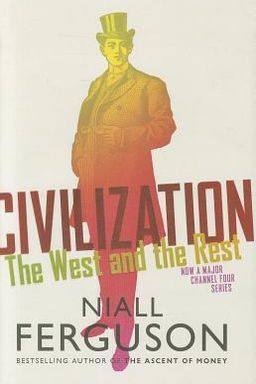
Why did the West rise to global dominance after 1500, while once‑powerful empires like Ming China, the Ottomans, or Mughal India receded? Niall Ferguson argues that the answer lies not in race or luck, but in a specific set of cultural and institutional innovations—what he calls six “killer apps.” These were competition, science, property rights, medicine, consumer society, and the work ethic. Together they produced a self‑reinforcing system of progress: fragmented politics spurred innovation, science turned knowledge into power, property safeguarded incentives, medicine extended life, industry fed consumer demand, and moral codes sustained disciplined work and trust.
You can think of Ferguson’s project as both an explanation and a warning. It explains why Europe and its offshoots came to dominate the world between 1500 and 1900, but it also warns that these advantages are not guaranteed—and can be ‘downloaded’ by other civilizations, as Japan, South Korea, and China have shown. This book tells a story of rise through competition, but ends as a meditation on fragility and possible decline.
From Fragmentation to Ascendancy
The first puzzle is why fragmented Europe, not unified China, launched the age of global exploration. Around 1420, Ming China was more advanced, building the Forbidden City and dispatching Zheng He’s massive fleets, while Europeans squabbled in dozens of petty states. Yet this very fragmentation was the launchpad for Western ascendancy. Rival states—Portugal, Spain, the Dutch Republic, England—could not suppress experimentation because failure in one region meant opportunity in another. As Ferguson puts it, competition decentralized innovation. You could outlaw shipbuilding in one port, but another kingdom’s merchants would keep sailing.
From this rivalry came the institutional revolution of capitalism: bond markets, joint‑stock companies like the VOC, and fiscal innovations that enabled long‑term investment in navies and empires. While Asian empires tended toward bureaucratic unity, Europe’s multiplicity created self‑correcting systems of rivalry and reinvention.
Science as the Western Multiplier
European competition would have mattered little without the Scientific Revolution. By turning curiosity into organized, cumulative experimentation—the Royal Society’s motto was Nullius in verba (“take nobody’s word for it”)—Western states harnessed science for economic and military advantage. The story runs from Gutenberg’s printing press to Newton’s Principia and Benjamin Robins’s gunnery research. Scientific method became a strategic tool. In contrast, when the Ottomans banned printing and demolished observatories, they slowed their own capacity to translate knowledge into power. Science in the West became not just a practice but an open institution—competitive, self‑correcting, public.
(For comparison, Jared Diamond’s Guns, Germs and Steel highlights geography; Ferguson focuses instead on cultural institutions that magnify human creativity through competition and openness.)
Property, Politics, and the Difference Institutions Make
When Europe expanded abroad, its political values traveled unevenly. Spanish America built hierarchical systems—the encomienda, concentrated estates, and oligarchic politics—while British North America evolved toward dispersed ownership and representative assemblies. Property shaped voice, and voice shaped stability. The result: prosperous, constitutional societies in the North; inequality and caudillismo in much of the South. This contrast illustrates how the institutional “apps” determined the development paths even among colonies equally endowed with resources.
Medicine and Humanity’s Health Transition
Western science’s most humane return came through medicine. Empires needed to keep soldiers and settlers alive in tropical climates, leading to public‑health breakthroughs. Robert Koch traced cholera, Ronald Ross uncovered malaria’s vector, and Pasteur Institute researchers developed vaccines. These discoveries underpinned dramatic life‑expectancy gains in colonies and, later, across the world. Yet the same science fostered darker ideologies: eugenics, racial pseudo‑science, and atrocities from German South‑West Africa to Nazi Europe. Ferguson urges you to see empire as both a vector of life‑saving modernization and a framework for coercion—a dual legacy written in blood and vaccine.
Consumption, Industrialization, and Cultural Power
The Industrial Revolution began in Britain not by accident but because high wages and cheap coal pushed entrepreneurs to mechanize production. Textiles led the way: spinning jennies, water frames, and steam looms transformed cotton into the first mass consumer good. The miracle lay in the feedback loop between worker and buyer: the same person who labored in the mill bought the cheap garments the mill produced. Later, Western fashion became soft power—Japanese elites in frock coats, Singer machines sewing European clothes in Africa and Asia, Levi’s jeans symbolizing freedom under Cold War communism. Material goods thus became moral messages. The West’s consumer society turned appetite into ideology.
Faith, Literacy, and the Word Ethic
The moral operating system of Western progress came partly from Protestantism. Weber’s “Protestant ethic” framed diligence and thrift as religious duties, but Ferguson reinterprets it as a “word ethic”—a culture of literacy, schooling, and moral codes transmitted through reading the Bible. Protestant missions, especially in colonies, built schools that raised literacy and civic participation. In places as distant as New England and Kerala, this literacy correlated with later economic success. Even as modern Europe secularizes, remnants of this ethic—valuing education and self‑discipline—continue to structure economic behavior.
Revolution, War, and the Fragile Order
Ferguson uses case studies—the American and French revolutions, Napoleon’s wars, and colonial participation in World War I—to show how crisis and conflict test the West’s “apps.” The American Revolution institutionalized liberty through representation; the French produced terror through radical equality and centralization. War can amplify progress or destroy it. Clausewitz captured this when he wrote that war is an extension of politics, but also a solvent of institutions. The devastating world wars, though waged among “civilized” powers, forced global reflection on whether Western civilization still deserved that name.
Decline, Complexity, and Global Convergence
In its final turn, the book adopts a systems perspective. Civilizations don’t decline gently; they fall abruptly. Like sandpiles near critical mass, a minor tremor—financial panic, pandemic, or war—can trigger collapse. Rome’s sudden fall, Ming China’s implosion, or the USSR’s overnight dissolution fit this model. Complexity science replaces cyclical pessimism with nonlinear realism. The implication is clear: the West’s dominance is contingent. If it stops renewing its apps—through education, innovation, and fiscal responsibility—it risks systemic failure rather than gradual decline. Meanwhile, the East has learned to “download” these institutions selectively: Japan since the Meiji era, China in the post‑Deng era.
Core message
Western ascendancy arose from six institutional innovations that magnified human creativity through competition, science, law, medicine, consumption, and work. But these advantages are neither innate nor eternal. They must be understood, renewed, and shared—or risk sudden erosion in an increasingly complex, interconnected world.