
Idea 1
Reinventing Power for Public Good
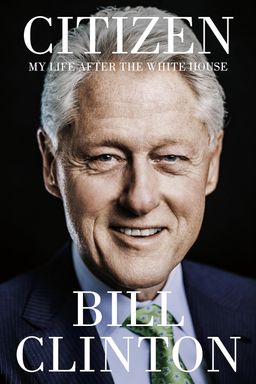
How can you keep making a difference after the most powerful job on earth? In this book, Bill Clinton argues that influence outlasts office if you repurpose it with a clear mission, practical partnerships, and relentless follow-through. He contends that post-presidential life can widen your impact—if you build institutions that solve real problems, practice cooperation over conflict, and measure success by whether people are better off when you leave than when you arrived.
You watch him trade the ceremonial song at the door for a Harlem office, legal bills, and a blank calendar. That humility sets the tone. He builds the Clinton Foundation to tackle health, climate, and economic opportunity; the Clinton Health Access Initiative (CHAI) to cut lifesaving drug prices; and the Clinton Global Initiative (CGI) to convert speeches into Commitments to Action. He also uses backchannels in delicate moments (China’s 2001 spy plane crisis; North Korea’s 2009 release of Laura Ling and Euna Lee), always coordinating with sitting presidents to complement, not compete with, official diplomacy.
From office to impact
Clinton’s early choices are strikingly normal: finish a book, give paid talks, pay debts, secure housing in Chappaqua and Washington, and choose Harlem—55 West 125th Street—as his public home. The symbolism matters: Cicely Tyson emcees the opening, Charlie Rangel welcomes him, and the day is proclaimed William J. Clinton Day. This isn’t nostalgia; it’s a commitment to be a neighbor, not a monument. That frame—live in the present for the future—becomes his mantra for you, too.
Build institutions, not moments
CGI flips the conference script: attendees pledge measurable commitments and are held accountable, producing billions for clean water, education, and health (e.g., Water.org’s financing reaching tens of millions, P&G’s packets delivering 22 billion liters of clean water). CHAI rewires drug markets by aggregating demand and validating generics through the U.S. FDA so PEPFAR can buy them, slashing antiretroviral (ARV) prices from hundreds of dollars per year to well under a dollar per day. The Clinton Development Initiative (CDI) creates anchor farms and value-chain enterprises so smallholders in Malawi, Rwanda, and Tanzania get inputs, training, and guaranteed buyers, with Acceso later raising farmer incomes in Colombia, El Salvador, and Haiti.
Act fast, rebuild better
In disasters—from Gujarat’s 2001 earthquake to the 2004 tsunami to Hurricane Katrina and the 2010 Haiti quake—he pairs rapid relief with the long slog of recovery. The throughline: local ownership, transparent coordination, and economic revival alongside housing and infrastructure. Aceh’s success under BRR chief Pak Kuntoro (with Starbucks marketing Aceh coffee) contrasts with Haiti’s governance headwinds despite paved roads, clinics, and thousands of jobs at Caracol Industrial Park. The principle for you is clear: cash and compassion are necessary; strong institutions are decisive.
Make interdependence work
Clinton frames your world as interdependent: science, tech, and trade bind us together, but so do shared threats—pandemics, climate, inequality. His speeches and projects aim to increase the positive and decrease the negative forces of interdependence. That shows up in practical climate work (Empire State Building retrofit; Los Angeles LED streetlights; Guyana’s forest deal with Norway; island solar) and in pandemic response, where CHAI helps countries solve oxygen and vaccine logistics while the Foundation feeds families and distributes books with Too Small to Fail. The message: marry moral ambition to measurable action.
Politics as the backdrop—and a warning
The book doesn’t ignore the storm outside the projects. It describes a "3 P" problem—divisive populism, deep polarization, and a post-fact media cycle—that shaped the 2016 race. James Comey’s norm-breaking announcements, Putin’s timed email hacks via WikiLeaks, and the press’s controversy incentive altered the information environment. Clinton doesn’t re-litigate every detail so much as draw a civic lesson: institutions and norms matter; when they break, bad actors exploit the gap.
A simple scorecard
"Are people better off when you quit than when you started? Do our children have a brighter future? Are we coming together instead of falling apart?" That’s how he measures post-presidential life—and how you can judge any phase of your own.
(Note: If you’ve read Peter Drucker or Jim Collins, you’ll hear echoes—clarify mission, pick the flywheels that spin, and track what actually changes on the ground. Clinton’s twist is diplomatic: turn relationships into market redesigns, coalition compacts, and resilient institutions.)
By the end, you’ve seen a replicable playbook: choose a mission over nostalgia; build teams that mix public, private, and NGO strengths; redesign broken markets; formalize commitments; insist on local ownership; and defend the norms that make all of the above possible. It’s pragmatic, hopeful, and relentlessly focused on results.