
Idea 1
Cinema as Cultural Education
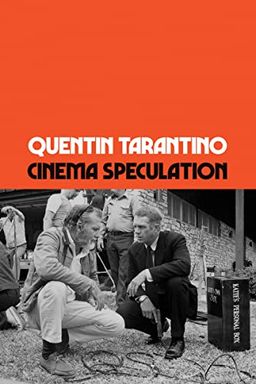
What does it mean to learn from the movies instead of about them? Across this book, you see how Quentin Tarantino argues that cinema—especially in the 1970s—is a full cultural education. Watching films, listening to audiences, and absorbing the contexts of exhibition form a kind of apprenticeship. Moviegoing becomes a way to understand society’s shifting codes: politics, sex, race, and rebellion. Tarantino isn't writing dry criticism; he’s tracing how his own experiences with movie theaters, critics, and films formed both his aesthetic and his moral vocabulary.
Cinema as an early classroom
From childhood, Tarantino learned cultural literacy in darkened rooms. He recalls being taken by his mother to adult-oriented films like M*A*S*H or Where’s Poppa? These screenings taught him about social boundaries by watching not only the screen but the audience’s behavior—what people laughed at, what embarrassed them, what made them uncomfortable. The moviehouse became a social lab where he learned shame, humor, and adult hypocrisy. His mother’s rules (“don’t be a pain, questions afterward”) enforced careful attention and emotional intelligence. The theater, in his telling, made him both observant and free-thinking.
Cultural nodes and communal learning
Key to Tarantino’s formation is the Tiffany Theater on the Sunset Strip, a microcosm of 1960s–70s counterculture. It wasn’t just where you watched movies; it was a meeting place for freaks, heads, and cineastes. The Tiffany’s midnight screenings of The Rocky Horror Picture Show, Woodstock, and Gimme Shelter turned cinema into community ritual. Viewers didn’t just watch — they participated with costumes, chants, and collective energy. For Tarantino, such spaces served as ‘schools of response,’ showing how audiences turn passive viewership into active culture-making. The Tiffany, nested between rock clubs and diners, blurred the border between film and nightlife, between Hollywood and youth rebellion.
Movies as moral case studies
What unifies films like Bullitt, Dirty Harry, and Deliverance in Tarantino’s analysis is how they act as moral mirrors. Bullitt valorizes cool style and self-control over plot logic, making Steve McQueen’s restraint the new masculine ideal. Dirty Harry turns police brutality into political spectacle, asking whether righteous violence is liberating or fascist. Deliverance redefines masculinity under trauma: men stripped of civilization reveal fear as much as strength. These films taught audiences—and budding directors—how genre cinema smuggles ethical inquiry under action and suspense.
Critical ecosystems and mentorship by proxy
Equally crucial are the people who interpreted and legitimized these films. Critics like Kevin Thomas at the Los Angeles Times acted as champions for exploitation cinema, writing serious reviews of Corman-style pictures that made studio scouts take notice. By reviewing filmmakers like Jonathan Demme or Joe Dante as legitimate artists, Thomas turned drive-in outsiders into Hollywood insiders. Tarantino credits this ecosystem—paper critics, midnight theaters, drive-in circuits—with nurturing a creative generation that blurred lines between exploitation and art-house cinema.
Learning cinema through participation
As you trace Tarantino’s recollections, the recurring theme is participation over observation. Whether as a kid puzzling through adult humor, a teenager inhaling the communal energy of counterculture theaters, or an adult reading how critics framed low-budget art with respect—each encounter taught a lesson about filmmaking that textbooks couldn’t. Tarantino learned what audiences feel, not just what critics say. That understanding explains the visceral energy of his own films: they’re directed as much toward the crowd as toward cinema history.
A decade of style, violence, and rebellion
All together, these anecdotes form a portrait of 1970s American cinema as social rebellion, formal invention, and commercial compromise. The movies Tarantino studies weren’t isolated art objects; they were influence networks tied to stars, studios, and street audiences. They taught how political outrage turned into genre tropes, how censorship gave way to experimentation, and how filmmakers like Schrader, Boorman, Siegel, and Peckinpah made moral philosophy out of pulp. To study these films today is to study the decade when American movies became, once again, dangerous and alive.