
Idea 1
China’s Super Consumers and the New Global Revolution
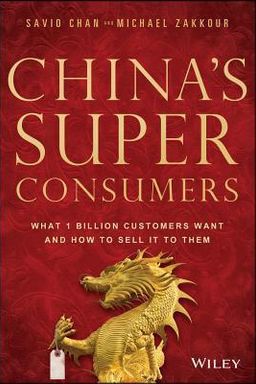
How is it that a country once synonymous with mass manufacturing now shapes the world’s consumption patterns? This is the guiding question at the heart of China’s Super Consumers: What 1 Billion Customers Want and How to Sell It to Them by Savio Chan and Michael Zakkour. The authors argue that China’s rise isn’t just an economic story—it’s a cultural and psychological revolution that has created the largest, most influential consumer class in human history. To thrive in the 21st century, every business must understand, adapt to, and engage with the Chinese super consumer.
From Beijing’s luxury boutiques to the vast digital marketplace of Alibaba, a new kind of consumer has emerged—one who is patriotic yet cosmopolitan, price-aware yet status-driven, and deeply influenced by history, community, and technology. Chan and Zakkour contend that this “super consumer” is not a singular demographic, but a dynamic, evolving force reshaping how the world manufactures, markets, and sells. If the American baby boomers defined consumption in the 20th century, the Chinese super consumers will define it for the 21st.
From Feudalism to Fendi
The authors begin with a sweeping historical arc, tracing how China moved from centuries of inward-focused imperial dominance to 30 years of astonishing market reform. Until the late 20th century, China’s economy ran on production, not consumption. During Mao’s era, there were no “consumers” in the Western sense—only workers and citizens. With Deng Xiaoping’s reforms in the late 1970s and the famous declaration that “to get rich is glorious,” the door opened for private enterprise, foreign trade, and eventually, personal consumption. By the 1990s, brands like Nike and Starbucks began to seed a consumer revolution that mirrored America’s postwar boom—and soon surpassed it in scale.
This transformation, the authors note, was not accidental. It combined four major catalysts: economic liberalization, urbanization, digitization, and cultural aspiration. The Chinese Dream, promoted by Xi Jinping, intertwines national revival with personal prosperity. The desire to buy, experience, and show success isn’t only about status—it’s also about freedom, identity, and modernity. This is a society coming back to life after isolation, discovering power through consumption.
Why This Matters Globally
For Western companies, the rise of Chinese consumers changes everything. The marketplace is no longer “China as a factory”—it’s “China as the customer.” Global brands that once relied on low-cost Chinese production now depend on Chinese demand for growth. From Microsoft’s cloud services to Nike’s flagship stores in Shanghai, businesses must rethink everything from product design to digital strategy through the lens of Chinese tastes, values, and government policy. The Chinese government itself plays a central role—both as regulator and as a cultural architect—shaping what consumption looks like within its broader political vision of “national rejuvenation.”
The authors use vivid case studies to ground these ideas. Microsoft succeeded in China by adapting its business model to local sensibilities, focusing on cloud services and gaming, while companies like Whirlpool and Best Buy failed by simply transplanting Western systems without cultural calibration. Luxury brands such as Brooks Brothers, Prada, and Coach have thrived by understanding China’s obsession with “face,” prestige, and craftsmanship—while modifying logos, price points, and brand storytelling to resonate with Chinese values.
The World’s Second Coming of Super Consumers
Chan and Zakkour describe the Chinese consumption wave as the sequel to America’s mid-century consumer revolution. Just as U.S. baby boomers drove decades of growth, China’s urban middle class—between 400 and 700 million people—is now defining global style, technology, and travel. These consumers have their own complexities: they are digital natives who live on WeChat, make purchases through mobile apps, and look to peers for product validation rather than corporate advertising. They see brands as mirrors of personal identity and social capital.
Just as importantly, China’s consumption extends beyond its borders. The “China Global Demographic” now includes the millions of Chinese students, tourists, and investors shaping economies from Los Angeles to London. Foreign real estate, luxury handbags, and overseas education have become powerful status symbols. Understanding this diaspora-driven consumer network is as vital as understanding consumers in Shenzhen or Chengdu.
A New Era of Reciprocity
Ultimately, China’s Super Consumers reveals that the modern Chinese marketplace is not just about buying—it’s about relationships. In China, commerce is personal, political, and social. Building trust—through physical presence, government alignment, and cultural resonance—is the foundation of success. The book teaches that doing well in China means “doing good” in China: aligning business goals with national priorities and people’s dreams. This synthesis of profit and partnership is what defines the Chinese approach to capitalism.
By exploring history, policy, technology, and culture, Chan and Zakkour show that we’re witnessing not merely an economic expansion, but a seismic shift in the architecture of global consumption. China’s super consumers aren’t just changing China—they are changing the world.