
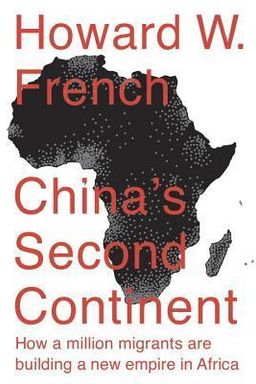
China''s Second Continent cover

China''s Second Continent

by Howard French

China''s Second Continent delves into the mass migration of Chinese to Africa, exploring how these migrants are reshaping the continent. Through strategic investments and cultural influences, discover the profound impact on both regions and the global stage.

The Many Faces of China in Africa

How do you truly measure China's presence in Africa? In China’s Second Continent, Howard French argues that what happens across the continent is not a single story of aid and trade, but a mosaic of state ambition, private migration, entrepreneurial risk, and uneasy coexistence. You see a project that is both personal and planetary: millions of Chinese citizens reshaping Africa’s physical and social geography, in tandem with Beijing’s strategic designs for global influence.

The book’s argument unfolds through individual lives—farmers, engineers, traders, and politicians—and gradually reveals how they reflect a deeper structure. French contends that China's engagement spans three layers: state power expressed through loans and diplomacy, market capitalism expressed through migrants and microbusinesses, and cultural imagination shaped by memories of hardship and opportunities abroad. To understand the future of global power, you must follow how these layers interact in African soil.

State Ambition and Soft Power

At the official level, initiatives like the Forum on China–Africa Cooperation (FOCAC) institutionalize Beijing’s outreach through tied loans, prestige projects, and policy banks. Bridges, hospitals, and stadiums symbolize China's modern benevolence. At the same time, a coordinated narrative of “win–win relations” promises partnership without political interference. You can see this in Mali’s new bridge, Zambia's stadiums, or Liberia's clinics—physical reminders of China’s soft power resting on visible, rapidly delivered infrastructure that reinforces diplomatic goodwill.

But beneath the surface, these projects double as economic strategy. Tied financing channels money back to Chinese contractors, equipment suppliers, and labor systems, ensuring that investment circulates within China's industrial ecosystem even as it transforms African skylines. The effect is a new form of globalization where capital, concrete, and political symbolism move together.

Migration and Everyday Globalization

Parallel to the state-to-state relationships runs a quieter revolution: the migration of ordinary citizens. People like Hao, a Henan farmer in Mozambique, epitomize the grassroots expansion of a Chinese frontier ethos. His 5,000-acre stevia and tea farm in Mozambique is both a personal redemption project and a microcosm of Chinese mobility. Migrants rely on dense informal networks—QQ chats, laoxiang hometown associations, and self-organized trade supply routes—to discover opportunities and stabilize life abroad.

These networks turn individual stories into structural change. A Fujian shopkeeper in Maxixe, a karaoke hostess in Dakar, or a truck driver supplying inland markets all use social ties to replicate China's developmental model in miniature. This chain migration blurs boundaries between business and community, producing self-sustaining enclaves that collectively construct what French calls a “shadow infrastructure” of trade, credit, and kinship beyond the grasp of official registries.

Friction, Inequality, and Resonance

French insists that this is not mere success; it is struggle. Local backlash follows wherever inequality and opacity persist—whether in Zambian mines plagued by safety disasters, Senegalese street markets flooded with cheap Chinese goods, or Malian rice fields quietly leased under speculative contracts. The tensions reveal a collision between different moral economies: African communities guarding ancestral rights and Chinese entrepreneurs guided by pragmatic, often paternalistic views of “hard work” and hierarchy.

At the same time, many Africans appreciate the visible results—bridges that stand, clinics that function, and prices that fall. This ambivalence defines what makes China's experiment in Africa both resonant and controversial. The “win–win” rhetoric appeals powerfully to governments frustrated with Western aid conditions, even as it conceals asymmetries in control and benefit.

Empire Without Colonies?

French concludes by asking whether this constitutes a new empire. Unlike European colonizers, China rarely seeks territorial rule. But through migration, infrastructure, and financial dependency, it achieves lasting forms of power. The parallel lies not in armies but in systems of dependence: credit, construction, and settlement that steadily entrench influence. Whether you call it empire depends on your vantage point—Beijing’s discourse of partnership or African warnings of a “second scramble.”

Ultimately, the book tells you that to understand China in Africa is to witness a multilayered transformation—neither simple exploitation nor pure cooperation. It is a mirror of globalization itself: the meeting of ambition and vulnerability, development and displacement, each side remaking the other in unexpected ways. French’s gift is to make the geopolitical intensely human, showing how one farm, one mine, or one marriage can embody the shifting center of the world.


Migration as Frontier Enterprise

You meet the new face of globalization not in Beijing or Washington but in Maputo, Dakar, and Ndola. Here, Chinese migrants like Hao from Henan and Chen Rui from Guangdong carve out lives that combine frontier capitalism with restless itinerancy. Their decisions, though personal, expand China's footprint across rural and urban Africa. Each farm, smelter, or karaoke bar adds a dot in a larger constellation of settlement that ultimately transforms local economies.

Why people move and what drives them

When you ask why Hao left China, you hear familiar motives: economic marginalization, failed ventures abroad, and a yearning for space. Africa presents itself as an imagined frontier—a place of lower competition and larger horizons. This isn’t just opportunity-seeking; it is a biographical response to China’s own past. Hao invokes chi ku (“eating bitterness”) to justify the hardships of farming in Mozambique, training his sons through physical labor and self-reliance reminiscent of Cultural Revolution ideals. Such migrants see themselves as pioneers rather than expatriates.

Networks and informal globalization

These settlers don’t rely on embassies or corporate HR departments. They depend on the chatter of QQ forums, laoxiang ties, and traveler gossip. Hao heard about Mozambique at a trade fair in Fujian; traders in West Africa stay connected through WeChat, ensuring every shopkeeper knows the next container ship schedule. These networks reduce risk, coordinate logistics, and reproduce community. They are the arteries of a parallel globalization that bypasses official aid and diplomacy.

Once established, these circuits spread benefits asymmetrically. Chinese shop owners bring affordable goods but unsettle local boutique merchants; migrants import their own bricklayers or drivers, unintentionally limiting knowledge transfer. Chain migration ensures endurance: Chen Rui brings her brother to Dakar, Hao plans to naturalize his children through local marriages. The line between temporary trade and permanent settlement dissolves.

Settlements and identity re‑creation

When you walk through Dragon City at Oshikango, a transnational trade hub on the Namibia–Angola border, you can sense how migration becomes community. Supermarkets stock Chinese brands; restaurants serve Sichuan dishes beside Angolan beer; local workers mix Portuguese with Mandarin. In Mozambique, Hao’s use of feng shui in house‑building and the strategic decision to name land under children born in Africa creates hybrid belonging—a subtle form of integration and power consolidation.

Migration, then, functions as both livelihood and geopolitical presence. It turns aspiration into asphalt, language exchange into leverage, and family migration into informal empire-building. The frontier mentality—risk-taking, opportunistic, sometimes exploitative—mirrors China’s own internal expansion westward decades earlier. French’s insight is that the new Chinese empire is being built by individuals who think they are simply escaping their pasts.


Markets, Urban Friction, and Everyday Politics

If you want to feel the friction of globalization, walk through the markets of Dakar or the shops of Maxixe. There, Chinese petty traders meet African entrepreneurs in direct competition. These encounters, visible at street level, make abstract geopolitics tangible. A sock vendor or DVD hawker becomes the face of an international trade revolution that changes prices, livelihoods, and urban identities.

Urban retail revolutions

In Senegal, the arrival of Chinese merchants along Le Centenaire brought both cheap abundance and social unrest. Protests in 2004 showed how local unions and politicians grapple with consumer demand versus producer protection. Similar dynamics appear in Lusaka or Lagos wherever Chinese goods flood the informal sector. The disruption isn’t just about price—it is about visibility: Chinese presence changes who belongs in the public economy of African cities.

French shows that migration stratifies quickly. Educated figures like Li Jicai operate as cosmopolitan intermediaries, while others, such as Chen Rui, navigate precarious sectors of entertainment and sex work, exposing darker sides of opportunity. This unevenness mirrors the Chinese domestic social ladder exported abroad.

From shops to skyscrapers

Urban tension scales up. Zhang’s proposed Central Business District project in Dakar—a multi‑tower real‑estate dream—illustrates how small traders evolve into developers seeking long‑term urban claims. Civic backlash stopped the project, proving that land and visibility are politically sensitive terrain. Behind every construction crane lies a debate over who reshapes African skylines and to whose benefit.

Cultural crossings and social strain

Meanwhile, reverse flows complicate the picture: African traders travel to Guangzhou, learning Chinese language and supply chains, creating new hybrid spaces of Afro‑Asian entrepreneurship. These mutual migrations destabilize hierarchies—Africans become global buyers, and Chinese become local settlers. Yet tensions persist where integration lags and prejudice lingers. French reminds you that cosmopolitanism at street level rarely feels symmetrical.

Through these micro‑encounters, cities like Dakar embody the promise and peril of China’s rise in Africa. They show how economics turns into politics and how, in the daily contest of markets, the architecture of global influence is negotiated one transaction at a time.


Mining, Labor, and the Politics of Backlash

Resource extraction reveals the hardest edges of China’s African presence. In Zambia’s Copperbelt and Congo’s artisanal mines, you watch how foreign capital, weak safety standards, and political opportunism ignite conflict. Chinese operators like Yang Bohe personify industrial drive paired with a disregard for local labor conditions—a toxic mix that becomes both economic engine and political flashpoint.

Inside the smelters

At Tianfen smelter near Ndola, workers labor amid smoke and heat with minimal protection. Chinese supervisors wear masks; Zambians improvise with cloths. Yang boasts of recovering investment in two months, proof of ruthless efficiency, but market downturns leave abandoned plants and toxic waste. Such stories puncture the “win–win” narrative, revealing exploitation masked as progress.

Labor and social division

Chinese firms frequently import skilled crews from China, sidelining local labor markets. Locals resent disparities: Chinese bricklayers earn $1,500 a month; Zambian miners survive on a fraction. Rumors of forced or prison labor, while exaggerated, signify deeper distrust. These inequities turned deadly when managers fired on protesters after a mine explosion, incidents that fueled nationalistic campaigns (notably Michael Sata’s populist rise).

Governments oscillate between courting investment and placating unions. Temporary wage hikes or safety reforms follow violence but rarely address systemic gaps in governance or enforcement. Resource wealth here shows its paradox: prosperity that bypasses the majority.

Lessons in governance

French uses these episodes to underscore that governance, not nationality, determines outcomes. Without transparent regulation, any investor—Chinese, Western, or domestic—will exploit weakness. But because China’s model privileges rapid output and imported know‑how, its projects often strain fragile states the most. The lesson: industrial ambition without institutional strength breeds backlash.


State Power, Loans, and Strategic Leverage

While migrants construct the human face of China’s presence, Beijing’s policies coordinate the scaffolding of influence. The Forum on China–Africa Cooperation (FOCAC) and state policy banks form the backbone of official engagement. This interplay of diplomacy and finance turns infrastructure into an instrument of geopolitical soft power.

How the system was built

Beginning with Jiang Zemin’s “go out” strategy in 1996, China institutionalized engagement through loan packages, debt relief, and spectacular construction gifts—the African Union headquarters, stadiums, hospitals, and parliament buildings. Xi Jinping’s recurrent visits underscore Africa’s significance as a testing ground for global partnership imagery.

The logic of tied finance

Policy banks like ExIm embed conditions that recycle value back to Chinese firms. Loans require Chinese contractors, materials, and sometimes labor, ensuring jobs at home and influence abroad. Projects like Ghana’s Bui Dam or Mali’s airport exemplify the model—cheap capital in exchange for long-term repayment and dependency. Critics call this a hardware bias: visible but shallow development.

“Infrastructure is incredibly important, but a bias for hardware does not equate with the best development choices.” — Jon Anderson, MCC (Mali)

Prestige, optics, and repayment

Prestige projects win short-term popularity for African leaders and long-term leverage for China. Debt repayment schedules, often opaque, can later constrain sovereignty when commodity prices fall. Yet for governments that equate visibility with legitimacy, the trade‑off seems worthwhile. French urges you to see infrastructure as currency: it buys both power and perception. The challenge for Africa is to convert that visibility into genuine institutional strength.


Land, Aid, and the Development Dilemma

Land and aid occupy the gray zone between help and control. In Mali’s Office du Niger, Liberia’s clinics, or Guinea’s infrastructure funds, Chinese engagement oscillates between generous assistance and opaque transactions. These arenas reveal how weak governance and cultural misunderstanding can undermine even well‑intended projects.

Land leases and hidden costs

Mali’s irrigated delta—remnant of colonial schemes—has become the object of feverish interest. Foreign investors court officials for leases of tens of thousands of hectares, often negotiated in secrecy. Chinese firms claim to test seeds but rent land back to locals; Libyan contracts cover 300,000 hectares but displace communities. Activists like Faliry Boly and Tiébilé Dramé expose how nontransparent deals erode customary land rights.

For China, Africa’s arable abundance tempts strategic food‑security thinking. But investment without accountability looks like appropriation. The “gift” of irrigation canals or tractors masks a new dependency when local farmers lose control of their livelihoods.

Aid and the turnkey trap

In Liberia’s Gbarnga project, agricultural training centers built by China Aid boast brand‑new dormitories and equipment—but theft, poor follow‑up, and dismissive attitudes toward local partners leave the programs hollow. Doctors like Dai run private clinics with impressive technology that serve mostly expatriates. These examples illustrate the “turnkey trap”: projects that succeed on delivery day but fail as institutions once the donors leave.

Governance and responsibility

Whether the issue is farmland or healthcare, French reminds you that sustainable development demands transparency, local ownership, and maintenance—software to match the hardware. Otherwise, Africa inherits infrastructure without empowerment, while China gains influence without accountability. The dilemma is not aid versus sovereignty; it is control over the future capacity to act.


Governance, Capture, and Civic Resistance

China’s ascent in Africa intersects decisively with the quality of governance. Where states are fragile, foreign investors—Chinese or otherwise—can dominate entire sectors. French documents how this vulnerability plays out from Sierra Leone’s iron ore fields to Mozambique’s resource corridors, and how civic resilience sometimes checks the tide.

Weak states, strong deals

In Sierra Leone, Anti‑Corruption chief Joseph Kamara battles thin budgets and elite impunity as multibillion‑dollar concessions with figures like Frank Timis reshape national ownership. Mozambique under President Guebuza shows similar patterns: resource rents feeding political patronage, with little trickle‑down benefit. Without legal expertise or negotiation capacity, states concede too much for too little.

“The government is so weak in policy formulation... We don’t have the human capacity.” — Rahall, Sierra Leone

Civil society and democratic pushback

Where citizen oversight is stronger, outcomes differ. Ghana’s public campaigns around the Bui Dam forced renegotiation and transparency; Mali’s activists halted dubious land leases; Sierra Leone’s media pressured revisions of mining laws. These examples prove that democracy and scrutiny increase bargaining power even when they delay projects.

The path forward

For African nations, the central task is competence—trained negotiators, active parliaments, and public access to contracts. For China, genuine partnership means accepting slower deals and shared oversight. French concludes that the difference between dependency and development will hinge less on Beijing’s intentions than on Africa’s ability to bargain on its own behalf.


Empire by Other Means

French closes with a provocative question: has China built an empire without calling it one? The evidence—expanding migration, strategic financing, and cultural influence—suggests a transformation reminiscent of earlier imperialisms, though adapted to modern norms of sovereignty. Africa becomes both laboratory and mirror for how global power operates in the twenty‑first century.

Continuities with past empires

Like Britain or France before it, China finances railways, ports, and cities that enable extraction and trade. It exports people, builds administrative capacity on foreign soil, and binds partners through debt and trade asymmetry. Migrants like Hao or developers like Zhang function as agents of informal colonization, extending presence without overt conquest. The infrastructure corridors from Addis Ababa to Lusaka resemble colonial arteries of the past, rediscovered under new ownership.

Differences of method, not effect

Yet this is not empire in the classical sense. China avoids military occupation, invokes South–South solidarity, and frames its role as that of an equal partner. Still, the outcomes—debt leverage, resource dependency, cultural ascendancy—converge with imperial dynamics. The crucial innovation is empire by transaction: domination through contracts, capital, and connectivity rather than cannon fire.

What comes next

The long‑term stakes are immense. Watch the trio of trends: debt accumulation, diaspora consolidation, and soft‑power saturation through media and education. Without institutional safeguards, sovereignty erodes stealthily—not through annexation but through dependency. French challenges you to decide whether this constitutes colonization or partnership, warning that history often repeats itself when new powers mistake speed for permanence.

Dig Deeper

Get personalized prompts to apply these lessons to your life and deepen your understanding.

Go Deeper

Get the Full Experience

Download Insight Books for AI-powered reflections, quizzes, and more.