
Idea 1
China in Ten Words: Seeing a Nation Through Lived Experience
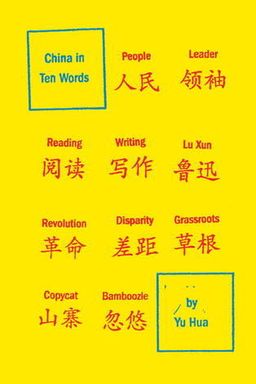
What if you could understand the transformation of an entire nation through just ten everyday words? In China in Ten Words, celebrated Chinese author Yu Hua takes this bold approach. He argues that to truly grasp modern China — its joys, contradictions, and agonies — you must look not only at its policies or leaders, but at its language. Each word in his book, from “People” and “Leader” to “Copycat” and “Bamboozle,” becomes a lens for exploring the moral, political, and emotional landscape of China’s radical metamorphosis over the past seventy years.
Yu Hua contends that China’s story is not a linear tale of progress but a deeply human one, shaped by pain, absurdity, and resilience. In ten evocative essays, he peels back the slogans and propaganda that have long defined Chinese identity to reveal how ordinary people have lived, suffered, and adapted amid sweeping historical change. Drawing on personal anecdotes from his childhood during the Cultural Revolution, his years as a dentist, and his journey to becoming one of China’s most acclaimed authors, Yu transforms political commentary into powerful storytelling.
A Personal Lens on a Collective Nation
Unlike typical political analyses or history books, Yu Hua writes with an intimacy rooted in lived experience. He was born in 1960, which means he witnessed the aftermath of Mao’s campaigns, the chaos of the Cultural Revolution, the tragedy of Tiananmen, and China’s later capitalist boom. This timeline allows him to bear witness to China’s transformation from a nation defined by ideology to one defined by wealth — and to the moral dissonance that shift created. “China’s pain is my pain,” he writes, declaring that his life and art remain inseparable from the fate of the country itself.
The author’s choice of language is not accidental. Each of his ten words — “People,” “Leader,” “Reading,” “Writing,” “Lu Xun,” “Revolution,” “Disparity,” “Grassroots,” “Copycat,” and “Bamboozle” — captures both a historical moment and a recurring truth about the Chinese condition. His method recalls George Orwell’s insistence (in “Politics and the English Language”) that political language is often a mask for power. Through simple, common words, Yu Hua unmasks how language both exposes and conceals society’s soul.
Ten Words for Ten Faces of Modern China
Each word functions as an entry point into a broader portrait of China. In “People,” Yu reflects on how the word once symbolized unity and hope but today serves mainly as a bureaucratic relic. “Leader” evokes Mao Zedong’s deification and the cult of personality that once defined loyalty and faith. In “Reading” and “Writing,” he recalls his early longing for stories and his eventual discovery that literature — like life — must confront suffering to find truth. “Lu Xun,” the revolutionary writer of the early 20th century, becomes both a symbol of integrity and a victim of propaganda, revered and distorted by the regimes that followed him. “Revolution” reveals how China’s capacity for collective upheaval never truly disappeared but merely changed attire — from political campaigns to market competition. Later words like “Disparity,” “Grassroots,” “Copycat,” and “Bamboozle” expose the moral and social fallout of the country’s explosive modernization — vast inequality, corruption, creativity, and audacious survival tactics that define everyday life for millions.
By organizing his reflections around simple vocabulary, Yu Hua elevates the personal to the universal. His essays show how words can be manipulated by power, yet also reclaimed by individuals seeking understanding. He reminds you that language itself is a battlefield: whoever controls the words shapes the story — and whoever shapes the story defines reality.
Pain, Humor, and Moral Clarity
Yu Hua’s tone blends dark humor, melancholy, and moral courage. His childhood memories of medical needles with barbed tips, reused until they tore children’s skin, stand as metaphors for China’s crude resilience: the same tools that healed also wounded. His stories about Maoist enthusiasm and later capitalist excess highlight the pendulum swings of his society. Through irony and compassion, he captures the absurd coexistence of idealism and greed — from revolutionaries fighting oppression to officials auctioning off sidewalk permits in the name of efficiency.
While Yu Hua writes for Chinese readers, his observations resonate globally. Anyone who has lived through rapid social change — the collapse of certainty, the rise of inequality, the redefinition of identity — will recognize themselves in his portraits. His approach recalls Aleksandr Solzhenitsyn’s use of testimony to voice collective trauma, but with the humor and surrealism of Milan Kundera’s irony. (Note: Western comparisons help contextualize Yu’s skill: like George Orwell and Gabriel García Márquez, he fuses politics and literature to capture truth through paradox.)
Why These Words Matter
By the end of China in Ten Words, you realize these essays aren’t just about China; they’re about how language shapes memory, identity, and truth. Yu Hua’s ten words offer a vocabulary for describing human experience under any system — be it totalitarian, capitalist, or something in between. His reflections help you question how your society defines “progress,” what it demands you forget, and what words you’ve silently agreed to misuse.
“We survive in adversity and perish in ease and comfort,” Yu Hua quotes Mencius, invoking an ancient truth: hardship refines courage; comfort breeds decay.
In a world where “bamboozling” and “copycatting” have replaced sincerity and craftsmanship, China in Ten Words reminds you to reclaim meaning — in your speech, in your writing, and in how you understand your time. For Yu Hua, storytelling itself becomes an act of resistance — a way to see clearly through the smoke of slogans and remember that every nation, like every person, lives between its words.