
Idea 1
Leading with Joy: The Human Side of Leadership
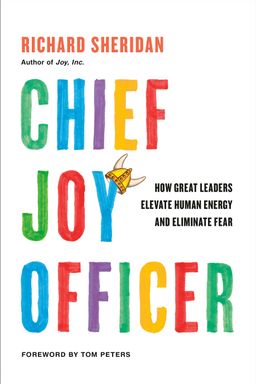
When was the last time you felt genuine joy at work? In Chief Joy Officer, Richard Sheridan challenges the idea that business success must come at the cost of human happiness. He argues passionately that joy is not a luxury—it’s a necessity for thriving organizations. For Sheridan, joy begins when leaders let go of fear-based management, put people before profits, and design workplaces where service, purpose, and human connection drive results.
Sheridan’s central claim is that leadership built on joy beats leadership built on fear. He contends that most leaders today, despite their good intentions, still operate under systems designed to control and intimidate—hierarchies, policies, and micromanagement rooted in mistrust. Joyful leadership, in contrast, fosters autonomy, empathy, and shared purpose. Joy, he insists, is deeper than happiness—it’s the lasting satisfaction of doing meaningful work that serves others.
The Problem: Fear-Based Organizations
Sheridan begins with a stark truth: most workplaces are built on fear. Fear of losing status. Fear of making mistakes. Fear of your boss’s reaction. He recounts his own burnout years at Interface Systems, where endless meetings, hero-worship, and chaotic product launches led him to dread going to the office. When his young daughter observed that no one could make a decision without him, he realized he had become the bottleneck. True leadership, he saw, isn’t about being indispensable—it’s about making others fully capable.
The Shift: From Fear to Joy
Turning fear into joy meant reinventing his workplace. Sheridan launched the first experiments at the “Java Factory,” where programmers worked openly in pairs, shared decisions, and eliminated titles. It was messy at first, but culture replaced control, and collaboration replaced hierarchy. This approach evolved into Menlo Innovations—a company built around joyful leadership. There are no private offices, no performance reviews, and no bosses in the traditional sense. Teams choose who to hire, and feedback flows daily, not annually.
Menlo’s mission, Sheridan explains, is to “end human suffering as it relates to technology.” Every system in the company—from pair programming to open-book finances—exists to support that purpose. Sheridan compares this to Peter Senge’s concept of the learning organization: a culture grounded in continuous growth and shared accountability rather than fear and blame.
The Foundation: Values and Authenticity
Joyful leadership starts with deeply held beliefs. Drawing on Gandhi’s idea that beliefs become thoughts, thoughts become actions, and actions become destiny, Sheridan lays out Menlo’s three guiding principles: create positive human impact, act with authenticity and integrity, and express care, hope, love, and joy. These are not marketing slogans—they are used daily to guide decisions. Leaders are expected to model these principles in their behavior, not announce them from the stage.
The Practice: Joy Is Action, Not Abstraction
Throughout Chief Joy Officer, Sheridan draws on stories—from CEO missteps to canoe trips with his father—to show that joy is inherently practical. He introduces practices like “Extreme Interviews” where candidates must help their partner succeed, and “Feedback Lunches” where peers guide each other’s growth. He encourages leaders to hand off control, clean their own offices, and turn up the lights themselves—acts that symbolize stewardship, humility, and service.
Most revealing, Sheridan describes how optimism and vulnerability sustain joy. When business dipped at Menlo in 2016, he didn’t hide the numbers—he shared them with the whole company. This radical transparency replaced panic with problem-solving and bonded the team. “Fear doesn’t make bad news go away,” his office posters remind employees. “Fear makes bad news go into hiding.”
The Why: Joy Creates Sustainable Success
The book ends by reaffirming that joy is not a soft concept—it’s a strategic advantage. Research from leaders like Shawn Achor (author of The Happiness Advantage) and Bob Quinn at the University of Michigan supports Sheridan’s claim that positive organizations outperform fearful ones. Optimism, service, learning, and storytelling create environments where people grow rather than retreat. Sheridan’s message is ultimately moral as well as practical: leaders must care for their people, teach others to lead, and leave their campsite—this world—better than they found it. That is the legacy of a true Chief Joy Officer.