
Idea 1
The Hidden System Behind Cheap
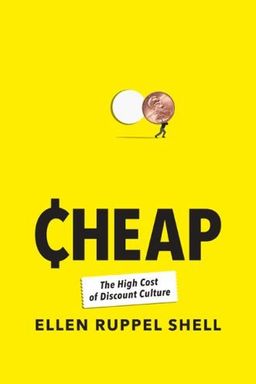
Why does everything—from shirts to shrimp—cost so little, and what does that really mean? The book reveals that cheapness is not an accident but a system: a historical, industrial, psychological, and global network designed to deliver low sticker prices while concealing the social and environmental costs behind them. To understand modern consumption, you need to see how industrial production, discount retail, global trade, and consumer psychology all work together to create a culture where price trumps value.
How the industrial revolution made cheap possible
In the early Republic, pioneers like Eli Whitney and Simeon North revolutionized production with interchangeable parts. Henry Ford perfected the principle on his assembly lines, turning the automobile into a mass-market product. Mechanization meant scale: skilled artisans gave way to semiskilled workers performing repetitive tasks, and mechanized output multiplied. What followed wasn’t just lower costs, but a complete redefinition of labor and value. 'Trade skill for scale' became the economic creed of the twentieth century.
On the retail side, the fixed price tag—popularized by John Wanamaker—and Woolworth’s five-and-dime model changed how you shop. The ritual of haggling disappeared, replaced by a single, posted price that seemed egalitarian but also disconnected you from questions of how those prices were achieved. The industrial and retail revolutions combined, producing the modern expectation that price should always fall.
The psychology that locks you in
Marketers quickly realized that price is more psychological than mathematical. Experiments by Daniel Ariely show anchoring and framing can change perceived value: the mere presence of a higher 'list price' makes a discount irresistible. The '9.99' trick relies on cognitive biases that make the brain treat round numbers as thresholds. Neuroscientific work from Brian Knutson even shows the brain’s pleasure centers light up when viewing a bargain. You are not calculating; you are anticipating reward.
Loss aversion (Kahneman and Tversky) ensures you fear missing a deal more than you value a small saving. Time discounting makes delayed gratification harder: 'limited time only' pulls you in. Retailers know this. Cheap is not just about production efficiency; it’s about manipulating the ancient circuits that govern what feels fair and urgent.
Globalizing cheap: China, containers, and cost externalization
By the late twentieth century, 'cheap' had become planetary. The shipping container—Marc Levinson’s 'box that changed the world'—reduced transport costs to pennies per product. Factories in China’s Pearl River Delta or Vietnam’s industrial zones churned out billions of goods under conditions invisible to Western consumers. Malpractices in safety, labor law, and environmental conditions became systemic. The 'China price' depends on low wages, weak enforcement, and the illusion that global markets are neutral spaces rather than moral choices.
Retailers such as Wal-Mart squeezed suppliers to meet demands for 'everyday low prices.' Suppliers, in turn, outsourced production to the lowest bidder. Auditing and 'corporate responsibility' programs often failed to detect violations because inspection systems were built for compliance optics, not justice. Consumers at home saw falling prices but not rising hidden costs in labor exploitation or ecological destruction.
The monoculture of markdowns
A relentless markdown culture amplified the dynamic. Once an occasional tactic, discounts became a business model. 'Markdown money'—suppliers reimbursing retailers for discounts—shifted risk upstream. Coupons and rebates gamified consumption: even unpaid rebates produced psychological satisfaction (what economists call 'breakage'). Free and near-free pricing induced irrational joy, connecting the cheapness of a good to emotional payoff rather than utility.
The cultural consequences
From Levittown homes poured without basements to IKEA’s flat-pack furniture, cheapness seeped into culture. William Levitt’s mantra—“How many can you sell for how little?”—applied to architecture as much as shirts or sofas. The result was not just affordability but fragility. Once, craftsmanship transmitted skill and memory; now, disposability dominates. When you treat a chair or a home as temporary, you absorb a quiet message about your own replaceability as a worker and citizen.
The same principle appears in food. U.S. agricultural subsidies and global grain markets make cheap calories abundant—corn syrup, processed rice, shrimp from devastated mangrove ponds—but externalize environmental ruin and rural poverty. 'Cheap food' feeds inequality: while urban consumers save pennies, small farmers collapse under global price pressure. The illusion of plenty conceals economic fragility.
Repairing cheap: toward value and balance
The book does not reject affordability; it asks you to see it whole. Models like Wegmans and Costco prove profit can coexist with fairness. Wegmans pays higher wages and invests heavily in training, showing that dignity and efficiency are not enemies. Supporting such models, demanding transparency from suppliers, and accepting real costs are steps you can take to rebalance the system.
Core truth
Cheap is not a number but a story. It tells you who makes, transports, displays, and discards the things you buy—and what each step costs somebody else. Seeing that system clearly is the first step toward changing it.