
Idea 1
The War on Drugs as a Global Construct
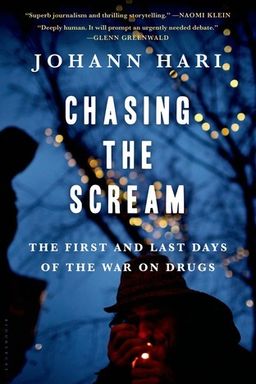
What if the world’s most sustained campaign of criminal punishment began not as a reaction to chemistry, but as a political invention? This book argues that the modern war on drugs is not a war on substances but a war on certain people and cultures—a system built on fear, racism, and economic interest. Across the twentieth century, the story of prohibition unfolds as a machinery that spreads from one bureaucrat’s obsession to a worldwide ideology.
You begin with Harry Anslinger, the first Commissioner of the Federal Bureau of Narcotics. His career transforms a patchwork of local anxieties about drugs into a national and then global crusade. Driven by personal fears and political calculation, Anslinger weaponizes cultural panic—linking drugs to racial stereotypes and radical movements—to secure his agency’s survival and expand its power.
Creating Prohibition from Fear
Anslinger’s early campaigns against marijuana and heroin set the tone. He amplifies anecdotes of violence, frames drug use as racial corruption, and casts addiction as a moral failure of nonwhite communities. Cases like the Victor Lacata murder and his persecution of Billie Holiday show how policy grows from panic, not evidence. Anslinger collaborates with media moguls like William Randolph Hearst to shape national myth—drugs as the enemy, addicts as threats, bureaucrats as saviors. (Note: this echoes propaganda patterns seen in McCarthyism and the Cold War.)
Economic and Political Design
Once prohibition takes root, its economic logic unfolds. By crushing medical treatment and legal supply chains, governments hand the market to organized crime. The Williams brothers—doctors who once prescribed opiates legally—are among thousands prosecuted under new laws. This destruction of clinical alternatives turns addiction into a criminal economy. Gangsters like Arnold Rothstein seize the opportunity, building networks that mimic industrial systems: corruption as cost control, violence as property protection. The death of Rothstein fragments his monopoly, setting off decades of escalating brutality—an evolution toward the cartels of Mexico.
Social Fallout and Human Consequences
What prohibition builds at scale, people like Chino Hardin experience on the ground. Born into cycles of addiction and abuse, raised amid systemic poverty and policing, Chino’s life shows prohibition’s recursion: when legitimate opportunity disappears, the drug trade becomes the default economy of survival. Violence operates as business, not frenzy, structured by market enforcement. The culture demands fear as marketing.
Policing and the Institutional Trap
Leigh Maddox’s story reveals prohibition’s paradox inside law enforcement. Police officers enter the field to fight crime and protect victims, but their careers are incentivized by volume, not justice. Arrest quotas and asset forfeiture reward punishment, not public safety. Removing a dealer doesn’t remove demand—it triggers violent succession wars. Maddox’s crisis of conscience becomes a template for professionals discovering that the machinery serves itself.
Global Reverberations
Internationally, prohibition extends through diplomatic coercion. Anslinger exports the American model into global institutions—the League of Nations, the UN—by threatening aid and trade. That pressure forces countries like Mexico into punitive regimes that later collapse under cartel warfare. Juárez becomes the endgame of this history: a city where billions in U.S. demand meet fragile governance. The murders of Marisela and Rubi, the activism of Juan Manuel’s Angel movement, and the corruption of military-trained Zetas expose how prohibition erodes the state itself.
Reconstructing the Story of Addiction
To escape this cycle, you need to reimagine addiction itself. Physicians and researchers—Gabor Maté, Bruce Alexander, Richard DeGrandpre—pull the conversation back to trauma and social isolation. Addiction is not an enemy but a symptom of broken bonds. From Rat Park’s experiments to Maté’s clinical work, the evidence converges: when people live in healthy environments, even potent drugs lose magnetic power. (Context: these ideas echo social-connection theories in Durkheim and Bowlby.)
Models of Hope and Reform
Alternative models rise against the tide—Vancouver’s VANDU movement shows addicts organizing themselves to save each other, building InSite as North America’s first supervised injection space. John Marks’s Merseyside clinic and Switzerland’s national heroin programs document medical regulation reducing crime and disease. Portugal’s decriminalization marries compassion with structure; Uruguay’s legalization under José Mujica proves small nations can reframe the moral calculus. What unites these successes is the courage to treat addiction as a social condition, not a criminal defect.
Key Message
This book’s argument is plain but revolutionary: prohibition creates the problems it claims to solve—violence, corruption, and despair. Healing begins when societies replace punishment with connection, replace fear with evidence, and redirect power from bureaucratic survival toward human dignity.