
Idea 1
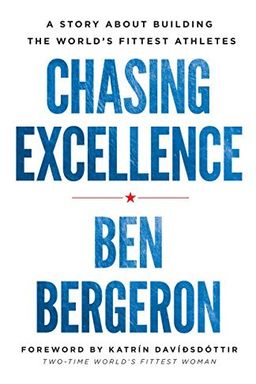
Chasing Excellence: The Mindset Behind the World's Fittest Athletes
What does it take to become the absolute best—whether in sport, work, or life? In Chasing Excellence, elite CrossFit coach Ben Bergeron argues that the difference between good and truly great performers has little to do with physical talent or luck. The secret, he says, lies in your character and process—how you think, train your mind, and dedicate yourself to the habits that forge excellence. Bergeron shows that greatness is not reserved for the gifted few but available to anyone willing to master the mental game.
Coaching CrossFit legends Katrín Davíðsdóttir and Mat Fraser to world championships, Bergeron discovered that the fittest athletes on earth share a remarkably consistent mindset. They focus not on winning trophies, but on mastering what’s in their control and acting with intention every day. The book blends gripping stories from the CrossFit Games with timeless lessons that apply to any pursuit—from running a business to raising a family.
The Pyramid of Peak Performance
Bergeron teaches that performance builds like a pyramid. Most people focus only on the top layers—ability and strategy. They chase physical strength, better techniques, or clever tactics. Champions, however, attend just as fiercely to the base: character and process. Without these, no strategy survives adversity. Developing humility, grit, and purpose allows an athlete—or anyone—to stay composed when challenges strike. This foundation supports an obsession with daily improvement rather than a fixation on results.
The Power of the Mental Game
From years inside the crucible of the CrossFit Games, Bergeron shows that mental toughness is a skill you can train. Traits such as commitment, positivity, confidence, control, and resilience can all be strengthened through deliberate practice. These aren’t vague slogans; they’re disciplines built one rep at a time. Katrín’s rope-climb failure in 2014, which cost her a spot at the Games, became the seed of her future victories because she and Ben learned to treat adversity as training.
In the same way, Mat Fraser’s decision to practice sprinting with high schoolers—even when it bruised his ego—embodies true humility. Both athletes learned that every weakness is an opportunity to get better, not a verdict on who you are. This mindset aligns with business theorist Chris Argyris’s concept of double-loop learning: the most successful individuals look inward, own their shortcomings, and continuously adapt.
Excellence as a Process, Not an Outcome
The heart of Bergeron’s philosophy is simple: focus on the process, not the prize. Borrowing from coaches like Nick Saban and Bill Belichick, he insists that you can’t control outcomes—only the decisions you make today. Champions don’t visualize standing on podiums; they focus on showing up for every practice and giving their full effort to each rep. When you do that long enough, excellence becomes almost inevitable.
Success, Bergeron reminds us, “is a decision, not a gift.” It’s found in how you breathe through the hardest moments, how you turn the page after setbacks, and how you define victory in your own terms. By the end of the book, “chasing excellence” feels less like a sports motto and more like a philosophy of life—about living deliberately, embodying your values in every action, and loving the pursuit itself more than the result.