
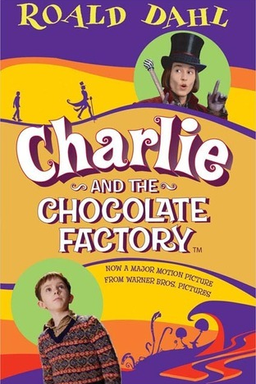
Charlie and the Chocolate Factory cover

Charlie and the Chocolate Factory

by Roald Dahl

In Roald Dahl''s timeless classic, young Charlie Bucket''s adventure inside Willy Wonka''s magical chocolate factory serves as a profound exploration of wealth and virtue. Amidst fantastical surroundings, Charlie exemplifies integrity and humility, teaching readers the true essence of happiness and success in the face of materialism.

Greed, Wonder, and the Moral Imagination of Childhood

Have you ever tasted something so wonderful that for a moment it felt like magic? Imagine living in a world where that magic comes alive—a place where rivers flow with chocolate, where imagination is an art form, and where goodness wins over greed. In Charlie and the Chocolate Factory, Roald Dahl invites you into that world, not merely to delight in its sugary marvels but to ponder the sharp moral lessons hidden beneath each fantastical invention.

At its heart, the book is a moral fable disguised as a child’s adventure. Dahl contends that the contrast between innocence and corruption—between Charlie’s humble goodness and the other children’s excesses—reveals the dangers of modern materialism and the enduring power of imagination and virtue. Through Willy Wonka’s mysterious factory, the author constructs a landscape of temptation and reckoning, where each room mirrors a vice and every consequence feels earned.

A Factory Built on Dreams and Discipline

The core idea is simple yet profound: life rewards curiosity, empathy, and integrity while punishing selfishness and gluttony. The factory, portrayed as both paradise and labyrinth, is more than the setting for a tour—it’s a character itself. Its chocolate rivers, edible landscapes, and singing Oompa-Loompas exemplify human invention taken to its eccentric extreme. But like a fairy-tale castle, it tests each visitor through trials of temptation. Dahl argues that imagination, when divorced from morality, collapses into chaos. Only the pure-hearted can handle wonder without being consumed by it.

Children as Mirrors of Society

Five children are chosen to enter Willy Wonka’s world—the greedy Augustus Gloop, the spoiled Veruca Salt, the compulsive gum-chewer Violet Beauregarde, the television-obsessed Mike Teavee, and the impoverished but kind Charlie Bucket. Each child represents a human failing magnified by absurd humor. Augustus’s gluttony sends him up the chocolate pipe; Veruca’s arrogance lands her down a rubbish chute; Violet’s competitiveness turns her into a blueberry; Mike’s obsession with screens shrinks him to toy size. Meanwhile, Charlie’s modesty and gratitude shield him from harm and elevate him above the rest.

Dahl uses these figures as moral archetypes—echoing the tradition of cautionary tales from the Brothers Grimm or even older parables. Each downfall is poetic justice that teaches the reader, directly and vividly, that indulgence and entitlement lead to ruin. By contrast, Charlie’s triumph feels like a celebration of ethical simplicity amid a noisy, seductive world. (Like C.S. Lewis’s Narnia stories, Dahl blends fantasy with spiritual metaphor—purity triumphs not because it’s clever, but because it’s good.)

Willy Wonka: The Trickster Mentor

Willy Wonka himself is the book’s most fascinating enigma—both magician and moralist. He embodies the creative drive and eccentricity of the inventor, operating outside ordinary society. His factory runs on mystery; his workers, the Oompa-Loompas, are loyal artisans who devote themselves to craft and song. Yet Wonka’s temperament swings between playful and severe. He laughs at tragedy, disciplines through humor, and rewards obedience with generosity. He tests character through marvels—his factory functions as a moral stage where delight and danger coexist.

If you look closely, you’ll see that Wonka represents the archetype of the creative genius—a figure who, like Goethe’s Faust or Mary Poppins, transforms reality through imagination but demands moral awareness. His brand of teaching is Socratic in disguise: every consequence is both punishment and revelation. You can taste wonder only if your soul is clean enough to digest it.

From Poverty to Wonder: Why It Matters

Charlie’s journey answers a question that resonates deeply with readers young and old: can simple goodness survive a world obsessed with excess? Dahl’s answer, delivered through laughter and spectacle, is a resounding yes. In fact, it’s the only kind of goodness that can endure. The Bucket family’s poverty—sleeping on mattresses, eating cabbage soup—contrasts sharply with the richness of Wonka’s factory. Yet this deprivation births imagination and gratitude. In reward, Charlie inherits not just a business but a philosophy: creativity and morality must coexist.

Ultimately, Dahl argues that childhood wonder, when fused with moral integrity, can renew the world. Like candy itself, imagination is intoxicating—but its sweetness must be tempered by conscience. The book’s final vision, of Charlie voyaging into the sky with his family, elevates humility into cosmic victory: the good heart rises above all distractions.

In the end, the story’s lesson is clear: goodness, not greed, is the true golden ticket. Dahl reminds you that the most magical factory is not one that makes chocolate—it’s the imagination itself, guided by kindness and curiosity.


Charlie Bucket's Quiet Strength

Charlie Bucket may be small, poor, and hungry, but his story radiates extraordinary moral power. Dahl portrays Charlie as a child whose humility and inner warmth allow him to survive psychological and literal tests in a landscape built for temptation. Living with six family members in a cramped wooden house, he endures poverty with quiet dignity. There is never resentment in Charlie—only longing, and beneath it, gratitude for small joys, like a single chocolate bar on his birthday.

Virtue as Resistance

In a world of excess, Charlie becomes a symbol of moral resistance. His hunger is both physical and metaphoric—a desire for nourishment that money cannot buy. Unlike Augustus Gloop, who gorges mindlessly, Charlie savors each bite. His patience transforms want into discipline, and that discipline becomes survival. When he finally discovers the golden ticket, it’s not luck alone—it’s fate rewarding perseverance. His family’s warmth amplifies this resilience: Grandpa Joe, fragile but spirited, mirrors Charlie’s imagination, proving that inner richness transcends external poverty.

Testing Innocence Through Temptation

Each child in the factory fails because of moral blindness. Charlie’s strength lies in his awareness—he sees temptation but doesn’t grab it. In the chocolate river scene, for instance, he watches Augustus fall but doesn’t mock him. In the Inventing Room, he listens and observes, curious without greed. Dahl crafts him as the antithesis of modern consumer behavior: he values experience over possession, wonder over ownership. This perspective turns Charlie from spectator into inheritor; he respects magic enough to deserve it.

The Humility That Builds Legacy

By the story’s end, Charlie’s humility earns an unimaginable prize—the factory itself. But Dahl reminds you that Charlie doesn’t desire wealth or status; he desires belonging. When Wonka declares he will give him everything, Charlie’s first thought is of his family. This act transforms victory into compassion. The moral, echoing Dickens’s emphasis on empathy in A Christmas Carol, reveals that generosity is the true language of survival.

Charlie teaches that goodness doesn’t roar; it waits. And in times of excess, the child who knows how to wait is the one prepared to inherit wonder.


Willy Wonka's Strange Genius

Willy Wonka is one of literature’s most eccentric creations—a figure who transcends the boundaries between inventor, magician, and philosopher. Dahl depicts him as both delightfully unpredictable and morally absolute. His factory runs more like a living moral laboratory than a business. Every invention reflects his belief that creativity demands discipline, and each punishment mirrors his insistence that art should reward only the virtuous.

The Magician of Morality

Wonka is a modern-day trickster, blending humor with judgment. He sings, dances, and jokes through disasters, turning each child’s downfall into an object lesson. When Augustus falls into the chocolate river, Wonka’s laughter masks wisdom: indulgence drowns wonder. When Violet turns blue from chewing gum, Wonka’s warning—“I haven’t got it quite right yet!”—feels like divine irony; human arrogance ruins beauty by pushing past its limit. Dahl’s decision to make Wonka simultaneously joyful and terrifying reinforces his role as moral alchemist—transforming folly into understanding through spectacle.

Inventing as Ethical Art

Wonka’s creations—Everlasting Gobstoppers, Hair Toffee, Fizzy Lifting Drinks—are metaphors for human invention itself. Each promise wonder, but misuse breeds chaos. By situating art and science in an ethical framework, Dahl distinguishes imagination from irresponsibility. Wonka becomes a teacher of creative restraint. He rewards curiosity but condemns greed, warning that fascination must serve harmony, not appetite. This theme parallels real-world innovators who caution that progress without compassion leads to destruction (a thought echoed by Mary Shelley in Frankenstein).

The Mentor Who Tests

Behind his flamboyance, Wonka plays the archetypal mentor—testing virtue through temptation. His decision to offer the factory to a child reveals his idealism: only innocence can sustain invention without corruption. He’s not seeking heirs with ambition but heirs with gratitude. Every question he asks—“Can you keep up? Can you listen?”—is spiritual as well as practical. He’s teaching moral imagination, not business management. Dahl thus uses Wonka as an allegory for creative integrity—the kind of leadership that values wonder over profit.

In Wonka’s world, genius is measured not by output but by empathy. The true artist, Dahl implies, is one who guards wonder from greed.


The Downfalls of the Four Children

The heart of Dahl’s fable beats strongest in the four moral failures that punctuate the factory tour. Each child—Augustus, Veruca, Violet, and Mike—embodies a corrupt modern appetite. Dahl doesn’t preach abstract morals but dramatizes them through unforgettable visual irony. Their fates are exaggerated, but their flaws are painfully recognizable. In their vanity, greed, and impulsiveness, we see society’s obsession with consumption and authority.

Augustus Gloop: The Devourer

Augustus represents gluttony, consuming without thought. His fall into the chocolate river serves as a metaphor for being swallowed by desires. Dahl’s humor makes it clear—the one who lives only to eat eventually becomes consumed himself. Like modern overconsumption, his appetite ignores consequence. Wonka’s calm detachment during the event reflects the indifference of justice: nature itself corrects imbalance.

Veruca Salt: The Spoiled Tyrant

Veruca personifies entitlement shaped by indulgent parenting. Her insistence—“I want it now!”—shows materialism at its loudest. The moment she demands a trained squirrel, Dahl uses absurdity to highlight real moral collapse. When the squirrels test her and throw her down the garbage chute, the symbolism deepens—selfishness literally leads to disposal. In a society of instant gratification, Veruca’s fall warns against mistaking possession for love.

Violet Beauregarde: The Competitor

Violet’s mania for records and gum-chewing mirrors obsession with status. Her transformation into a blueberry is the novel’s most grotesque metaphor for vanity turned disease. Dahl targets ambition without empathy, illustrating that self-centered success inflates the ego until it bursts. This scene reads like satire on branding and perfectionism—the modern drive to stand out at any cost.

Mike Teavee: The Technology Addict

Mike’s obsession with television frames the book’s most prophetic warning. His shrinking after being sent by screen represents how mass media reduces intellect and imagination. Dahl’s critique feels timeless: technology distracts rather than enlightens. The Oompa-Loompas’ final song rails against television’s power to “rot the senses in the head.” In modern reading, this makes Mike a precursor to social-media overstimulation—the child consumed by screens rather than chocolate.

Taken together, these downfalls form Dahl’s moral orchestra. They show that innocence isn’t ignorance—it’s wisdom untarnished by excess.


The Oompa-Loompas and Moral Music

The Oompa-Loompas, the factory’s mysterious workers, perform more than labor—they function as the chorus of conscience. Their whimsical songs punctuate every moral lesson, echoing theatrical tradition from Greek drama to opera. In Dahl’s hands, they become poetic commentators who transform punishment into artful storytelling. Their rhythmic refrains mock vice while reaffirming virtue, keeping the tone playful but the message sharp.

The Ethical Undercurrent

Whenever a child meets disaster, the Oompa-Loompas emerge to distill the moral essence in rhyme. Their songs aren’t mere entertainment—they compress the book’s philosophy into lyrical parable. When Augustus falls, they chant against gluttony. When Violet swells, they condemn gum addiction. When Veruca falls, they critique spoiled parenting. And in Mike’s fall, they attack the hypnosis of television. This structure turns the novel into a cycle of musical morality, like Dante’s poetic punishments rendered in rhyme.

Satire Disguised as Cheer

What makes these songs remarkable is their tone—they’re cheerful about catastrophe. Dahl uses this contrast to expose how moral correction, though harsh, feels restorative. Through humor, the Oompa-Loompas soften consequence into wisdom. They model Wonka’s philosophy: lessons are sweeter when sung. Like teachers in disguise, they make ethics digestible. Their playfulness protects the reader from despair, allowing moral awareness to coexist with joy.

The Voice of Craft and Community

On another level, the Oompa-Loompas represent the humble artisans behind creativity. They embody friendship, loyalty, and shared purpose—qualities that the selfish children lack. Their grateful songs about cocoa beans remind you that wonder requires cooperation. In their harmony, Dahl offers his vision of ethical community: happiness is collective effort, not competition.

In every lyric, Dahl fuses laughter with philosophy—because morality, when sung with joy, becomes not punishment but celebration.


The Final Gift: Imagination as Inheritance

The book’s conclusion reframes the story from a contest into a spiritual inheritance. When Willy Wonka grants Charlie the factory, Dahl transforms material reward into moral rebirth. It’s not about wealth—it’s about continuity. The gift signifies trust in innocence to renew creativity. For Wonka, giving the factory to Charlie means ensuring that imagination remains guided by empathy. The factory becomes a metaphor for humanity’s collective dream—the endless capacity to make sweetness from struggle.

Transcending Possession

What makes the ending powerful is its rejection of greed even in victory. Charlie doesn’t rejoice at owning something; he rejoices at sharing it. He immediately thinks of his family, inviting them to live within the factory walls. The final image—Charlie’s house lifted skyward in the Great Glass Lift—symbolizes moral ascent. He’s not ascending into privilege but into perspective, joining Wonka as steward of imagination rather than owner of goods.

A Legacy of Wonder

Dahl closes the story with a message about creative inheritance: the next generation must protect wonder from cynicism. The factory isn’t just a workplace—it’s a sanctuary for curiosity. Wonka’s choice proves that creativity thrives when guarded by innocence. In giving Charlie the keys, Dahl suggests that only those uncorrupted by excess can sustain progress ethically.

From Sweetness to Wisdom

As the family ascends, the narrative transcends the physical world—the literal sweetness becomes philosophical sweetness. The impoverished child now embodies divine creativity, resembling the archetypal “chosen one” in myths who transforms deprivation into blessing (as seen in fairy-tale heroes like Cinderella or David Copperfield). The Great Glass Lift symbolizes transparency of conscience: creativity can soar safely only when it’s open, honest, and good.

By giving imagination to the righteous, Dahl argues that the sweet taste of goodness is the only flavor that never fades. Wonder, when inherited ethically, becomes eternal.

Dig Deeper

Get personalized prompts to apply these lessons to your life and deepen your understanding.

Go Deeper

Get the Full Experience

Download Insight Books for AI-powered reflections, quizzes, and more.