
Idea 1
Changing Your Questions to Change Your Life
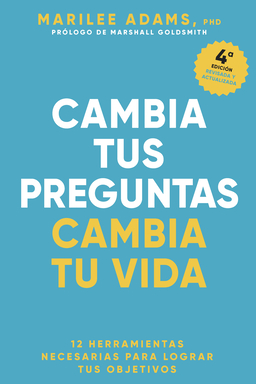
Have you ever caught yourself spiraling in frustration, asking things like “What’s wrong with me?” or “Why can’t I get this right?” Dr. Marilee Adams believes that the quality of the questions you ask—especially the ones you silently ask yourself—directly shapes the quality of your life. In Change Your Questions, Change Your Life, she argues that questions are not just tools for gathering information; they are the levers that drive awareness, behavior, relationships, and results. Shift your questions, and you can shift everything.
Adams introduces a practical methodology she calls Question Thinking (QT)—a framework for becoming conscious of the questions running your life and learning how to reprogram them for better outcomes. At the heart of QT lies the belief that your thoughts take shape in the form of questions, whether you realize it or not. Ask judgmental or self-defeating ones, and your brain naturally goes searching for negative answers. But ask empowering, learner-oriented questions, and you literally open new possibilities—internally, in your leadership, and in your relationships.
A Modern Fable About Rethinking Your Thinking
Rather than writing a textbook, Adams teaches her ideas through a fable about Ben Knight, a capable but struggling new executive whose career and marriage are both hanging by a thread. Ben is technically brilliant—“the Answer Man”—but when his promotion exposes his lack of people skills, he nearly quits. His boss, Alexa Harte, refuses to accept his resignation and instead sends him to her own mentor, the wise executive coach Joseph S. Edwards. Through Joseph’s coaching, Ben learns to replace his need for answers with an appreciation for powerful questions, discovering not only how to save his career but how to rebuild his relationship with his wife, Grace.
Each session between Ben and Joseph unfolds like a masterclass in self-awareness and leadership. We watch Ben move from being reactive, defensive, and judgmental—a “Judger”—to being open, curious, and collaborative—a “Learner.” As this shift takes root, he transforms how he leads, listens, and loves. Adams’s storytelling makes abstract psychological principles vivid and deeply human.
The Two Paths: Learner and Judger
One of Adams’s central metaphors is the Choice Map, a visual model showing two diverging mental roads: the Learner mindset and the Judger mindset. At any moment, you can choose which road to travel. The Judger path begins with reactive thoughts—“Whose fault is this?” or “Why can’t they do anything right?”—and ends in what Adams calls the “Judger Pit,” a place of defensiveness, blame, and limitation. The Learner path, by contrast, starts with choice and curiosity—“What can I learn from this?” or “What’s possible now?”—and leads to collaboration, innovation, and constructive action.
“Either you have your questions, or your questions have you.” – Marilee Adams
Using this model, Adams helps readers become conscious of how easily we slip into Judger mode—snapping at coworkers, second-guessing ourselves, or shutting down new ideas. The first step in transformation is awareness: noticing when we’re operating from Judger, then using deliberate “Switching Questions” (like “Am I in Judger?” or “What else could be true?”) to steer ourselves back to Learner mode.
From Self-Coaching to Leadership
What begins as a personal journey becomes a leadership manual. Adams shows how Question Thinking can elevate whole teams and organizations. When Ben starts applying QT at work, his group’s morale and results transform—culminating in a powerful tool called Q-Storming, a group process that replaces brainstorming for answers with brainstorming for better questions. This method ignites creativity, ownership, and innovation, turning toxic team cultures into collaborative learning environments.
Later, Ben even helps his team use Question Thinking to turn a failing project into a triumph, and eventually becomes the company’s Chief Question Officer—a symbolic culmination of his metamorphosis from answer-giver to inquiry-driven leader. Adams integrates insights from neuroscience (including brain reactions in “Judger hijacks”), emotional intelligence (Daniel Goleman’s work), and mindset research (Carol Dweck) to show how changing our mental questions reshapes both emotional and neurological pathways.
Why This Matters Now
In today’s fast-changing, information-saturated world, leaders and individuals alike are often overwhelmed by complexity. Adams argues that judgemental, reactive thinking only amplifies this chaos. The Learner mindset, on the other hand, fosters adaptability, empathy, and collaboration—the very skills demanded by modern leadership and life. Whether you’re managing a company, a relationship, or your own self-doubt, the ability to pause, ask mindful questions, and choose your mindset determines your effectiveness and happiness.
Ultimately, Change Your Questions, Change Your Life isn’t just about asking better questions—it’s about transforming the way you think. When you consciously shift from “Who’s to blame?” to “What can I learn?”, you move from fear to possibility, from reaction to creation. As Ben discovers—and as Adams affirms—you don’t need all the answers to change your life. You just need the right questions.