
Idea 1
The Making of a Modern Consort
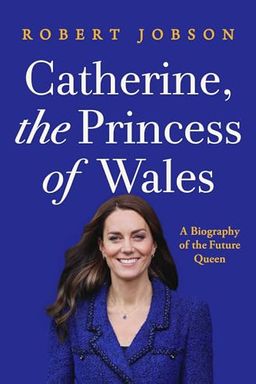
How do you future-proof an ancient institution in a democratic, digital age? This book argues that Catherine, Princess of Wales, is the monarchy’s most fully realized answer so far: a commoner-turned-consort who blends relatable roots, strategic restraint, and evidence-based philanthropy to modernize soft power without breaking tradition. It contends that her story is not a fairy tale but a blueprint for institutional renewal—where personal discipline, careful messaging, and long-term social investment become the new royal toolkit.
Across Catherine’s trajectory—Berkshire childhood, St Andrews romance, the 2011 Westminster Abbey wedding, three children, and the Princess of Wales title—you see an evolving model of public leadership. The book’s thesis is that three currents shape her role: shifting social norms around royal marriage, relentless media dynamics that force new privacy and communications strategies, and a philanthropy agenda that treats convening power like a policy lever (not merely patronage). To understand her impact, you track how she adapts in moments of stress: paparazzi clashes, the 2012 Closer lawsuit, the 2020 pandemic pivot, the Caribbean tour backlash, and the 2024 health crisis communications challenge.
A century of shifting expectations
Once, royal marriages were diplomatic chess moves; now, they’re exercises in democratic optics. Catherine’s ascent—alongside peers like Mary Donaldson (now Queen Mary of Denmark) and Crown Princess Mette-Marit of Norway—signals that commoners can bolster legitimacy by bringing competence and relatability. Her mixed lineage (coal miners and the Earl of Shelburne) and her parents’ enterprise (Carole’s Party Pieces) read as a cultural bridge: middle-class values and elite readiness in one package (a contrast to morganatic anxieties that constrained earlier eras).
From private individual to public instrument
Catherine’s early years—Jordan nursery, Marlborough sport, Art History at St Andrews—equip her for the Crown’s most human tasks: empathy on walkabouts, resilience in crises, and a grounded family life that doubles as constitutional messaging. The book shows how athletic teamwork, academic rigor, and a “simple things” family ethic translate into a calm, prepared public manner. When you watch her handle public duty, you see a playbook of preparation, modesty, and long-term consistency.
Media pressures and legal guardrails
Modern royalty lives and dies by the lens. Catherine and William learn that the line between access and intrusion must be actively policed—sometimes with hard law. From the ‘Waity Katie’ tabloid era and paparazzi swarms to the Closer trial in Nanterre (lawyer Aurélien Hamelle: “a young woman, not an object”), the couple craft a policy: protect dignity and children’s privacy at almost any cost. Those choices reshape press practices and set a tone for an institution still haunted by Princess Diana’s experience.
Soft power as a measurable enterprise
The Crown’s relevance depends on turning symbolism into social value. Catherine’s laser focus on the early years—via the Royal Foundation Centre for Early Childhood, “5 Big Questions,” and “Big Change Starts Small” (with Harvard and LSE)—treats convening power like an engine for systems change. Tours, fashion diplomacy, and the “Kate effect” amplify the signals; research partnerships ground the effort in evidence (compare this blend of profile and rigor with modern philanthropy’s shift toward outcomes-based funding).
Crisis as classroom
COVID accelerates her evolution. With travel halted, Catherine moves to digital service and launches Hold Still, a 31,000-entry national photographic archive that captures kindness, grief, and resilience. You watch a creative, empathetic method of public leadership emerge—intimate, participatory, and shaped by ordinary voices—while remaining consistent with the Crown’s nonpartisan stance.
The fragility of image and the price of missteps
The same control that protects the family can backfire. The Photoshop flap (“Kategate”)—agencies rejecting an edited family photo during her recovery—shows how curated authenticity must be verifiable. Caribbean tour optics (a mesh-fence handshake, protests, leaders pressing for reparations) reveal that soft power collapses when symbolism misreads history and politics. These stumbles force a “Cambridge way” reset: more proactive briefings, better local consultation, and faster acknowledgement of misjudgments.
Core argument
Catherine’s life is a case study in how a constitutional monarchy adapts: open the gates to talented commoners, defend humane privacy norms, and convert celebrity attention into measurable social dividends—while learning quickly from communications failures.
This matters for you because it models leadership in complex systems: start with credibility and restraint, invest in a long horizon, and respect that optics can erase outcomes if context is mishandled. The book suggests that the future of monarchy—and by extension any legacy institution—hinges on people who can balance intimacy with distance, science with story, and family with state. Catherine’s apprenticeship, through triumphs and missteps, maps that delicate balance.