
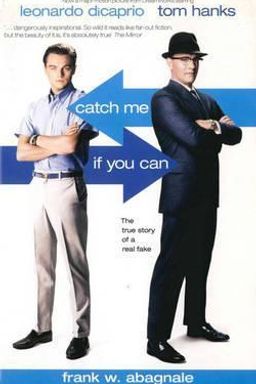
Catch Me If You Can cover

Catch Me If You Can

by Frank Abagnale and Stan Redding

Catch Me If You Can is the riveting true story of Frank Abagnale, a master con artist who posed as a pilot, doctor, and lawyer, swindling millions. His journey from deception to redemption offers a fascinating glimpse into the art of the con and the vulnerabilities of human nature.

The Irresistible Art of Deception

Have you ever admired someone who could walk into a room and instantly command attention, no matter their true credentials? In Catch Me If You Can, Frank W. Abagnale—along with co-author Stan Redding—turns that alluring charisma into an unforgettable portrait of deception, ambition, and survival. He argues that the art of the con is not just about tricking others but about mastering illusion itself—the ability to read, mimic, and manipulate the codes of trust that govern human societies.

Through frank storytelling and a flair for self-aware irony, Abagnale reveals the psychology behind what drove him to defraud banks, airlines, and universities while masquerading as pilots, doctors, professors, and lawyers—all before turning twenty-one. His core contention is startling: beneath his life of crime lay not pure greed but the manic appeal of reinvention, the need to control perception when his real world—broken parents, loneliness, alienation—felt uncontrollable.

Fraud as Performance Art

Throughout the book, Abagnale approaches forgery not as mere financial theft but as a theater of human confidence. Each disguise—Pan Am pilot, Harvard-trained lawyer, pediatrician—becomes a performance in which he plays the role others want to believe. Like a method actor, he studies details, tone, and jargon until his deceptions feel authentic even to himself. In a sense, his crimes blur into the universal human tendency to perform identity. We all, Abagnale implies, wear masks—his were simply more audacious.

This idea connects with philosophers like Erving Goffman (The Presentation of Self in Everyday Life), who argued that society itself is a stage of perpetual role-playing. Abagnale’s genius was to exploit that theater—to weaponize belief in uniforms, titles, and credentials. He reminds you how easily trust can be faked when symbols (a pilot’s badge, a doctor’s tone, a lawyer’s confidence) become more persuasive than substance.

Between Charm and Crime

While his escapades sound glamorous—jetting across continents, romancing stewardesses, cashing counterfeit checks—his internal narration exposes a darker tension. For every thrilling con, there’s a moral void: sleepless nights, fear of discovery, and the ache of loneliness. Abagnale’s lies begin after the pain of his parents’ divorce, a wound that sent him spiraling into rebellion. What starts as small delinquency soon scales into global deceit. You realize his brilliance in human psychology is matched only by his desperation to be someone.

He becomes an icon of modern imposture—a blend of Jay Gatsby’s romantic self-invention and Machiavelli’s cunning pragmatism. But unlike Gatsby, Abagnale survives his sunset. His eventual capture—and later redemption as a consultant for the FBI’s Financial Crimes Division—marks the rare arc where intellect born in criminality transforms into social good.

Trust, Technology, and the Human Factor

At its heart, Catch Me If You Can anticipates our own world’s dilemmas about identity and authenticity. Abagnale’s schemes—pilfering Pan Am payroll checks with nothing more than art supplies and charm—underscore how fragile systems of trust can be. For him, every fraud exploits a simple truth: people trust appearances more than they question procedures. Today, that insight feels prophetic. In the age of phishing scams and digital fraud, Abagnale’s analog cons reveal psychological roots that still endure.

The book also exposes how institutional arrogance helps con artists thrive. From banks that ignored red flags to airlines flattered by his “professionalism,” Abagnale’s success depended on how authority figures feared embarrassment more than loss. (Charles Ponzi, Bernie Madoff, and even modern deepfake scammers echo the same dynamic: people want illusions of legitimacy.)

The Long Search for Redemption

When the glamor fades, the real narrative becomes penitence. Prison in Perpignan—a French hellhole described in grotesque, harrowing detail—finally strips him of illusion. From there to a humanitarian Swedish system and later to his rehabilitation through self-education and cooperation with the FBI, the book arcs from moral collapse to ethical rebirth. Abagnale’s genius, he claims, can find purpose only when aligned with truth rather than deceit. The irony is that his criminal mindset becomes law enforcement’s best weapon.

Ultimately, Catch Me If You Can is about the seductive power of belief: how humans crave stories of success and sophistication—how we fall for appearances—and how one man’s pathological need to belong can mirror society’s obsession with status. Beneath the crime thriller, the book asks a deeper question: In a world obsessed with image, can anyone truly be authentic without pretending?

That question—posed through Abagnale’s life—invites you to examine your own relationship to deception. Every title, degree, or LinkedIn profile is a mini performance. Frank Abagnale’s tale reminds you that truth and fraud may differ only by intention—and that even the greatest impostor can be caught if, deep down, he’s still chasing himself.


Early Origins of a Master Impostor

To understand Frank Abagnale’s extraordinary crimes, you must first meet the teenage boy who mastered manipulation long before he learned forgery. His story begins not in airplanes or law offices, but in the fractured suburbs of New York, where his parents’ divorce planted seeds of rebellion and loneliness. At fifteen, Frank discovered that deception could offer comfort—a skill set to control an uncontrollable world.

The Broken Home That Made a Con Artist

Abagnale’s account of his family separation is poignant. His father, a charming Republican businessman, and his French-Algerian mother created an environment of luxury until their marriage collapsed. When his father lost his business and social sheen, young Frank felt unmoored. That instability became the psychological trigger for his “make-believe” life. To a child who worshiped his father, deception began as imitation. His first con was, chillingly, against his own dad—defrauding him with a Mobil credit card scam worth $3,400.

The audacity of this first crime—a teenager charging tires and batteries he resold for cash—reveals the pattern that defines Abagnale’s adult life: clever improvisation combined with unshakable confidence. In his father’s gentleness (he laughs instead of punishes him), Frank discovers the easiest prey are those who trust absolutely. “Blind trust,” Abagnale writes, “is the mark of a perfect pigeon.”

Learning to Read People

What makes this episode astonishing is not the theft but the psychology. Even before mastering checks and credentials, Abagnale recognized one rule every con artist knows: play to people’s emotions, not their logic. By fifteen, he was studying reactions—how charm disarms authority and how guilt can be reframed as persuasion. This intuitiveness made him formidable. He saw emotion as a system of codes that could be hacked, long before “social engineering” became a term in cybercrime.

From candy shop pranks to teenage identity manipulation, his Bronxville escapades create an origin myth fit for a con-man archetype: a blend of street smarts, charm, and moral ambiguity. The sympathetic irony is clear—his rebellion was not violent or addictive, but performative. Like a jazz musician riffing on rules, he reimagined social boundaries as improvisations.

Seduction, Status, and the Discovery of Power

In adolescence, Abagnale also discovers another motivation—the magnetic power of attention. His car becomes a “fox trap,” his confidence a magnet for beautiful girls. Sex and status blend into his training as a manipulator. He learns that when you give people what they want—flattery, charisma, aspiration—they’ll give you what you want: trust, money, and silence.

This ability to seduce through symbols carries into all his adult ventures. Whether wearing a pilot’s uniform or a doctor’s white coat, Abagnale turns visual identity into emotional authority. Readers realize that his crimes start not with signatures but with psychology—an insight echoed by modern behavioral experts like Robert Cialdini (Influence), who describes how authority cues trigger compliance even in skeptics.

By tracing these early years, you understand that Abagnale’s later brashness stems from a lonely boy’s wish for control—a mirror of our own tendency to act confident when we feel most insecure. His childhood reveals the blueprint of deception that later conquers banks and governments.


The Pilot Who Couldn’t Fly

Arguably Frank Abagnale’s most iconic con was impersonating a Pan American pilot—a fantasy fueled by his first glimpse of airline crew charisma in New York. This episode defines both his genius and his madness: a teenage runaway who decides that the key to respect and wealth lies in uniform. His pilot persona lasts years, turns him into a celebrity faker, and exposes how appearance outweighs competence in systems built on trust.

A Uniform Is Civilization’s Shortcut

Frank’s decision begins with a simple question to Pan Am headquarters, answered by a helpful employee who unknowingly sets a global fraud in motion. Abagnale uses charm and improvisation to acquire a genuine pilot’s uniform, complete with gold stripes and wings. The incredible part: airline bureaucracy itself enables him. People assume credentials are self-evident—a lesson in how procedural blind spots create opportunity for deception.

From the moment he dons his uniform, his life transforms. Children salute him, stewardesses flirt, hotels give him rooms on credit. It’s the purest form of psychological leverage—status without substance. When another pilot asks, “What kind of equipment are you on?” Frank bluffs, saying “General Electric,” hilariously mistaking “equipment” for engine type. The mistake nearly exposes him but underscores his bravado: bluffing isn’t about knowing facts but performing confidence.

Deadheading Around the World

Soon, Abagnale learns that airline pilots can “deadhead”—ride free in cockpit jump seats. Exploiting this perk, he jets across continents without spending a cent, cashing fraudulent checks at airline counters, hotels, and crew stops. The aviation community’s familiarity becomes its weakness: pilots trust other pilots. Frank blends seamlessly into this fraternity, even learning to speak “airlinese” by dating stewardesses and listening to cockpit banter.

The genius of the con lies less in technical forging than in cultural immersion. He studies habits, slang, and emotional cues until he’s accepted as one of them. In psychological terms (again reminiscent of Cialdini’s authority principle), uniformed confidence triggers deference faster than logic. No one questions credentials when identity feels right.

The Duality of High Life and Hiding

Yet behind the glamor—flying in jump seats and dating international stewardesses—lurks anxiety. He lives “slipperier than a buttered escargot,” forever escaping through windows and rooftops. Admiration from others masks terror within. He admits he “never felt like a criminal,” only a faker chasing belonging. The pilot persona becomes metaphor: soaring above others while fearing every landing.

When he’s finally caught mid-flight, the irony solidifies—his biggest con exposes society’s biggest flaw: a world where credentials are trusted more than character. The uniform gives him respect, but it also becomes his cage. As he later reflects, “Every con needs belief—and sometimes I believed my own illusion most of all.”


From Doctor to Lawyer: The Shape-Shifting Genius

After conquering the skies, Abagnale reinvents himself again—first as a pediatrician in Georgia, then as a Harvard-educated lawyer in Louisiana. These transformations illustrate his escalating boldness and intellectual curiosity: con artistry as education. Instead of stealing cash alone, he starts stealing identity itself, testing the limits of systems that reward titles more than verification.

Impersonating a Pediatrician

In Atlanta, Abagnale moves into a singles complex under the guise of “Dr. Frank Williams.” His neighbor—a real pediatrician—befriends him and unwittingly helps legitimize the fraud by introducing him to a local hospital. There, our con artist uses charm and basic medical reading to secure a position as supervising resident! The trick? He projects authority, humor, and wit, convincing colleagues to handle the real work while he performs the act of supervision.

This part of the book reads like satire of bureaucracy: Abagnale’s medical career depends entirely on others not questioning protocol. His “mistakes”—like referring to newborns with jokes or sending interns to handle emergencies—become seen as eccentricities of an experienced doctor. It’s comic genius born from lethal ignorance. He later confesses, “I didn’t know the difference between a blue baby and a green baby—I thought she was joking.”

Forging a Harvard Law Degree

Not content with medicine, Abagnale’s next identity scales even higher: he forges a Harvard transcript and passes the Louisiana bar exam after failing twice. The fact that he genuinely studies law and eventually passes the bar reveals an astonishing truth—his criminal drive morphs into true intellectual discipline. He’s not only a con artist; he’s a learner addicted to mastery.

Working as an assistant attorney general, he manipulates courtroom decorum with the same performative charm he used in cockpits and clinics. His arrogance, however, becomes his downfall. A Harvard graduate exposes him after noticing inconsistencies in his academic stories—a reminder that expertise without authenticity collapses under scrutiny. His law escapade provides commentary on education itself: credentials often measure persistence, not intelligence.

Reading these chapters, you sense both admiration and horror. He masquerades as paragons of respectability—roles that symbolize authority in society—and reveals how little verification lies beneath. In both professions, people trust confidence more than competence, a theme still resonant in modern impostor culture from Silicon Valley frauds to resume inflation.


Paper Dreams: The Science of Forgery

Beyond his disguises, Frank Abagnale’s technical skill as a forger demonstrates obsession bordering on artistry. His study of checks becomes a meticulous scientific pursuit. He learns to exploit numbers, perforations, paper weight, and typography—turning banking into calligraphy. His ingenuity transforms simple stationery into world-class counterfeit instruments, often flawless enough to fool Chase Manhattan itself.

The Eureka of Eureka

In California’s Eureka, Abagnale invents his masterpiece. By blending art supplies and a model airplane kit, he produces Pan Am payroll checks that fool every teller who sees them. The secret lies in human psychology: tellers see the uniform, not the check. His self-reflection—“It’s not how good the paper looks but how good the man behind it looks”—captures the essence of confidence fraud.

The Numbers Game

His deeper innovation, however, is in statistical forgery. He learns to manipulate Federal Reserve District numbers so that a counterfeit check’s routing confuses computers for days, buying him escape time. This mastery of systemic loopholes anticipates modern cybercrime—where delay equals survival. He explains bank codes and clearing processes with near-academic precision, converting bureaucracy into camouflage.

At this point, Abagnale sees himself as an intellectual outlaw. His joy comes not from money but from beating systems. Like Sherlock Holmes inverted, he views fraud as deduction—the thrill of solving puzzles others don’t even know exist. His later cooperation with the FBI, teaching these same techniques to prevent crime, feels inevitable. “My worst crimes became my best lessons,” he says later. In that transformation lies the seed of redemption.


A Life Caught, Punished, and Reborn

All games of deception end, and Abagnale’s finale plays across prisons from Perpignan to Malmo. If the first half of the book is mischief, the second is endurance: a catastrophic descent through suffering followed by redemption. His capture in France leads to imprisonment so cruel it nearly kills him—an experience that turns psychological glamour into spiritual reckoning.

Hell in Perpignan

The Perpignan chapter remains one of modern nonfiction’s most harrowing prison narratives. Abagnale describes total darkness, filth, starvation, and madness. The French system’s brutality contrasts sharply with the civilized deceit he once practiced. Those months reduce him from godlike manipulator to desperate animal, scoured of ego and illusion. It’s in that hell that his conscience wakes, realizing he’s not beating systems—he’s broken by them.

Mercy in Sweden

Yet the Swedish justice system, humane and rehabilitative, offers counterpoint. When extradited there, he encounters Inspector Jan Lundström, whose kindness and honesty begin his moral healing. The judge who later protects him from harsher countries (by deporting him home) acts as Abagnale’s savior—proof that compassion, not punishment, reforms. The juxtaposition between Perpignan and Malmo embodies Europe’s two judicial philosophies: vengeance vs. reform.

Redemption Through Knowledge

Back in America, Abagnale’s journey concludes with cooperation. After serving four years in Virginia, he reinvents himself as an expert on fraud prevention for the FBI, banks, and corporations. His insight—once criminal—is now civic. The reform feels authentic, not moralistic. He acknowledges the irony: “I went to prison as a criminal and came out a teacher.” His lectures, featured in The Art of the Steal, continue that purpose today.

By the end, Catch Me If You Can becomes less a confession than a psychological study of modern identity. In a world awash with fake credentials and desire for belonging, Frank Abagnale’s evolution—from illusionist to advisor—warns that truthful reinvention demands honesty, not disguise. You can change who you are, he insists—but only once you stop pretending.

Dig Deeper

Get personalized prompts to apply these lessons to your life and deepen your understanding.

Go Deeper

Get the Full Experience

Download Insight Books for AI-powered reflections, quizzes, and more.