
Idea 1
The Art of Presence and Privacy
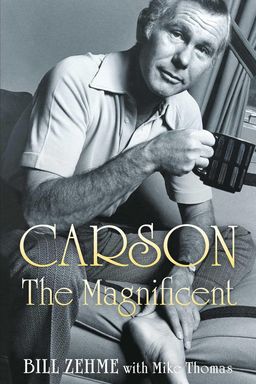
How do you become the most familiar stranger in America—and then choose to vanish? This book argues that Johnny Carson’s lasting power comes from a paradox you can learn from: he engineered nightly intimacy through meticulous craft and ritual while fiercely protecting an interior life. Bill Zehme’s decades-long pursuit—and Mike Thomas’s completion after Zehme’s death—frame Carson not only as a host but as a study in performance, control, and the costs of cultural stewardship.
What made Carson matter
You meet a Midwestern magician-turned-host who designed a nightly world that reassured a country at bedtime. Carson’s Tonight Show isn’t just a program; it’s a ritual machine. From Paul Anka’s theme (reworked as “Johnny’s Theme”) and Ed McMahon’s elongated “He-e-e-e-e-e-e-r-e’s Johnny!” to the end-of-monologue golf swing, every cue told you it was safe to exhale. Carson himself defines the mission plainly on-air: “My job is to give them that feeling—that there will be a tomorrow.” He built that promise through craft—timing, misdirection, restraint—and a trusted team (Ed, Doc Severinsen, producers like Art Stark and Perry Cross, and writers like Michael Barrie and Jim Mulholland) who made spontaneity reliable.
Craft as the invisible engine
Carson’s boyhood magic obsession—performing as The Great Carsoni, hours of card practice, and close-up sessions with Dean Dill and Paul Gertner—taught him the ethic that later governed his hosting: control the audience’s attention with timing and misdirection. He practices omission as a superpower (producer Art Stark calls him “great by omission”): the pause before a punchline, the silent look, the riff he decides not to do. Watch a single date—September 18, 1973—and you see how the ninety-minute rhythm works like clockwork: brassy open, topical monologue, desk bits, elastic guest pacing, band cues, and a communal sign-off. It’s less about jokes than about an emotional architecture you trust every night.
Purpose line
“There will be a tomorrow.” Carson treats late night as civic reassurance, not just entertainment.
The guarded man behind the friendly host
Offstage, Carson is the “ultimate Interior Man.” The iceberg metaphor fits: you see the bright tip on television; the mass below remains cold and private. Midwestern reserve, wartime trauma (recovering decomposed bodies aboard USS Pennsylvania), and perfectionism reinforce the boundary. He moves easily inside the ritual he built but retreats from cocktail chatter and public overexposure. That tension—public warmth, private caution—explains why he makes bold choices later: moving the show to Burbank for control and talent access, negotiating ownership in 1980 (shorter schedule, sixty-minute format, the show’s negatives), and, finally, exiting cleanly in 1992 without a comeback.
The vanish as a final act of craft
When he retires (announced at Carnegie Hall, May 23, 1991), he shocks America less by leaving than by staying gone. He makes no prime-time comeback, appears sparingly (a Simpsons voice cameo, lettered gags to Letterman, Kennedy Center Honors), and repeats his rationale: “I did it.” The Vanish preserves the brand: no diminished returns, no public unraveling. Even as he dreams he’s late for the show, he refuses to dilute the memory. Rick Carson’s death in 1991 and later health struggles (quadruple bypass, emphysema) intensify the private turn. By the time he says “I bid you a very heartfelt good night,” he has choreographed an exit as carefully as he once paced a monologue.
How the biography gets made
Zehme’s method mirrors Carson’s patience. A fan from South Holland, Illinois, he becomes a trusted profiler (Esquire, Rolling Stone, Playboy), collects binders of transcripts, videos, tax returns, and even a canceled $1,500 check from Carson to Doc. He gains backstage access, attends the 1992 finale, and writes the definitive 2002 Esquire profile (“The Man Who Retired”). Grief (his mother’s death), the weight of Carson’s interiority, and later stage 4 cancer stall the book—until Mike Thomas, his friend and longtime research partner, finishes it after Zehme’s 2023 death. The biography becomes a second story: how to render an interior man faithfully without violating the guardrails he set. (Note: This echoes Gay Talese’s long-haul reporting ethos but with heavier archival ballast.)
Why it matters to you
If you perform, lead, or build public experiences, Carson teaches you to design rituals that stabilize people, to prize timing and omission, and to guard a private core. If you manage influence, he shows how gatekeeping carries ethical weight and security risk (FBI stings, weekly threats). If you plan an exit, he offers a rare template: leave at your peak, curate silence, and let the work stand. And through Zehme’s odyssey, you see that telling a life requires persistence, empathy, and the humility to let the subject keep some mystery.