
Idea 1
Beating Career Fear in the Age of Disruption
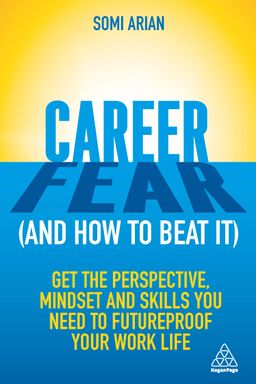
Have you ever felt unsure whether your career will survive the next wave of technological change? In Career Fear (and How to Beat It), Somi Arian argues that this uncertainty—what she calls “career fear”—is the defining challenge of our time. Automation, artificial intelligence (AI), and the rapid digitalization of every industry are radically transforming what work is, what roles we play in it, and how we define success. Arian contends that the way to thrive in this chaos is not by resisting technology, but by mastering uniquely human capabilities—perspective, mindset, and skills—that machines still cannot replicate.
Drawing on her journey from war-torn Tehran to becoming a technologist, philosopher, and entrepreneur in London, Arian explores how our obsession with speed and comparison in the digital age erodes clarity and self-knowledge. She asks readers to slow down and reclaim their sense of perspective—to see where work came from, where it’s going, and what our distinct human strengths really are. This isn’t just a manual on how to keep your job; it’s a philosophical playbook on how to find meaning and purpose in a world where the machines are catching up.
Perspective: Understanding Work’s Evolution
Arian begins by tracing the story of work from the hunter-gatherers to today’s knowledge economy. She highlights that our relationship with labor has always been love-hate: early people avoided it, Industrial Revolution workers feared it, and modern professionals identify with it. Understanding that context helps you see that every upheaval—from the first iron forge to Ford’s assembly line—felt as destabilizing as today’s AI revolution. The difference now is the pace. Where the first Industrial Revolution unfolded over seventy years, digital disruption happens in just months.
In this historical journey, Arian reveals a repeating cycle of innovation, disruption, and revolution. Each wave—mechanization, mass production, computerization, and now AI—reshapes what humans contribute. The question isn’t if machines will change work, but how we can redefine our contribution in response. The new frontier, she argues, is not about physical or even purely cognitive skill but emotional, ethical, and contextual intelligence—the abilities that make us human.
Mindset: Knowing Yourself Amid Acceleration
“Know thyself,” Socrates urged, but Arian points out that this is harder than ever in an age driven by algorithms. Social media amplifies peer pressure, creating artificial benchmarks of success—being a “30 under 30” entrepreneur or accumulating followers instead of fulfillment. To beat career fear, Arian says you must define success on your own terms. She divides her approach into three inner pillars: knowing your personality traits (through the OCEAN model of Openness, Conscientiousness, Extraversion, Agreeableness, and Neuroticism), identifying your motivations (achievement, power, or affiliation), and clarifying what success truly means for you beyond money or status. The result is a grounded personal philosophy that can withstand the turbulence of technological change.
Arian’s own story illustrates this lesson. Despite surviving disownment, teaching herself English, and thriving in global organizations, she still felt inadequate because she measured herself against artificial milestones. Her turning point came when she realized that fulfillment lies in solving real problems for others, not chasing recognition. That insight forms the foundation of her mindset framework: align your career with service, purpose, and empathy, rather than speed and ego.
Skills: The Human Edge in the Machine Age
Once you have the right mindset, Arian argues, you must develop four human skills to stay indispensable: Emotional Intelligence, Critical Thinking, Contextual Creativity, and Mindfulness. These complement, rather than compete with technology. Emotional intelligence allows you to manage your feelings and collaborate empathetically—something algorithms can’t replicate. Critical thinking helps you question biases, spot faulty logic, and interpret probabilities realistically (as Nobel laureate Daniel Kahneman emphasized). Contextual creativity connects insights across fields—turning disruption into opportunity. And mindfulness provides the focus and presence to integrate them all, helping you stay centered amid noise and distraction.
Why It Matters: Redefining Work and Humanity
At its core, Career Fear argues that the future of work isn’t about competing with machines, but about collaborating with them in a human-centered way. Arian envisions a “golden age of work” where automation eliminates drudgery and allows people to focus on meaning, relationships, and creativity. But that vision only becomes reality if individuals and organizations learn to re-humanize time, measure success in healthier ways, and prioritize emotional and ethical intelligence as much as technical skill. This is not utopian thinking—it’s an urgent call for balance between our Apollonian need for order and our Dionysian capacity for flexibility and adaptation (as Nietzsche would describe). Beating career fear, then, is about evolving yourself as fast as the world evolves around you—without losing your humanity along the way.