
Idea 1
The Unimaginable Alternative: Life Under Capitalist Realism
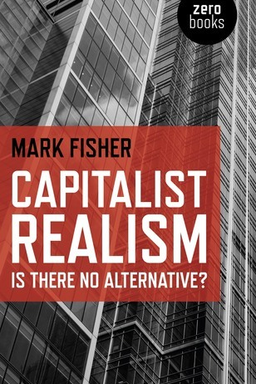
Can you imagine a world without capitalism? In Capitalist Realism: Is There No Alternative?, Mark Fisher asks this haunting question not as a thought experiment but as a diagnosis of our current condition. He argues that our greatest collective failure isn’t accepting capitalism’s flaws—it’s our inability to imagine a different way of life. For Fisher, capitalist realism is not just an ideology; it’s an atmosphere we breathe, the invisible limit of what we consider possible in politics, culture, and everyday experience. Late capitalism, he contends, has so thoroughly colonized our minds that even our dreams, our art, and our rebellions replay its logic.
The Culture of the Impossible
Fisher begins with Alfonso Cuarón’s film Children of Men, in which humanity becomes sterile and society collapses into decay and authoritarianism. Fisher sees this dystopia not as a warning but as a mirror of our world—a place where culture can no longer regenerate itself, where every attempt at innovation feels like a remix of the past. He notes how even “alternative” movements, like indie music or hip-hop, end up reproduced inside capitalist systems as styles and commodities. The future has been privatized. What remains is what he calls a “fugue of repetition”, where novelty is simulated through marketing slogans rather than social transformation.
The Neoliberal Dream and Its Nightmare
Capitalism has survived not by persuasion but by absorbing all alternatives. Fisher draws on scholars like Fredric Jameson and Slavoj Žižek to explain that where Orwell’s totalitarianism ruled through fear, capitalism rules through participation. We buy products to express our individuality. We recycle, donate, and boycott—all while remaining locked inside the same system of consumption. He calls this interpassivity: the idea that the system performs our dissent for us. For example, watching the eco-satire Wall-E may make you feel anti-corporate, yet the same movie is sold by a megacorporation. The catharsis replaces real critique.
Capitalism and the Real
Fisher draws on psychoanalytic theory to show how capitalism presents its order as natural. Depression, bureaucracy, and stress are treated as the result of individual failure, not symptoms of systemic dysfunction. The collapse of alternatives—symbolized by Margaret Thatcher’s mantra “There is no alternative”—has naturalized what he calls a “business ontology,” the belief that everything, even education and healthcare, must function like a market. Against this illusion, Fisher urges a confrontation with the Real: those traumatic truths capitalism cannot assimilate—ecological collapse and mass mental illness among them. These are the cracks where resistance might begin.
The Pathologies of the Present
Through his own experience as a teacher, Fisher explores how capitalist realism shapes education and youth culture. Britain’s students, he observes, are plagued by “reflexive impotence”—the resigned belief that things are bad but that nothing can change. Their passivity is intertwined with anxiety and depression, which Fisher sees as collective symptoms of a social system that privatizes stress. Young people are distracted, endlessly seeking pleasure but incapable of purposeful action. In this way, mental health becomes political: our malaise is not chemical, but structural.
The Bureaucratic Spectacle
Capitalist realism isn’t just ideology—it’s paperwork. Fisher’s chapter on education highlights the explosion of meaningless metrics, targets, and evaluations—a system he calls “market Stalinism.” Bureaucracy doesn’t disappear under neoliberalism; it metastasizes. Teachers and workers are trapped in Kafkaesque circuits of self-surveillance, judged by their compliance rather than their competence. This results in paralysis, what Fisher terms reflexive impotence—a feeling of inevitability that sustains the very institutions it despairs of changing.
The Politics of the Unthinkable
Fisher’s vision is not entirely pessimistic. He sees hope in the cracks of realism—in the rising rates of mental illness, in bureaucracy’s absurdity, and in ecological crisis. These contradictions, he argues, can expose capitalism’s inability to fulfill its own promises of freedom and efficiency. Post-2008, when the state saved the market from collapse, a paradox emerged: capitalism could survive only through collective intervention. Fisher ends by calling for a “new left” that will reclaim the public sphere, confront the structural causes of our despair, and imagine again what capitalism tells us is impossible.
Ultimately, Capitalist Realism is a wake-up call. Fisher’s question—what if there is no alternative?—is meant not as defeat but as challenge. By seeing capitalism as contingent, not permanent, you can begin to imagine otherwise. The book urges you to look at your own exhaustion, your own distractions, not as private flaws but as evidence of a system that has colonized the soul. To reclaim agency, we must first reclaim imagination—and dare to think beyond the end of capitalism itself.