
Idea 1
Capitalism as the Guardian of Freedom
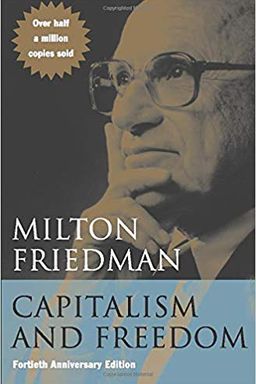
What would happen if every economic decision you made—from how you earn money to what you buy—was dictated by someone else? This question lies at the heart of Milton Friedman’s Capitalism and Freedom, a book that insists that economic liberty is not just about money—it’s about personal autonomy. Friedman argues that capitalism is the foundation of all other freedoms. Without the ability to choose how to work, spend, and invest, you can’t truly choose how to live, think, or speak. Economic freedom, he claims, is the cornerstone of political freedom.
Friedman’s manifesto does more than champion markets—it offers a full blueprint for a free society. Published in 1962, it was radical for its time. Postwar governments were expanding welfare programs, subsidizing industries, and tightening economic control. Against this tide, Friedman stood up to say that such interventions—even when well-intentioned—were eroding the liberties that democracy promised. To him, capitalism was not just an economic system; it was a moral defense of individual choice and responsibility.
Economic Freedom and Political Freedom
Friedman begins by showing that freedom in the marketplace and freedom in politics are inseparable. You cannot have one without the other. The market disperses power: buyers and sellers make decisions independently, without needing government approval. This dispersion of economic authority counterbalances political power and prevents tyranny. In contrast, socialism—whether democratic or totalitarian—concentrates both economic and political power into a single entity, inevitably destroying personal liberty.
He illustrates this with examples: in the Soviet Union, citizens couldn’t freely trade or work outside the state, and their political freedoms vanished alongside their economic rights. Even in Britain after World War II, when exchange controls prohibited citizens from traveling abroad with their own money, Friedman notes that this “economic” restriction was every bit as oppressive as censorship. Limiting trade limits freedom itself.
Government’s Proper Role
Friedman doesn’t call for anarchy. He accepts that government has essential roles: enforcing law and contracts, protecting property rights, and maintaining an honest monetary system. But he insists the state should stay within these boundaries. The moment it tries to control income, prices, or education, it begins dictating how individuals must live. For example, when government sets minimum wages or approves only certain schools, it substitutes compulsion for voluntary agreements. To Friedman, this paternalism—however noble its intent—inevitably undermines freedom.
He emphasizes two constitutional principles: limit the scope of government and disperse power across levels (local, state, and federal). Local governance, he suggests, is healthier because dissatisfied citizens can move—providing natural checks against abuse. Concentrate power in Washington, however, and choice disappears.
Markets as Moral Mechanisms
For Friedman, the market is not cold or mechanical—it’s profoundly moral. It enables cooperation without coercion. Each transaction, freely chosen, benefits both parties. Unlike politics, which requires majorities to enforce conformity, markets allow diversity. If you want a red tie and I prefer blue, we both can have what we want; no vote, no force required. That freedom of choice, scaled up, creates civil peace and innovation. Thus, the market is an ethical system grounded in voluntary consent, not compulsion.
This idea echoes Friedrich Hayek’s warning in The Road to Serfdom: central planning may begin with good intentions but ends with servitude. Friedman updates this insight for a democratic age, showing that advancing welfare through the state often backfires. Whenever governments expand “for our own good,” they erode the freedom they claim to protect.
Why These Ideas Matter Today
Friedman’s argument remains strikingly relevant. In a time when economic interventions are common—subsidies, stimulus programs, or rent controls—his warning resonates: government promises always come at the cost of individual agency. “Freedom is a rare and delicate plant,” he writes; its greatest threat is the concentration of power. Whether that power sits in corporate monopolies or political bureaucracies, it threatens the autonomy that defines a free person.
His legacy endures because he reframed capitalism as more than profit—it’s the architecture of liberty itself. As you read, you’ll see how Friedman applies this principle across education, fiscal policy, welfare, and even labor unions. Ultimately, Capitalism and Freedom argues that if we wish to preserve democracy, we must preserve the marketplace. Every time you spend, save, or invest freely, you are practicing freedom—not just economics.