
Idea 1
Capital, Inequality, and the Logic of r > g
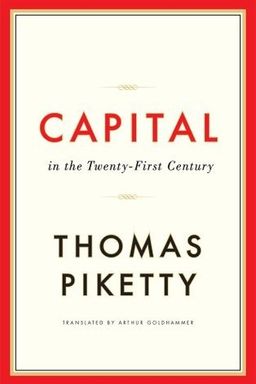
Why do some societies become dominated by inherited wealth while others nurture merit and mobility? In his landmark work Capital in the Twenty-First Century, Thomas Piketty argues that the answer lies in a simple but profound economic inequality: when the rate of return on capital (r) exceeds the growth rate of the economy (g), past wealth grows faster than output and wages, inevitably amplifying inequality and creating a self-reinforcing patrimonial order.
This book fuses economics, history, and politics into a long-run empirical narrative grounded in centuries of data. Piketty’s goal is not mere theorizing but measurement: his team reconstructed income and wealth distributions for over twenty countries using tax archives, estate records, and national balance sheets. That long-run evidence reveals striking U-shaped patterns in both income concentration and the capital/income ratio—from the high inequalities of the nineteenth century, through the mid-twentieth-century compression, to the resurgence after 1980.
The Data Revolution and Its Meaning
You enter the argument through a historical correction: political economy from Malthus to Marx to Kuznets lacked systematic longitudinal data. Kuznets famously proposed his “curve,” a hopeful idea that inequality naturally declines as societies industrialize—but his sample covered only a few decades of U.S. data amid exceptional shocks. Piketty’s World Top Incomes Database (with collaborators like Saez, Atkinson, and Zucman) expands this evidence globally and over centuries, changing the debate from ideology to verifiable historical trajectories.
Two Laws of Capitalism
The book’s analytical core rests on two relations. First, α = r × β links national income shares to the return on capital and the capital/income ratio. Second, β = s / g connects the steady-state stock of capital to savings and growth rates. These identities show why slow growth or high savings mechanically increase the role of capital: as g falls, β rises, magnifying α—the share of income going to owners rather than workers. Together, they turn abstract inequality debates into testable dynamics of accumulation.
Historical Shocks and Rebounds
Between 1914 and 1945, wars, debts, inflation, and taxes destroyed rentier wealth and lowered β dramatically. Postwar recovery and privatization reversed the process, steadily restoring capital stocks to pre-1914 levels. Asset-price rebounds (reflected in Tobin’s Q rising since 1970), the transfer of public assets into private hands, and slow growth combined to lift private wealth again to six or seven times national income in Europe by 2010—a historical echo of the Belle Époque.
The Return of Inheritance
Inheritance flows mirror the capital ratio: France’s by (inheritances as share of national income) fell to ~5% after World War II but climbed back toward 15% by 2010. The formula by = μ × m × β—average wealth at death × adult mortality × capital/income ratio—explains this U-shape. As populations age (lower m), the elderly hold more wealth (μ rises), offsetting demographic dilution. The rise of gifts and early transfers makes patrimonial logic strong even before death. Balzac’s literary maxim—prefer inheritance over study—returns as a measurable economic truth.
From Rentiers to Supermanagers
A key shift differentiates eras: nineteenth-century inequality was capital-based (“rentiers” living off inherited land and assets), twentieth-century inequality temporarily centered on high labor incomes (“supermanagers” commanding huge pay). But beyond appearances, both patterns stem from concentrated capital—either inherited or financial. Since the 1980s, falling top tax rates and globalized financial markets have enabled both rentier and managerial wealth to expand rapidly.
What the Future Demands
If r remains around 4–5% and g slows toward 1–1.5%, patrimonial capitalism will resurge. Piketty’s proposed remedy is not national isolation but global transparency and progressive taxation on capital and inheritance, akin to mid-century democratic fiscal regimes. Without coordinated reporting (a global financial cadastre) and redistributive public policy—education, pensions, and welfare revitalized by progressive taxes—the structural tendency of r > g will reassert itself.
Key takeaway
When the returns on capital persistently exceed economic growth, inherited wealth accumulates faster than earned income. Only deliberate, data-aware, and transparent democratic choices can keep capitalism compatible with equality of opportunity.