
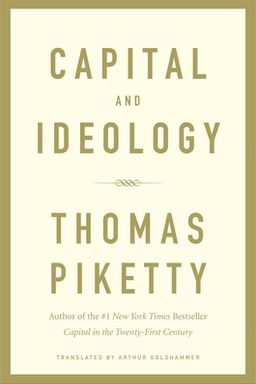
Idea 1
Ideology and the Architecture of Inequality
How do societies decide who belongs, who owns, and who rules? Across centuries, Piketty argues that inequality is never a neutral result of markets or technology—it is constructed, justified, and stabilized by ideology and institutions. You live inside what he calls an inequality regime: a coherent set of ideas, laws, and practices that define property, membership, and legitimacy. To change material outcomes, you must first understand and challenge this ideological architecture.
The two organizing questions: borders and property
Every inequality regime rests on two axes: the border question (who counts as part of the political community) and the property question (what may be owned and how it is transmitted). These axes interact constantly. Property rights determine wealth concentration, while border rules decide who can access property, education, and political participation. In modern capitalism, fiscal and legal systems protecting cross-border capital—through tax havens or opaque trusts—are ideological choices that favor owners over states.
From trifunctional hierarchies to proprietarian regimes
Piketty traces how premodern ternary societies (clergy, warriors, producers) justified inequality through religious and martial duty. The Christian Church, by becoming a massive property-owner, even created financial and legal innovations—such as early trust instruments—that shaped modern property law. When revolutions broke these premodern orders, new ownership societies emerged: the nineteenth-century proprietarian ideology sacralized private property as the cornerstone of freedom and productivity. Wealth concentration was legitimized as merit and market reward. Yet archival data show otherwise: the top 1% in France held more than half of total wealth before 1914, supported by low inheritance duties and light land taxes.
Global evolution and the ideological cycle
Across Britain, Sweden, France, and colonies, Piketty documents how ownership regimes globalized—financing empires, producing enormous foreign asset positions (Britain’s reached 191% of national income by 1914)—and how these patterns later collapsed under war, revolution, and progressive taxation. The mid‑twentieth-century social-democratic era (roughly 1950‑1980) built the fiscal and social state with high progressive taxes and social programs, only to see inequality surge again after 1980 when neo-proprietarian ideologies reasserted themselves under the banner of globalization and meritocracy.
Why facts must become collective learning
For Piketty, inequality is a learning process. Data—cadastres, tax records, censuses—do not simply describe gaps; they reveal the ideas that justify them. Institutions evolve when citizens reinterpret those facts and construct new ideologies. This “collective learning” is embodied in projects like the World Inequality Database, designed to democratize information so that fiscal and social debates rest on evidence instead of mystique.
The moral and political conclusion
You learn that inequality regimes are reversible. The Church’s medieval laws gave way to revolutionary codes; proprietarian opulence fell after wars and progressive taxes; social democracy curbed concentration until neoliberalism revived it. What unites all transitions is politics—the power to redefine borders and property. The practical lesson is clear: to rebuild equality, societies must craft new ideologies, institutionalize transparency, and design fiscal rules that circulate wealth instead of freezing it. Ideology, not fate, drives inequality.