
Idea 1
Mastering the Art of Difficult Conversations
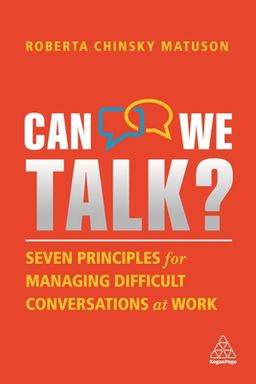
When was the last time someone said, “Can we talk?” and your heart sank? In Can We Talk?: Seven Principles for Managing Difficult Conversations at Work, Roberta Chinsky Matuson asserts that these three little words—often dreaded—hold the key to healthier workplaces, stronger leadership, and better relationships. Matuson argues that while most people avoid hard conversations to maintain peace, avoidance actually fuels conflict, resentment, and organizational dysfunction. True leaders, she contends, must learn how to talk openly, honestly, and compassionately even when it’s uncomfortable.
Through her approachable style and stories from decades of coaching executives, Matuson introduces seven guiding principles for managing challenging conversations: confidence, clarity, compassion, curiosity, compromise, credibility, and courage. These principles form a step-by-step framework that can transform even high-stress discussions into opportunities for growth and understanding.
The Avoidance Epidemic
In the introduction, Matuson describes what she calls a workplace “avoidance epidemic.” She cites studies showing that 70% of employees regularly avoid hard conversations with peers or managers, costing organizations billions in lost productivity. She tells how her own painful experience with a nightmare boss—who fired her without ever expressing clear expectations—sparked her passion for teaching others to have better conversations. The takeaway: discomfort is inevitable, but silence is far more damaging.
Matuson reframes conflict as a chance for connection. She likens bad communication to a car crash you can see coming but feel powerless to prevent—a metaphor that captures how unspoken frustrations eventually erupt. Her message is reassuring: with preparation, trust, and emotional intelligence, anyone can navigate even the toughest discussions gracefully.
Why Words Matter More Than Ever
Matuson contextualizes her message in a changing workplace landscape. Hybrid communication, remote teams, and digital miscommunication make the ability to talk openly more crucial than ever. She critiques the “corporate kindness” trend that equates niceness with goodness, arguing that kindness without candor breeds toxicity. She quotes management thinkers like Joseph Grenny (Crucial Conversations) and Marshall Goldsmith to confirm that accountability depends on brave, frequent dialogue.
One of Matuson’s memorable tools is the Conversation Equation: it takes two people—and mutual respect—to make a conversation, but most workplace talks are one-sided monologues. The first rule of dialogue, she insists, is listening. The “success shuffle” she recommends is like the game of shuffleboard: take turns moving forward, listen before you respond, and aim for progress, not domination.
A Framework for Change
Each of the seven principles adds a missing piece to what she calls a “fast-pass” to relational effectiveness. Confidence helps you trust yourself enough to speak; Clarity ensures you know your purpose before you speak; Compassion reminds you to seek understanding, not victory. Curiosity keeps conversations open rather than defensive; Compromise transforms conflict into collaboration; Credibility makes your words matter; and Courage helps you persist even when power dynamics or fear stand in your way.
What makes Matuson’s approach so engaging is her blend of psychology, leadership theory, and real-world experience. She coaches the reader through practical habits—writing scripts, anticipating emotional triggers, and practicing empathy—to replace anxiety with confidence. As she writes, “We can’t control what others say, but we can control how we respond.”
From Silence to Speaking Up
Ultimately, Can We Talk? is a manifesto for reclaiming your voice at work. Whether you’re confronting a boss, resolving team friction, or dealing with an underperformer, Matuson’s message is clear: courage is contagious. One authentic, respectful conversation can cascade into organizational trust. She calls readers to end the epidemic of avoidance and build a workplace where people talk, listen, and grow—together.