
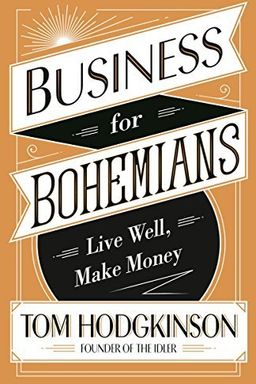
Business for Bohemians cover

Business for Bohemians

by Tom Hodgkinson

Business for Bohemians offers an alternative path for creative spirits to thrive in the business world without compromising their values. Through practical advice and personal anecdotes, Tom Hodgkinson shows how you can achieve financial success while maintaining the freedom to live your bohemian lifestyle.

Living Freely Through Business with Soul

Have you ever dreamed of earning your living doing something you love—without selling your soul to corporate life? Tom Hodgkinson’s Business for Bohemians is a witty, warm, and practical manifesto for anyone who wants to turn creativity into livelihood while keeping their values intact. Hodgkinson challenges the romantic myth that artists must choose between freedom and money, arguing instead that independence blossoms when we embrace the practical realities of business.

In essence, Hodgkinson contends that true bohemianism requires financial competence. You can’t live freely if you’re perpetually broke, stressed, or indebted to the bank. The creative idealist who disdains money ends up enslaved by it. Instead, learning to love spreadsheets, pricing, negotiation, and accounting becomes a path to liberation—not bureaucracy. The key, he insists, is to build a business that mirrors your ideals: small, human, soulful, and sustainable.

From Romantic Idler to Realistic Entrepreneur

The book begins with Tom’s own reckless leap from bestselling author and self-styled professional idler into the messy, unforgiving world of business. After years of writing and running The Idler magazine, he and his partner Victoria launched the Idler Academy—a part bookshop, part café, and part philosophy school—in Notting Hill. They imagined it as a haven for thought, culture, and joy. In reality, they found themselves plunged into tax bills, rent hikes, and late-paying customers. For a man who once celebrated four-hour workdays, the transition to fourteen-hour slogs was sobering. Yet those experiences became the foundation for this book’s guidance—the hard-earned lessons of turning passion into profit without losing sanity or freedom.

The Central Promise: Freedom Through Competence

At its core, Business for Bohemians claims that you can be both creative and commercially competent. Running a small, ethical, joyful business is not at odds with living a meaningful life. On the contrary, a business rooted in craftsmanship, autonomy, and service can itself be a creative act. Hodgkinson taps into thinkers from Socrates to Seneca to Charles Handy to illustrate this truth: work should support the good life, not consume it.

Freedom, he argues, is not achieved by rejecting structure but by mastering it. You must understand where your money goes, how to price your time, how to negotiate fairly, and how to say no. “Respect doesn’t pay the rent,” Hodgkinson quips, quoting punk poet John Cooper Clarke. In this way, the book bridges the cultural gap between artists who fear business and businesspeople who fear art.

A Philosophy in Practice

Hodgkinson guides you through every stage of the bohemian business journey—from the dream to the daily grind. He begins with reflection: “How do you want to live?” Are you seeking wealth or independence? Prestige or peace? This personal vision, he says, must come before your business plan. The next step is practical grounding. You confront money head-on, learn to price properly (“think of a price, double it, add tax”), and understand how debt, investment, and overheads really affect you. You’ll even befriend that most dreaded of tools—the spreadsheet—and discover its symmetry and order can be strangely beautiful.

Beyond finances, Hodgkinson delves into the human side of entrepreneurship: selling authentically, hiring wisely, and managing relationships. He teaches that bohemian business thrives through community rather than hierarchy—but warns against mistaking kindness for weakness. His tales of mismanaging wayward staff (“Tarquin and Fluffball”) serve as comic morality plays about setting boundaries and creating systems.

Idleness, Stoicism, and Sustainable Success

In the later chapters, the book transforms from a business guide to a manifesto for philosophical survival. Hodgkinson invokes Epicurean simplicity and Stoic endurance as the mental frameworks modern entrepreneurs need. Work is not a punishment; nor is leisure a sin. Overwork, he insists, is “for stupid people and slaves.” The true bohemian entrepreneur learns efficiency not to save hours for more work, but for idleness itself—time to walk, read, and think. These pauses are fertile ground for creativity and clarity.

The book closes with the wisdom of quitting: knowing when a project has run its course. Hodgkinson describes closing his Idler Academy shop when rent rose unsustainably—not as failure, but as part of the natural life cycle of creative business. Like Stoics facing death, he advocates learning to let go lightly and move on to new endeavors.

Why It Matters Now

In an age when “hustle culture” and “passion economy” dominate self-employment discourse, Business for Bohemians stands apart. It humanizes business, strips away jargon, and invites you to build something that sustains both bank balance and spirit. If The Four-Hour Workweek (Tim Ferriss) glamorized optimization, Hodgkinson reclaims leisure as sacred; if The Lean Startup preaches disruption, he preaches depth. His book is a countercultural manual for artists, freelancers, and dreamers who want success with soul—a reminder that sustainability, sanity, and joy are the true currencies of business done right.


Start with a Vision of the Good Life

Every great bohemian business begins not with a product, but with a philosophy of living. Hodgkinson challenges you to define freedom for yourself before you define your business model. In his view, money is useful only insofar as it supports the life you actually want. This means asking practical philosophical questions: Do you want to build something scalable or sustain something personal? Do you crave riches, or time?

Drawing on ancient Greek ideas of eudaimonia—a life of flourishing through fulfillment—he suggests that a successful business isn’t just profitable; it aligns with your daemon (your inner guiding spirit). You can build either a “lifestyle business” like a family-run café, or a “real business” aimed at growth, but be conscious about your choice.

Vision Over Vanity

Too many people, he warns, build businesses that impress others but imprison themselves. True success, like that of small bookshops or artisans, rests in autonomy and the joy of daily work, not shareholders’ praise. Entrepreneurs he admires—Dan Kieran of Unbound, Nigel House of Rough Trade Records—embody this balance: they do what they love with businesslike rigor yet resist soulless expansion.

(This echoes E.F. Schumacher’s Small Is Beautiful, which argued that human-scale enterprises offer more meaning than giant corporations.) Hodgkinson positions business not as greed, but as self-governance.

Know Thyself

Socrates said, “Know yourself.” Hodgkinson makes this the cornerstone of entrepreneurship. Some people thrive on responsibility and staff; others prefer a freelance life. Self-knowledge determines everything from pricing to ambition. To chase other people’s definitions of success—the investor’s exit strategy or the tycoon’s empire—is to lose the freedom that drew you in originally.

By writing down what your “ideal day” looks like, Hodgkinson says, you identify what the business must deliver—not just profits, but rhythm, pleasure, and meaning. Then you can reverse-engineer your strategy around that life. The question becomes not “How can I get rich?” but “How can I structure work so I’m free?”

Key Takeaway:

Freedom is built on intention, not accidents. When you know what you seek—time, meaning, art—you can design a life and business that serve it instead of chaining you to someone else’s ladder.


Mastering Money Without Losing Soul

In the bohemian imagination, money is a necessary evil. Hodgkinson turns that belief upside down: money is magic when understood and respected. He tells blunt stories of early mistakes—late tax payments, cash-flow nightmares, and remortgaging his home to keep the Idler Academy alive—to show that ignorance doesn’t make you noble, only nervous. By confronting finances with curiosity instead of fear, you become freer.

The Mindset Shift

First, Hodgkinson insists that making a profit is not selling out—it’s sustainability. Without profit, your business collapses and your creativity suffers. Quoting mentor Charles Handy, he suggests balancing passion, duty, and money in different seasons of life. Sometimes money must take precedence to secure the ground for future freedom. This triad mirrors Epicurus’s ancient call for moderation and foresight.

Practically, Hodgkinson advises keeping overheads minimal—work from cafés, skip designer clothes, and bring your own lunch. “Rich bohemians have more fun than poor bohemians,” he wryly reminds readers. Saving isn’t puritanical; it’s protective.

Creative Cash Flow

The book offers a smorgasbord of funding models suited to artists and small thinkers: membership schemes (like Patreon), subscriptions, crowdfunding, bank loans, and even remortgaging. Each comes with trade-offs. Family investors can be meddlesome; banks can be heartless; investors crave “scalability” you may not desire. Hodgkinson recommends starting lean and self-funded where possible—less money in means fewer masters later.

Crowdfunding, he warns, looks glamorous but requires months of spreadsheets, videos, and self-promotion—more Shark Tank than salon conversation. Yet through crowdfunding he raised nearly $200,000 for the Idler’s expansion, discovering that loyal fans can become joyful co-owners rather than faceless investors.

Living Frugally, Living Fully

Ultimately, money serves comfort and calm, not status. Like the Stoics, Hodgkinson celebrates enoughness. He describes joyful austerity—beer, books, and no debts—as true wealth. When funds are tight, keep your day job, he advises, echoing Charles Handy’s “portfolio life”: a blend of passion, duty, and income. That steady income can sustain art until art sustains itself.

In Short:

Don’t disdain money—master it. Profit isn’t greed; it’s creative fuel. Being broke is not bohemian; being beholden is. Financial clarity, like good art, is a form of freedom.


The Beauty of Spreadsheets and Systems

To the self-described bohemian, the phrase “spreadsheet” sounds like exile to bureaucratic hell. Hodgkinson treats it instead as salvation. Chaos, he argues, is not charming; it’s costly. Embrace structure, and you buy your own peace of mind. “Be an accountant,” he declares, “because otherwise someone else will be—and they’ll own you.”

Order as Art

Hodgkinson compares good bookkeeping to beauty itself. Like neatly arranged boots in Xenophon’s Oeconomicus, order saves time and so preserves leisure. With a spreadsheet, you trace your finances, see where money leaks, and ensure taxes don’t ambush you. Each cell becomes part of a pattern you can control. He even calls spreadsheets “beautiful” because a single change ripples through automatically—a small metaphor for how understanding transforms anxiety into power.

Using Google Sheets or similar free tools, he recommends tracking overheads, income, and forecasts monthly. Your “P&L”—Profit and Loss—becomes your mirror. The act may feel anti-artistic at first, but it’s the discipline that keeps art alive.

Delegation with Understanding

You may hire bookkeepers or accountants, but Hodgkinson insists you must still understand your numbers. Too many stars—from Sting to Uma Thurman—were fleeced by trusted accountants because they happily played the aloof artist. Ignorance is not liberation; it’s abdication. Learn the basics yourself, then delegate intelligently.

System Equals Freedom

The punchline: systems create idleness. When you have routines for invoicing, tracking expenses, and updating records, you stop firefighting and start relaxing. Organization, like Stoicism, transforms reaction into reflection. This paradox—discipline as the gateway to freedom—runs through the whole book and defines Hodgkinson’s brand of “practical bohemianism.”

Bohemian Wisdom:

A little order each day prevents chaos tomorrow. Think of your finances not as prisons but as gardens. Tend them with care; then lie beneath the tree you planted.


Getting Paid What You’re Worth

Pricing is where many creative people sink. Out of niceness—or fear—they charge too little. Hodgkinson argues this is self-sabotage. For small businesses, low prices kill sustainability. He learned after undercharging for events, paying speakers generously, and ending evenings with barely $50 profit. His epiphany: charge what you’re worth, not what seems polite.

Understanding Margin

Charlie Gladstone, founder of Pedlars, told Hodgkinson, “If you don’t understand margin, you’re stuffed.” Large corporations can afford thin profits; small ventures can’t. The formula is simple: buy low, sell high enough to cover costs and joy. Hodgkinson’s friend Serena Rees, who built Agent Provocateur, gave him a rule: “Think of a price, double it, add tax.” It’s cheeky—and it works.

Free events or tokens of generosity, he found, often attract disinterested freeloaders rather than supporters. People value what they pay for. When he charged full price for his short “Idler Guides,” they sold briskly; when he offered free talks, attendance dropped.

The Psychology of Worth

Pricing signals confidence. Many customers assume that expensive means better. Underselling yourself doesn’t just shrink your profit—it undermines trust. Complaints, Hodgkinson jokes, are good signs: if no one’s grumbling about cost, you’re too cheap. Likewise, consultants should research market rates and then err high; it’s easier to lower than raise.

Practical Tools

From PayPal to Shopify to card-payment brokers, Hodgkinson demystifies how creatives get paid online without banks dismissing them as “too small.” He urges adopting modern payment systems early, even if fees pinch. Getting paid fast beats chasing invoices for months. “Respect doesn’t pay the rent,” he reminds again—so make sure your checkout does.

Pricing Truth:

Low prices please others; fair prices preserve you. Every creative act deserves its reward. The more you value your work, the longer you can keep creating it.


Selling Without Selling Out

To make art profitable, you must become a salesperson—but not a sleazy one. Hodgkinson reframes selling as sharing enthusiasm. “If you can’t smile, don’t open a shop,” he says, citing a Chinese proverb. Sales, like storytelling, is about conviction; you’re offering people something beautiful or useful, not tricking them.

Honest Salesmanship

Working in his own bookshop taught him the joy of “hand-selling”—suggesting titles personally matched to customers. Each sale became a conversation, an act of education. He realized selling books was like journalism: both communicate passion and inspire curiosity. The myth of the pure artist above commerce, he argues, hides fear of rejection more than virtue.

You don’t need to invent tricks. Tell your story clearly, display beautifully, and create communities of interested “fans” who see themselves inside your brand. Memberships, live events, and mailing lists turn transactions into friendships.

Rejecting Undercutting

Never become ruthless like Amazon or Uber, Hodgkinson warns. Undercutting prices destroys solidarity among independents. Instead, embrace the bohemian ethic: collaborate with peers, share space, sell quality, and refuse race-to-the-bottom tactics. “We are not Uber or Amazon,” he insists; we are human-sized enterprises serving people, not algorithms.

Marketing as Friendship

Effective marketing is simply staying in touch. Through weekly newsletters, witty social media updates, and party-like events, he fosters genuine connection. His advice: focus on dialogue, not data. One letter to fans beats a thousand paid ads. (He despises wasting money on SEO campaigns, calling them enrichment plans for “the geeks.”)

Hodgkinson’s Rule:

If you love what you sell, people will buy into your spirit as much as your product. Selling isn’t betrayal—it’s invitation.


People, Partners, and the Perils of Trust

Running a bohemian business means working with kindred spirits—and sometimes chaos. Hodgkinson’s hilarious tales of mis-hired staff (the drug-taking Tarquin, the party-loving Fluffball) underline a sober truth: friendliness is not management.

From Anarchy to Order

He admits that the early Idler Academy team devolved into a weekend café-party because he couldn’t bear to be bossy. The bookstore became a bohemian circus. Only upon hiring Julian, a seasoned bookseller, did order return. The lesson: competence is kindness. Employees need clarity more than charm. Never hire just because you feel sorry for someone.

Rules of Collaboration

Hodgkinson gives practical rules: check references, write down systems, separate friendship from payroll. “When you go into business with a friend,” warns Charles Handy, “you either lose the friend or the business.” Discipline, he argues, is not un-Bohemian; it’s what keeps communities sane.

He introduces management wisdom—clear job titles, regular meetings, key performance indicators (KPIs), and even appraisals. Annual appraisals, says Handy, are acts of mutual listening, not punishment. Praise generously, critique clearly, and never gossip. Leadership, to Hodgkinson, is responsibility without ego: take blame, share credit, and laugh often.

Essential Insight:

Bohemian does not mean messy. Love your people, but lead them. Kindness without clarity breeds chaos; clarity with kindness breeds community.


Idleness as Efficiency

For a man who built his reputation on doing less, Hodgkinson ends by proving that laziness is good business. Overwork, he argues, kills creativity and ruins health. Idleness—the guilt-free type celebrated by Wordsworth and Bertrand Russell—is the engine of reflection, insight, and joy. “Hard work,” he scoffs, “is for stupid people.”

The Science of Doing Less

Citing Prussian General Kurt von Hammerstein-Equord, Hodgkinson recalls that clever, lazy officers make the best leaders; they delegate wisely to avoid unnecessary work. The lesson for entrepreneurs is the same: systems exist to create leisure. Routine saves mental energy for imagination.

The Ritual of Rest

He prescribes timeless habits: take daily walks, protect your afternoon nap, and guard unproductive time as sacred. Cafés, he notes, are the modern monk’s cell—public yet peaceful for contemplation. Establish routines that mimic monks’ matins and vespers: morning solitude, afternoon collaboration, evening merriment. For Hodgkinson, this rhythm—philosophy, husbandry, merriment—is the essence of the good life.

The Courage to Detach

Doing less also means caring less about control. Let staff handle details, automate what you can, and silence your phone. The stillness birthed by laziness is productive in unexpected ways. As he found when dropping his smartphone in a toilet, being unreachable restored grace to his days. Real independence demands releasing perfectionism and trusting time itself.

Final Wisdom:

Efficiency is not doing more work in less time—it’s doing less work better. Laziness, rightly understood, is the art of letting your mind wander into wisdom.


The Stoic Way to Survive Business

The last chapters of Hodgkinson’s journey move from bookkeeping to philosophy, culminating in an ode to Stoicism—the ancient art of staying calm amid chaos. Running a small business, he says, is “a spiritual thing.” You will face endless trials: debt, failure, stress, and trolls. The only weapon is attitude. Borrowing from Zeno, Seneca, and Marcus Aurelius, Hodgkinson teaches resilience without despair.

Stoic Armor

The Stoics saw life as flow: you cannot control events, only your response. Hodgkinson recalls inventing his “Wrong Book,” a notebook to record daily disasters—the printer breaking, taxes overdue—not as grievances but as lessons. Each problem becomes part of practice. If you expect things to go wrong, he quips, they lose their sting.

Embracing Failure

Half of all businesses fail within five years. For Hodgkinson, this isn’t tragedy—it’s training. Failure, he writes, keeps us humble and curious. The Idler Academy’s rocky years—empty cafés, bad hires, snide reviews—taught him compassion for himself and others. (In modern psychology, this mindset parallels Cognitive Behavioral Therapy’s focus on reframing thoughts.)

The Freedom to Quit

Finally, quitting is not cowardice. It’s clarity. Hodgkinson closed his Notting Hill shop when rent rose, describing it as liberation, not loss. “It’s better to be trapped in your own nightmare than someone else’s,” he says. True stoicism means flexibility: perseverance without attachment. When one path ends, walk another—with humor intact.

Stoic Lesson:

Most suffering in business comes from wishing things were otherwise. Laugh, adapt, and carry on. The only lasting failure is forgetting to enjoy the process.

Dig Deeper

Get personalized prompts to apply these lessons to your life and deepen your understanding.

Go Deeper

Get the Full Experience

Download Insight Books for AI-powered reflections, quizzes, and more.