
Idea 1
Building a Sellable Business That Runs Without You
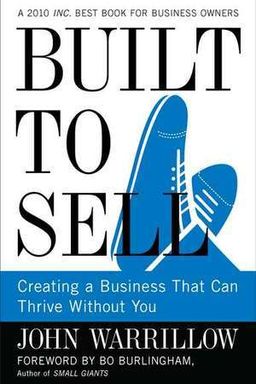
Have you ever wondered if your business could thrive without you? For most entrepreneurs, the answer—if they're honest—is no. In Built to Sell, John Warrillow argues that a business reliant on its founder is not really a business at all; it’s a job masquerading as an asset. His core message: to create real wealth and freedom, you must build a business that can function, grow, and even be sold independently of its owner.
Through the fictional story of Alex Stapleton, Warrillow turns complex principles of entrepreneurship and valuation into relatable lessons. Alex owns a struggling marketing agency that depends entirely on him for sales, client management, and creative direction. Burned out and frustrated, he decides to sell—but his mentor, Ted Gordon, reveals the harsh truth: the Stapleton Agency is worthless unless Alex transforms it into a process-driven company that can operate without him. This begins Alex’s journey toward creating a sellable, scalable business.
From Chaos to Clarity
At the book’s start, Alex’s company is chaotic—overreliant on one giant client (MNY Bank), lacking focus, suffering cash-flow problems, and staffed by generalists who depend on Alex for every decision. The problem isn’t that Alex is unsuccessful; it’s that his success cannot be transferred. Ted’s first lesson is brutal but liberating: “Your business is worthless because it’s dependent on you.” This distinction reframes entrepreneurship as building a transferable system, not just selling hours of your time.
Warrillow weaves in universal truths many service-based founders miss. They believe growth means doing more for more clients, but Ted challenges Alex to specialize. In his words, “Don’t generalize; specialize.” By narrowing the agency’s focus to one product—a Five-Step Logo Design Process—Alex discovers not only a niche but a repeatable model.
Turning Services into Products
A major turning point is Ted’s insistence that Alex productize his service. Instead of offering bespoke creative work, Alex defines a standardized five-step method for logo design: Visioning, Personification, Sketch Concepts, Black-and-White Proofs, and Final Design. This structure transforms a vague creative service into a tangible offering that clients can understand and buy confidently. (This idea parallels Michael Gerber’s “E-Myth” philosophy that systems, not personalities, create value.)
Owning a process makes selling easier and shifts the power dynamic. Clients stop dictating terms, and Alex starts to act like a true product company. His professional confidence rises, and his first sales under the new system prove that standardization doesn’t limit creativity—it amplifies it.
Cash Flow and Control
Ted pushes Alex further: product businesses generate cash before delivery, while service firms wait months to get paid. By charging upfront, the Stapleton Agency flips its cash flow from negative to positive. As Ted explains, “Avoid the cash suck.” With each project funded before work begins, Alex finally escapes the anxiety of bank calls and late invoices. This insight highlights a key valuation factor—companies that generate cash, not consume it, attract better buyers.
Alex’s journey also reveals an emotional truth. By learning to say no to ill-fitting projects and focusing on the logo business, he gains control over his time and reputation. Specialists become more referable, more profitable, and more respected. (Seth Godin’s Linchpin echoes this: mastery in one domain builds leverage.)
Scaling Beyond the Founder
Once the logo process is clear, Ted challenges Alex to systematize delivery and hire a team that can run the steps without him. He builds instruction manuals, trains managers, and hires salespeople who can sell a product rather than a customized service. The transformation is completed when the agency sells multiple logos a week—with Alex uninvolved in day-to-day operations.
The shift from founder-driven chaos to team-driven growth demonstrates the book’s thesis: you don’t sell services; you sell systems. Alex’s company evolves into a machine—predictable, profitable, and, most importantly, independent of him.
Preparing for Sale—and Freedom
Once the Stapleton Agency becomes a well-oiled business, Alex faces the emotional and practical challenges of selling. These include preparing a management incentive plan, picking a broker, and negotiating earn-outs. The final lesson is not merely about valuation—it’s about self-liberation. Alex learns to detach his identity from his company, overcoming guilt about his team and discovering that true leadership creates opportunity for others, not dependence.
Warrillow closes with Alex’s sale to a large company for $5 million—a moment of bittersweet triumph. The result is freedom: Alex has built something that outlasts him. It’s a universal message for entrepreneurs—your greatest achievement isn’t creating a thriving business, but creating one that thrives without you.
The heartbeat of Built to Sell is this insight: Stop running a business that needs you every day. Build one that works like a machine—scalable, teachable, and transferable. Only then will your company have true value—and you, genuine freedom.