
Idea 1
Building Companies That Last
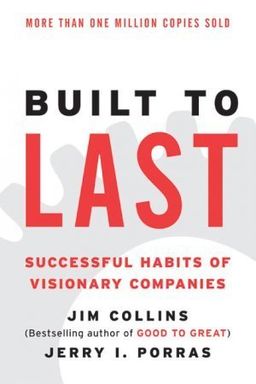
What makes some companies endure for decades while others fade after brief success? In Built to Last, Jim Collins and Jerry Porras argue that enduring greatness comes not from a single visionary leader or a brilliant product, but from building an organization designed to prosper beyond any one moment. They call this distinction the difference between time telling and clock building: a time teller knows the precise time for now, while a clock builder designs a mechanism that tells time for generations. In short, extraordinary companies focus less on one idea and more on creating an enduring architecture of values, systems, and culture.
The Research Behind the Findings
Collins and Porras conducted an ambitious six-year study comparing 18 visionary companies—like 3M, Hewlett-Packard, Merck, and Johnson & Johnson—to carefully matched peers that were once strong but failed to reach enduring greatness. They analyzed over 1,000 historical documents, leader biographies, and stock data back to 1926. Their discovery: the visionary companies outperformed the general market 15-to-1 and their comparisons nearly 6-to-1.
From these comparisons came a common set of architectural practices: an unwavering core ideology, a drive for continuous progress, mechanisms for renewal, audacious goals, and a culture built for alignment. Each practice helps the company adapt without losing its identity.
The Core Argument
Enduring greatness arises from what the authors call the genius of the AND—the ability to preserve a timeless core and simultaneously stimulate innovation and change. Visionary firms don’t choose between purpose and profit, stability and movement, continuity and evolution. They embrace both. They are built around a core ideology—values and purpose that guide all decisions—and pair it with mechanisms that drive experimentation, discomfort, and bold ambition.
From Vision to Design
In contrast to charismatic founders who rely on inspiration, visionary architects—like Bill Hewlett and Dave Packard at HP or William McKnight at 3M—designed management systems and cultural norms that would reproduce their ideals long after they were gone. They institutionalized training, promotion, and succession processes that embedded company values deeply into operations.
These companies were not dependent on a single breakthrough product or technology. They built what Porras and Collins call organizational DNA—the rules, rituals, and mechanisms that preserve core values while enabling teams to challenge everything else. That architecture produced corporate longevity measured in decades rather than quarters.
Why It Matters Today
The framework challenges modern entrepreneurial myths. Many founders think they must have a revolutionary idea, a magnetic brand, or a hero CEO. But the data show that sustained greatness depends on building resilient systems—leadership pipelines, ideological clarity, and cultural mechanisms for experimentation. The idea extends to all scales: whether you run a startup, a school, or a department, your goal is the same—to construct a clock that keeps ticking, not to become the person everyone checks for the time.
Key Thought
“Build a company as a mechanism for greatness. If it depends on you, it dies with you. If it depends on design, it can live for generations.”
The rest of the book unpacks how to do just that: define a core ideology beyond profits, pursue audacious goals, sustain momentum through experimentation, maintain a disciplined culture, and institutionalize alignment. Together, these principles form a practical road map for building companies that endure and grow stronger with time.