
Idea 1
Rebuilding Strength Through Intelligent Load
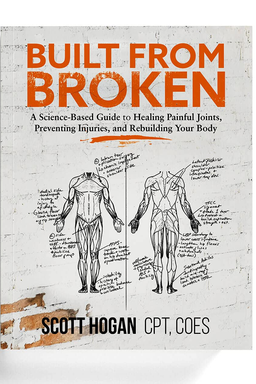
How do you rebuild your body when it has broken down from overuse, pain, or poor movement? In Built from Broken, Scott Hogan contends that the answer is not less movement or endless therapy—it’s intelligent load. The book argues that properly applied resistance training is the most potent rehabilitation and longevity tool. Load, delivered through quality movement, is the body’s primary signal for structural healing—a process called mechanotransduction, where mechanical stress triggers cellular repair and collagen synthesis.
The book reframes resistance training from a cosmetic pursuit to a biological necessity. Joints, tendons, and connective tissue all depend on controlled stress to remain resilient. It teaches you to train smarter, not just harder—using deliberate progressions that fortify the scaffolding of your body rather than erode it.
The Biological Blueprint: Mechanotransduction
Mechanotransduction is at the core of this framework. When you apply mechanical load—say, a slow eccentric squat—your cells translate that stress into increased collagen production and improved tendon stiffness. This dose–response relationship is what helps tissue remodel, provided you respect recovery and don’t overload too quickly. As Hogan explains, the body interprets “appropriate” stress as a cue to strengthen; too little creates atrophy, and too much leads to degeneration.
Tendons in particular love heavy, slow work. Research examples cited in the book (e.g., Jill Cook, David Burris) show that tendons adapt best to high-magnitude, long-duration strain—roughly 6–8 rep loads at 70–80% of one-repetition maximum, performed with slow control. These sustained contractions stimulate collagen cross-linking far better than light, repetitive exercise.
Pain Reconsidered: Communication, Not Damage
Central to Hogan’s philosophy is a new understanding of pain. Pain doesn’t always equal damage; it’s a signal. The brain modulates pain through different pathways—nociceptive, neuropathic, and centralized—and each requires a tailored response. Chronic pain often persists because the nervous system becomes sensitized, amplifying harmless signals. The task, then, isn’t suppressing sensation but restoring accurate feedback between brain and body.
Core Insight
Pain is your nervous system’s language—it protects, adapts, and sometimes overreacts. The goal is not to silence it but to teach it to interpret movement as safe again.
Four Healing Targets
Rather than chase symptoms, the book teaches you to rebuild health around four pillars: 1) Inflammation modulation—allow acute inflammation but prevent it from becoming chronic; 2) Tendinopathy resolution via progressive load rather than anti-inflammatories; 3) Synovial fluid health—using frequent motion to self-lubricate joints; and 4) Collagen integrity—strengthened through nutrition, hydration, and load-based remodeling. Together, these drive long-term structural change instead of temporary relief.
Movement as Medicine
The human body evolved for varied, frequent movement. Studies of the Hadza and other indigenous movers reveal how small bursts of locomotion throughout the day prevent modern brittleness. Hogan urges you to replicate this pattern: frequent walking, dynamic mobility, and daily “movement snacks.” These continuous exposures maintain collagen turnover, pump synovial fluid, and keep the nervous system desensitized to pain.
Even mobility training is redefined: real mobility is not how far you can stretch but how much range you can control under load. Static stretching alone offers fleeting benefits. The real work lies in dynamic, loaded, and multi-planar control—training the body for stability before flexibility. This principle applies to everything from your rotator cuff to your hips and knees.
Training the Whole System
Hogan’s approach is a systems model: optimize connective tissue, neurology, and movement together. He provides blueprints for the “Big Three” problem zones—back, shoulders, and knees—by addressing root causes like poor hip mobility, scapular instability, or quad–glute imbalance. Combined with progressive programming and modern periodization, these routines help you rebuild rather than simply manage injury.
Ultimately, Built from Broken redefines fitness as repair. You don’t chase exhaustion—you chase adaptation. Through controlled stress, strategic rest, and precise technique, you turn pain into data, load into medicine, and strength into longevity. The promise of the book is both scientific and human: when you learn to stress your body intelligently, you don’t just recover—you evolve.