
Idea 1
Clarify Your Message So Customers Listen
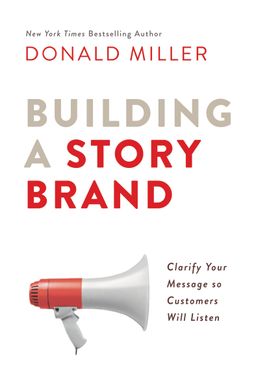
Why do some businesses with average products win while better ones fade into obscurity? Donald Miller’s Building a StoryBrand offers a provocative answer: the difference lies not in the quality of the product but in the clarity of the message. Miller argues that if customers don’t understand what you do and how it helps them, they tune out—regardless of how brilliant your offering is. The central premise of the book is simple yet transformative: you are not the hero of your company’s story—your customer is.
Miller’s insight draws from storytelling, brain science, and marketing psychology. At its heart is the StoryBrand 7-Part Framework (SB7), a concise storytelling formula that helps businesses communicate in ways customers can easily understand. The framework harnesses timeless narrative structure—the same structure behind every successful film—to position your brand as a guide who helps customers overcome challenges and achieve success. The book insists that this narrative clarity can double or triple business growth because it removes the most common obstacle to persuasion: confusion.
The Power of Story to Organize Information
Miller begins by exploring why the human brain is naturally drawn to stories. Stories provide mental order. When we listen to one, we stop tuning out and start paying attention because our brains are wired to understand narrative structure as a survival mechanism. In every story, the hero faces a problem, meets a guide, follows a plan, and achieves transformation. This logic makes stories the ultimate clarity tool. Miller argues that most businesses talk about themselves endlessly—their founder’s background, their process, their passion—but customers don’t want to hear that. They care about their own problems, desires, and transformation. A company’s job, then, is to invite customers into a story where they are the hero.
The SB7 framework is designed to align brand messaging with this gravitational pull of story. When customers can immediately understand three things—what you offer, how it helps them survive or thrive, and what action to take—they listen. Miller calls this “passing the grunt test.” If a caveman could look at your website and grunt, “You sell X, it helps me Y, I get it by doing Z,” then your communication passes. Anything less clear forces customers to burn too many mental calories—and confusion drives them away.
Business Communication as Storytelling
The book unfolds like a storyteller’s map applied to marketing. The SB7 Framework includes seven critical elements of story, each with a parallel function in business messaging:
- A Character: The customer, who wants something specific.
- Has a Problem: Both external (a tangible challenge) and internal (emotional frustration).
- And Meets a Guide: Your brand, which shows empathy and authority.
- Who Gives Them a Plan: Clear, simple steps to succeed.
- And Calls Them to Action: A direct invitation to make a purchase or commit.
- That Helps Them Avoid Failure: Clarifying the negative outcomes of inaction.
- And Ends in Success: Showing a clear vision of transformation.
This structure mirrors the narrative arc in movies like Star Wars or The Hunger Games. Luke Skywalker (the customer) faces a problem (the Empire), meets his guide (Obi-Wan and Yoda), follows a plan (trust the Force), and achieves success (destroying the Death Star). A company’s role, Miller says, is not to present itself as the hero—but as Yoda, the trusted mentor. Whenever a brand acts like Luke instead of Yoda, customers stop listening because they’re already playing the hero in their own minds.
Why Confusion Destroys Business
Miller’s conversations with neuroscientist Mike McHargue (“Science Mike”) reveal that the brain’s primary job is to help humans survive and thrive. When marketing messages don’t clearly signal how a product contributes to survival (safety, belonging, status, or meaning), the brain discards them as irrelevant noise. A flashy website or clever slogan won’t matter if the message isn’t crystal clear within five seconds. “If you confuse, you’ll lose,” Miller repeats throughout the book. In short, clarity beats cleverness every time.
To illustrate, he tells of a business owner with three different painting services who cluttered his website with unrelated details, from company history to charity links. Visitors couldn’t tell what service was offered. When Miller suggested simplifying the page to one image and line—“We Paint All Kinds of S#*%”—sales skyrocketed. Humor aside, the clarity worked because it communicated survival value faster than clutter did.
The Stakes: Clarity as a Moral Mission
Miller closes his argument with a moral perspective: businesses are one of the most powerful forces for good. They employ people, create solutions, and improve lives—but only if customers can hear what they’re saying. When “good guys” communicate unclearly, “bad guys with louder microphones” dominate. The StoryBrand mission, then, is not just about profit; it’s about helping ethical businesses find their voice in a noisy world. Whether you’re a solo consultant or a Fortune 500 company, learning to clarify your message is both a business strategy and an act of service. It helps the right story—your customer’s story—take center stage.