
Idea 1
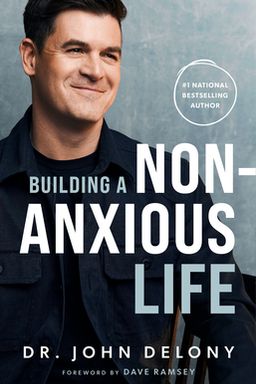
Building a Non-Anxious Life
What would your life look like if the constant hum of anxiety finally quieted down? In Building a Non-Anxious Life, Dr. John Delony argues that while anxiety may seem like an inescapable reality of modern existence, it is actually a signal—not a sentence. Anxiety, he insists, isn’t a disease to cure but an *alarm system* alerting you that something in your life is unsafe, disconnected, or out of balance. The question isn’t “How do I get rid of anxiety?” but “What is my anxiety trying to tell me?”
Delony contends that we’re living in a world our bodies were never designed for—a world of digital noise, social isolation, debt, and endless busyness. This disconnect between human design and cultural reality fuels anxiety, burnout, and despair. His approach moves beyond quick fixes or pharmaceutical answers. Instead, he offers a practical map: six daily choices that together form a resilient and peaceful life—reality, connection, freedom, mindfulness, health and healing, belief—all culminating in the courage to walk the “hard path.”
The Fire and the Alarm
Delony’s foundational metaphor reframes the entire discussion. Anxiety is not the fire—it’s the smoke alarm. Too many of us waste energy silencing the alarm (through avoidance, numbing, or medication) instead of addressing the flames consuming our relationships, finances, and physical health. This distinction flips conventional wisdom on its head: rather than asking how to stop feeling anxious, we should ask what’s burning and how to rebuild from the ashes. (Delony’s earlier book Redefining Anxiety established this premise, which he expands here into a comprehensive life model.)
Anxiety, he writes, ignites when our bodies sense we are unsafe, isolated, unhealthy, or powerless. These are the four signals of the alarm. Each of his six daily choices directly addresses them, forging safety, belonging, physical strength, and inner clarity. He blends clinical insights with stories from his counseling career, research in psychology and neuroscience, and deeply personal accounts of his own burnout and recovery. His tone—approachable, humble, often humorous—makes heavy concepts feel like a kitchen-table conversation over late-night chips and queso.
A Crisis of Connection and Control
Why are we so anxious when we have more than any generation before us? Delony argues that abundance has eroded anchoring forces—community, rest, simplicity, faith—that historically buffered human stress. We’ve replaced local friendships with digital followers, physical activity with screens, and self-regulation with endless consumption. We’re “trying to stay alive,” he writes, “on a concoction of cortisol and unearned dopamine.”
Through this lens, our collective anxiety is not a moral failing or a mystery of modern brain chemistry—it’s the predictable result of living in dissonance with human design. The solution, therefore, isn’t to numb ourselves further but to live differently—to build a world our bodies can exist in again. The six daily choices are not hacks but disciplines that restore agency, integrity, and rootedness in a chaotic age.
The Six Daily Choices
Delony’s framework comprises six interconnected decisions to be made daily, not as resolutions but as ongoing orientations toward life:
- Choose Reality — Face the truth about your circumstances, relationships, and internal struggles instead of avoiding or numbing them.
- Choose Connection — Reject loneliness by cultivating authentic relationships built on honesty and love.
- Choose Freedom — Free yourself from debt, clutter, broken boundaries, and the illusion that busyness equals worth.
- Choose Mindfulness — Learn to pause before reacting, cultivating awareness and curiosity over judgment and reactivity.
- Choose Health and Healing — Care for your physical body, confront trauma, and create safe environments for rest and growth.
- Choose Belief — Anchor yourself in faith or a higher power that reminds you the universe doesn’t depend on your control.
These six choices interlock like a wheel, maintaining balance and momentum. Neglect one, and the system strains; practice them together, and the alarms quiet. (This circular model echoes Stephen Covey’s holistic frameworks and James Clear’s habits-based transformations, yet Delony’s version integrates faith, bodily wellness, and practical boundaries.)
The Hard Path and Hope
Throughout the book, Delony reminds readers that the non-anxious life is neither painless nor perfect. It is *hard*—but intentionally hard. Modern comfort, he argues (drawing from Michael Easter’s The Comfort Crisis), has deprived us of resilience. Facing difficulty head-on—not avoiding it—is what strengthens mind, body, and spirit. Pain, grief, and uncomfortable truth are not enemies but teachers that lead us toward peace.
Ultimately, Building a Non-Anxious Life is a manifesto of hope. It rejects the lie that anxiety defines you or that healing is beyond reach. You are not broken, Delony writes; you are simply exhausted and disconnected. The work of rebuilding is slow and sacred, but it begins with one small choice—today. His invitation closes with a promise: “There is hope. For you, for me, for our kids, for the people we love, and for our world.”