
Idea 1
Building for Tomorrow: Turning Change into Opportunity
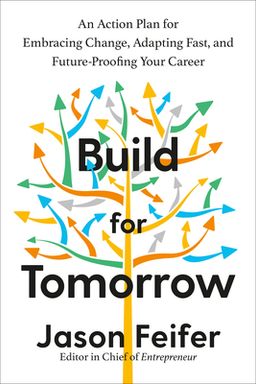
How do you thrive when everything around you is changing—your job, your industry, your relationships, your routines, even your sense of self? In Build for Tomorrow, Jason Feifer argues that change is not a curse but an opportunity. He contends that discomfort and uncertainty can become the most powerful engines of growth—if we learn to navigate them consciously instead of panicking or clinging to the past.
Feifer, best known as editor in chief of Entrepreneur Magazine, draws lessons from the most adaptable minds he’s encountered: startup founders, innovators, historians, and even psychologists. He noticed they all move through four distinct phases whenever confronted by disruption—Panic, Adaptation, New Normal, and Wouldn’t Go Back. These phases mirror emotional evolution, from fear of change to gratitude for transformation. His promise: if you master these stages, you’ll discover that progress doesn’t destroy what came before—it builds upon it.
The Age of Constant Upheaval
We live in what Feifer calls an age of “warp-speed innovation.” Technology reshapes industries overnight, pandemics reset priorities, and cultural shifts rewrite norms. Your present life—job security, habits, even your living situation—will inevitably disappear in a few years. That sounds terrifying, yet as Feifer reminds us, it’s always been true. History is full of crises that looked like the end of the world but ultimately ushered in periods of acceleration. The bubonic plague, for example, killed 60% of Europe but sparked labor rights and created the modern employment contract. Feifer sees this as proof that breakdown precedes breakthrough.
The Four Phases of Change
Feifer organizes the book into four sections that correspond to how we emotionally and practically respond to upheaval:
- Panic: The moment something upends the familiar. We freeze, lash out, or make rash decisions. Feifer uses the butter industry’s war on margarine and John Philip Sousa’s campaign against the phonograph to show how fear of change wastes opportunities.
- Adaptation: When the dust settles and we realize we can’t return to “normal.” Change is inevitable; we must start learning, experimenting, widening our perspective, and modifying the story from “something happened to me” to “I’m happening to something.”
- New Normal: The adjustment phase. We build new systems, relationships, or routines—but risk oversimplifying complex shifts. This is where Feifer encourages curiosity, challenging assumptions with questions like “What is this for?”
- Wouldn’t Go Back: The destination. You realize the transformation was ultimately liberating, even if painful. You see the benefits of innovation, new habits, or perspectives—and you’d never trade them for the comfort of the old world.
Together, these stages form not just a roadmap for resilience but a model for how societies evolve. Feifer argues that the same mental patterns that make entrepreneurs thrive can help anyone handle personal upheaval—from career shifts to global crises.
Why This Framework Matters
Feifer’s core insight is that resistance isn’t rational—it’s neurological and cultural. Humans evolved to equate change with danger, but modern life rewards adaptability. As psychologist Amy Orben explains in the book, our brains respond to novelty with anxiety because ancient survival instincts misinterpret it as threat. Yet those who reframe uncertainty as opportunity—what Feifer calls “building for tomorrow”—unlock exponential growth.
Moreover, Feifer balances history and psychology with business pragmatism. From restaurants that reinvented themselves during COVID to leaders who thrived by ditching short-term thinking, he shows that transformation isn’t accidental—it’s structured. Each example reminds readers that every “old normal” was once a “new normal.” If you learn to see change as cyclical, you can ride the wave instead of fighting the current.
Seeing Instability as Opportunity
The essence of Feifer’s argument is simple yet profound: instability is the foundation on which tomorrow is built. Like entrepreneurs pivoting when markets collapse or scientists discovering breakthroughs by accident, progress emerges from instability. The challenge is emotional—the need to quiet panic long enough to think creatively. If we cultivate curiosity instead of fear, reflection instead of reaction, we stop clinging to the past and start shaping the future.
Core Message
Change will always come. You cannot control its timing, but you can control your response. When you replace panic with inquiry, adaptation with action, and acceptance with innovation, you create a life—and a career—you’d never want to go back from.
Ultimately, Build for Tomorrow isn’t just about handling disruption. It’s about reprogramming how you define stability. Feifer wants you to realize that the most productive mindset isn’t “survive the future”—it’s “create the future, starting now.”