
Idea 1
The Buffett Way: Investing as a Businessperson, Not a Gambler
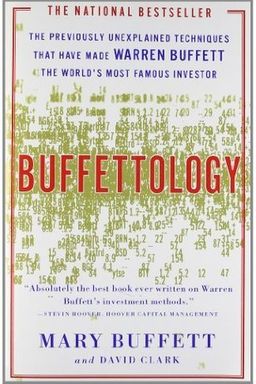
Have you ever wondered why Warren Buffett—armed with no secret algorithm or privileged market access—became one of the richest investors in the world? Buffettology, by Mary Buffett and David Clark, argues that Buffett’s success isn’t about timing the market or frenzied stock-picking. It’s about seeing investments not as lottery tickets but as part ownership in real businesses. The book introduces what the authors call business perspective investing—a disciplined, long-term method based on rational analysis rather than speculation.
Mary Buffett, a former member of the Buffett family, had an inside look at Warren’s world when she married his son Peter. Along with financial analyst David Clark, she distills Buffett’s wisdom into a structured, teachable system. Together they reveal how Buffett transformed $105,000 into tens of billions by treating each stock as if he were buying the whole company itself.
From Graham’s Value Investing to Buffett’s Philosophy
Buffettology grounds itself in the lineage of Benjamin Graham, Buffett’s professor at Columbia and author of The Intelligent Investor. Graham taught that investments should be approached with the logic of a business owner—buy only what makes financial sense. But Buffett evolved this philosophy. Where Graham sought statistically undervalued stocks (buying 100 mediocre businesses cheaply), Buffett sought wonderful businesses at fair prices. His secret lies in identifying excellent companies with durable economic advantages, predictable earnings, and ethical, competent management.
Buffett’s world divides neatly into two business types. The first are commodity-type businesses—those in highly competitive industries like textiles, steel, or oil, where price wars erase profits. The second are consumer monopolies—companies like Coca-Cola, Wrigley, or Gillette that capture consumers’ loyalty and can raise prices without losing sales. These businesses, protected by strong brand names or unique products, generate predictably high returns on capital. Buffett hunts for these, waits for their stocks to be fairly valued, and then holds them indefinitely.
The Two-Question Investment Test
At its core, Buffettology simplifies investing to two questions: What business should I buy? and At what price? Buffett rejected Wall Street’s obsession with trends and forecasts. Like a business owner evaluating a purchase, he studies earnings, debt, and pricing power—and uses these to calculate the intrinsic value of a company, defined as the future cash flow the business will generate, discounted back to today. This approach allows an investor to predict an annual compounding rate of return based on future earnings growth and the starting price paid.
The price you pay, Buffett insists, determines your rate of return. Buy too high and you lock in mediocrity; buy right and compounding works miracles. This principle distinguishes Buffett’s method from speculation. It’s the art of letting time and quality do the heavy lifting—an idea that makes investing more about patience than prediction.
Compounding: The Real Magic
Buffett’s real 'magic formula' is not a secret equation but the discipline of compounding high returns over time. As co-author David Clark notes, a 15–20% return compounded for decades creates exponential wealth. Buffett’s brilliance lies in holding great companies through the years so retained earnings within those businesses multiply without triggering taxes. Think of it as owning a bond whose coupon grows every year—a 'forever bond' where inflation and taxation are your allies, not enemies.
The Businesslike Mindset
Mary Buffett begins the book by sharing how Warren taught his family to treat stocks as real businesses. At Christmas, instead of cash gifts, he gave family members shares in companies like Capital Cities or Coca-Cola. The lesson was simple: once you own part of a business, you study its reports, follow its management, and think years ahead. This habit mirrors Buffett’s detachment from market noise—he cares about what the business earns, not where the stock trades.
Buffett’s disdain for Wall Street’s short-termism reflects wisdom echoed by other long-term thinkers like John Bogle (founder of The Vanguard Group) and Charlie Munger (his lifelong business partner). Where most investors chase price movements, Buffett remains anchored in business fundamentals. He treats stocks as vehicles for owning the power of production, not trading slips subject to emotion-driven volatility.
Why This Philosophy Matters
In a world obsessed with overnight success, Buffettology offers a countercultural lesson: real wealth is built through understanding, discipline, and time. This approach reframes investing as an act of business ownership rather than speculation. The book’s central promise is empowering: if you learn to value a business and think decades ahead, you can achieve returns that outperform Wall Street professionals. In short, you can become what Buffett calls an 'intelligent investor'—someone who uses reason, not reaction, to build enduring wealth.