
Idea 1
The Making of a Rational Capitalist
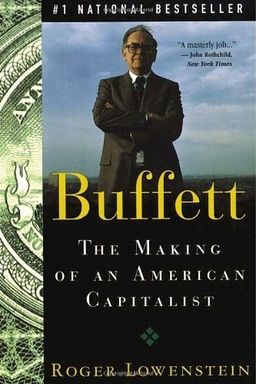
How does an ordinary boy from Omaha become the archetype of rational investing? In this sweeping biography, you follow Warren Buffett’s transformation from a numerically obsessed child counting license plates to an investor who built Berkshire Hathaway into a model of disciplined capitalism. The book offers both a chronology of his life and a manual in rational thought—how temperament, structure, and ethics fuse to shape superior economic outcomes. Through decades of business adventures, the throughline remains constant: mastery of numbers coupled with an unusually detached, moral sense of money.
From quantitative childhood to disciplined adulthood
Buffett’s affinity for numbers appeared early: he memorized population figures, calculated odds at racetracks, and treated lemonade sales as miniature financial experiments. That blend of curiosity and control shaped an adult who sees markets as laboratories for applied probability. Howard Buffett’s political conscience and Leila Buffett’s emotional volatility also molded him; from one he inherited moral rigor, from the other a desire for predictability and refuge in quantifiable tasks. These early tensions explain why Buffett prefers businesses with simple math and predictable behavior—his way of taming uncertainty.
Graham’s discipline and Buffett’s reinterpretation
At Columbia, Buffett discovered Benjamin Graham’s value-investing framework and found language for instincts he already possessed: treat stocks as businesses, insist on a margin of safety, and ignore crowd emotion. Graham provided protective armor against volatility. Yet Buffett evolved beyond Graham’s formulas, integrating qualitative judgment about brands, management, and emotional durability. His investments in American Express, Disney, and later See’s Candy mark the inflection: value lies not only in assets but in consumer trust and managerial character. By fusing Graham’s arithmetic with Philip Fisher’s enthusiasm for “wonderful businesses,” Buffett built a hybrid style—quantitative discipline married to qualitative vision.
Building structures to protect thinking
Buffett’s partnerships institutionalized his temperament. His rules—no fixed fees, partners share upside after a 4% hurdle, secrecy about holdings—created a system that rewarded patience and independence. He outperformed the Dow for over a decade while refusing to court media attention or short-term investors. The structure insulated him from the noise that distorts judgment. When opportunities vanished in the speculative 1960s, he chose to liquidate rather than bend his principles—a rare act of self-restraint that preserved his reputation and set the stage for reentry through Berkshire Hathaway.
Transforming businesses through capital allocation
The Berkshire narrative demonstrates how Buffett converted dying enterprises into compounding machines. His insight into insurance float—collecting premiums now, paying claims later—gave him perpetual capital to invest. By acquiring National Indemnity and later GEICO, he tapped a source of low-cost leverage that financed stakes in media, consumer products, and manufacturing. Buffett’s magic wasn’t in invention but in allocation: shifting capital from low-return textiles to high-return franchises while preserving managers’ autonomy. He demanded honesty, owner-like behavior, and frugality. Berkshire became proof that decentralized culture plus rational capital deployment can outperform bureaucratic conglomerates.
Character, temperament, and the moral dimension of money
Throughout, Buffett’s success links to temperament more than technical brilliance. He treats market cycles as behavioral experiments, urges fear when others are greedy, and confesses his own lapses into 'rhinophobia'—the fear of idle cash. His mistakes (USAir, Salomon, defensive preferreds) reveal that intelligence cannot substitute for patience. Unlike raiders of the 1980s, he abhors leverage, treats reputation as a strategic asset, and defines risk as permanent loss, not volatility. His philanthropy, cautious and empirical, replays the same theme: deploy resources where measurable results exceed emotion.
By the end, you see a man who turned capitalism into an ethical craft. Buffett’s life illuminates how clear thinking, structural independence, and moral self-command can transform the pursuit of wealth into an intellectual and civic discipline. The lesson for you: intelligence counts, but structure and temperament sustain fortunes.