
Idea 1
Changing Your Brain, Changing Your Life
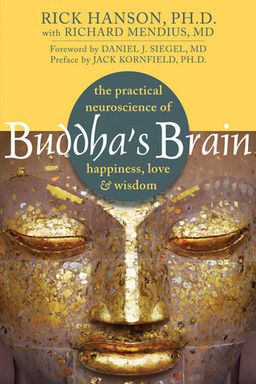
Have you ever wished you could literally rewire your brain—to become calmer, wiser, and happier? In Buddha’s Brain, neuropsychologist Rick Hanson and neurologist Richard Mendius argue that you can. They reveal how simple mental practices can reshape the neural pathways of your brain, transforming your life from the inside out. The authors contend that happiness, love, and wisdom are not lofty ideals but trainable brain states—and they show how ancient Buddhist insights harmonize with cutting-edge neuroscience to illuminate the path toward well-being.
The book begins by exploring how your mind and brain are inseparable systems: every thought changes your neural wiring. Hanson draws on the principle that “neurons that fire together wire together,” meaning repeated mental activity strengthens corresponding brain circuits. From this scientific foundation, he argues that mindfulness and virtuous behavior can literally sculpt your brain for contentment, empathy, and peace. The authors unpack how your nervous system evolved to help you survive—but also how those survival mechanisms inadvertently cause stress and suffering. You’ll learn how to quiet those ancient fears while activating higher regions of your brain that promote calm, compassion, and wisdom.
Why the Brain Matters
Your brain is a dynamic, self-transforming organ. Every experience—pleasant or painful—leaves physical traces. Hanson writes that mental activity “flows through your mind and sculpts your brain.” Even fleeting emotions or moments of focus strengthen particular neural pathways. Understanding this principle turns mere experiences into opportunities for growth: by repeatedly feeling compassion or gratitude, you train your brain to default toward those states. This scientific view of neuroplasticity offers striking optimism: small, deliberate shifts in your attention can produce long-term inner change.
The Bridge Between Science and Contemplation
Hanson and Mendius beautifully bridge modern neuroscience with Buddhist tradition. Buddhists have long taught that suffering arises from craving and ignorance. Neuroscience now shows that craving corresponds with particular patterns of neural activation—especially in dopamine circuits—and ignorance with biased attention processes. The authors integrate mindfulness, compassion, and virtue with the physical workings of the brain, suggesting that contemplative practice trains both mind and body. This alignment echoes Daniel Siegel’s concept of “mindsight”—intentional awareness that regulates the flow of energy and information through neural networks.
Why Suffering Happens—and How to End It
Evolution built your brain to survive, not necessarily to be happy. Hanson identifies three strategies driving the brain’s behavior: separation (protecting boundaries), stabilization (maintaining equilibrium), and approach/avoidance (chasing pleasure, fleeing pain). These helped our ancestors stay alive—but they also produce endless stress and dissatisfaction in modern life. Every time you grasp for pleasure or resist pain, your nervous system fires the same circuits that once helped a hunter-gatherer escape predators. To counter that suffering, the authors propose cultivating the ‘three pillars’ of practice: virtue (regulation of conduct and emotion), mindfulness (steady attention), and wisdom (discerning the causes of happiness and suffering). Each pillar rewires distinct neural circuits—calming the limbic system, strengthening the prefrontal cortex, and harmonizing emotion and reason.
The Promise of Small Daily Changes
Perhaps the most empowering message of Buddha’s Brain is that transformation happens incrementally. Hanson calls this the “law of little things”: dozens of small moments of practice—brief meditations, acts of kindness, flashes of awareness—accumulate like neural raindrops carving a canyon. Over months and years, these drops reconfigure your emotional reflexes. You become more peaceful not by suppressing bad feelings but by strengthening networks of contentment and compassion. “When you change your brain,” Hanson writes, “you change your life.”
A Path for the Modern Mind
Ultimately, Buddha’s Brain teaches that spiritual evolution is biological evolution. Mindfulness is not mystical—it’s neural training. By learning how psychological states correspond to neural states, you gain practical control over your inner world. You can tilt your mental habits away from fear and craving toward serenity and compassion. Whether you approach this practice scientifically or spiritually, the process is the same: moment by moment, thought by thought, you are shaping the structure of your own happiness. This is Hanson’s radical invitation—to become the artisan of your own brain, and through it, the architect of a joyful, wise life.