
Idea 1
Owning Midlife Power
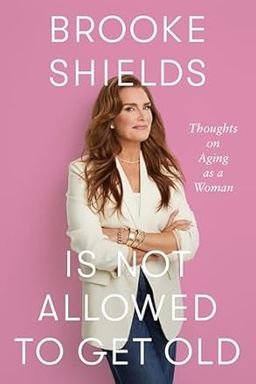
What if the years everyone warned you about turned out to be the exact years you finally felt most like yourself? In Brooke Shields Is Not Allowed to Get Old, Brooke Shields (with Rachel Bertsche) argues that midlife isn’t the beginning of the end for women—it’s the long-delayed beginning of living on your own terms. She contends that the supposed decline narrative is both culturally manufactured and commercially convenient, and that women in their forties, fifties, and beyond can claim a distinctly potent mix of clarity, confidence, and agency—if they stop waiting for permission and start scripting their own next chapters.
The cultural script is familiar: beauty fades, children leave, work dries up, and women recede. Shields calls BS. She walks you through how to rewrite that script: how to speak up at work and at home, how to advocate for your health, how to reframe bodies and beauty, how to see menopause as a transition—not a verdict—and how to build richer friendships, renegotiate marriage, and even start a company at a time many expect you to slow down.
The problem we inherit
Shields names the air you breathe but rarely see: ageism and the “invisible woman” effect. The data is stark. The Geena Davis Institute found that women over 50 comprised only 5 percent of film characters and were coded “frumpy” or “senile”; fewer than 1 percent of ads feature women over 60, despite that cohort’s outsize purchasing power. Academia still defines women of reproductive interest through age 49, making women’s health research and training gaps predictable (and damaging). The result? A civilization-scale blind spot that makes many women feel like their best days are behind them just as they’re reaching their prime.
The reframe that frees you
Shields reframes midlife as an accelerator, not a handbrake: the period when your experience finally matches your aspirations, your voice grows steadier, and your tolerance for nonsense drops to mercifully low levels. She shows this reframe in action through vivid stories: saying yes to a terrifying one-woman show at New York’s Café Carlyle (and discovering what kind of performing actually lights her up), clapping back publicly at Tom Cruise’s 2005 attack on her postpartum depression treatment, and relentlessly advocating for her own medical care after a broken femur, a staph infection, and a seizure that landed her in an ambulance with Bradley Cooper holding her hand.
What you’ll learn in this summary
You’ll see how to turn fear into a compass (not a stop sign), how to build “bankable confidence” one hard thing at a time, and how to become your own chief medical advocate when you encounter bias or dismissal. You’ll explore body image and beauty choices without the shame—Spanx hacks, Fraxel, dye, or gray—while prioritizing strength over smallness. You’ll demystify menopause and hear why education and community radically improve the experience (Dr. Suzanne Gilberg-Lenz calls it “the puberty of midlife”), and you’ll meet the friendships and solitude practices that make this era sweeter. You’ll also look squarely at marriage and sex in middle age—the shifting power dynamics, the pressure to maintain the male gaze, and the small, unglamorous habits that actually reconnect two people.
Finally, you’ll step into a bigger concept of ambition: how midlife can be the moment to start—not stop—whether that’s pitching a sitcom, launching a business (Shields’s hair-and-scalp brand, Commence), or speaking on a SXSW stage with Meghan Markle and Katie Couric. You’ll see how to fundraise amid mansplaining, why the average successful founder is 45 (Harvard Business Review), and how to use “weak language” strategically (Adam Grant) without weakening your point.
Why this matters now
Women over 40 are one of the fastest-growing, most economically powerful demographics—and yet they’re still sidelined by outdated tropes. Shields’s core insistence—that you are allowed to get older and expand, not contract—challenges not just the beauty-industrial complex, but how workplaces, healthcare, and families treat women in their prime. The payoff is personal and collective: greater happiness (the midlife “U-curve” bottoms earlier for women than men), better health (self-advocacy changes outcomes), and a culture less likely to waste hard-won female wisdom.
Big promise
Midlife won’t hand you your power; but if you claim it—by setting your own rules, renegotiating roles, and telling your story on your terms—it becomes the most expansive, creative, and connected chapter yet.