
Idea 1
Mastering Brevity in an Age of Overload
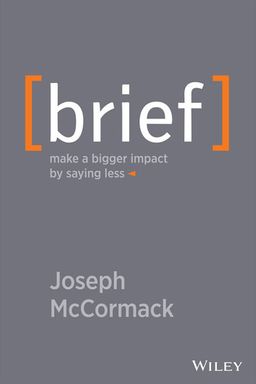
Have you ever walked out of a meeting wondering what was just said—or wished you could reclaim the hour you lost to someone’s rambling? In Brief: Make a Bigger Impact by Saying Less, Joseph McCormack tackles this universal frustration by showing why brevity has become the ultimate 21st-century leadership skill. In a world of constant distraction—smartphones buzzing, screens flashing, and minds multitasking—he argues that those who can speak, write, and present their message with clarity and economy will stand out, earn respect, and get results.
McCormack’s central claim is powerful: being brief isn’t about cutting corners; it’s about communicating deeply and intelligently within the limited attention span of today’s audiences. He introduces the concept of “deep brevity,” meaning conciseness with comprehension—where precision shows mastery, not superficiality. Brevity, he insists, is a habit that requires awareness, discipline, and decisiveness. These three pillars organize the book, forming what he calls the new ADD: Awareness of overloaded minds, Discipline to craft lean communication, and Decisiveness to know when and where to be concise.
Why Brevity Matters
McCormack starts by exploring the consequences of verbose communication. He tells stories of brilliant professionals who lose deals or derail careers by failing to get to the point—like the rising executive barred from client-facing roles because she couldn’t stop talking, or the Army officer whose entire presentation collapsed under a sea of PowerPoint slides. In today’s economy, attention is currency. For executives buried under information overload, brevity isn’t optional—it’s survival.
He describes how information inundation, inattention, interruptions, and impatience define modern life. You check your phone 150 times a day, scroll through endless e-mails, and attend meetings that rarely end on time. McCormack compares this environment to drowning; people don’t want your “big build-up.” They need your life preserver—clarity and purpose in the first minute. That means getting to the point before attention fades.
The Psychology of Attention
The book mixes practical advice with cognitive insights, citing experts like David Rock (Your Brain at Work) who explain how frequent interruptions drain mental energy and lower IQ. McCormack encourages readers to think of attention as a muscle that fatigues quickly. Your job, he says, is not to fight the distracted mind but to manage it strategically. By being brief, you help people process, remember, and act faster. Brevity, therefore, is not just good manners—it’s cognitive empathy.
From Awareness to Discipline
Once you see how flooded and impatient your audience is, you move to discipline. McCormack lays out four core techniques for what he calls “mental muscle memory”: Map it, Tell it, Talk it, and Show it. Each builds a skill for making complexity clear. You map your message visually before speaking, tell your story through compelling narrative, talk in controlled conversations rather than monologues, and show with visuals that engage and clarify. His examples—from Steve Jobs’s iPhone reveal to Southwest Airlines’ legendary storytelling culture—illustrate how disciplined brevity creates magic in business.
Decisiveness—Knowing When to Be Brief
McCormack’s final section turns to context: not every moment calls for terse phrasing, but you should know when it matters most—job interviews, meetings, presentations, sales pitches, and even digital communication. Each situation is fertile ground for brevity when done thoughtfully. He offers vivid stories from corporate leaders and military officers who turn complicated missions into crisp, memorable narratives by respecting time and attention. In each case, conciseness becomes not just a style but a leadership virtue.
Why Brevity Is a Competitive Advantage
Ultimately, McCormack wants you to see brevity as your differentiator—the skill that shows deep knowledge and emotional intelligence. He borrows a phrase from author Bernie Trilling: “light brevity” is being concise without comprehension, while “deep brevity” is succinct with savvy. To be brief, you must first go deep, then return with clarity. That’s hard work—but it pays enormous dividends in trust, influence, and efficiency. In our attention-deficit economy, he reminds you, people don’t just want information—they want understanding served in small plates.
Brevity isn’t about saying less—it’s about saying what matters most. It’s about people listening longer because you’ve earned their attention.
Through stories from corporate giants like W.W. Grainger and leaders like General William Caldwell, McCormack proves brevity can transform organizations. As you read, you realize being concise doesn’t trivialize complexity—it distills it. This book’s promise is simple but radical: if you master the art of saying less, you’ll finally be heard.