
Idea 1
Building an Enduring System for Play and Innovation
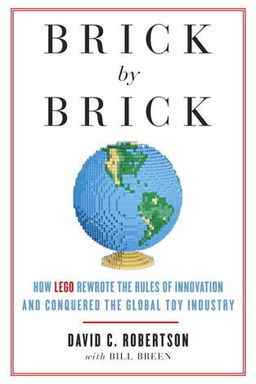
How can a company avoid the common trap of creative chaos while remaining endlessly innovative? LEGO, through decades of triumphs and crises, provides one of the best answers. Its journey—from a small Danish toy shop to a global creative powerhouse—is not primarily about the brick itself but about deliberately engineered values, systems, and disciplines that make continuous innovation possible. This book reveals how LEGO translated a simple purpose, "play well," into an entire operating philosophy for sustained creativity and resilience.
Values as Cultural Infrastructure
LEGO’s story begins with Ole Kirk Christiansen, who believed toys could build imagination and community in hard times. His motto—leg godt (“play well”)—was paired with another commandment: “Only the best is good enough.” Those values did more than advertise quality; they structured how decisions were made. When Godtfred Kirk Christiansen enforced product precision down to 0.1mm, when the company refused to compromise backward compatibility between bricks, and when leaders decades later reasserted these beliefs during crisis, they were practicing operationalized values. These ideals became “decision filters” that shaped everything from tooling budgets to product briefs. (Note: in business strategy, this mirrors Jim Collins’s concept of core ideology—values that survive every generational shift.)
Systems and Experimentation
The LEGO brick itself emerged not from a flash of genius but from relentless experimentation—a decade of tweaking molds, materials, and geometry. The 1958 patent for the stud-and-tube design, which gives bricks their unique “clutch power,” reflected the value of iterative learning. What followed was system thinking: the LEGO System of Play ensured every piece remained compatible across generations. This was as much a business design as a play philosophy. Each new set reinforced past purchases, reducing factory complexity and creating compound customer loyalty. The System made LEGO uniquely defensible even after patents expired.
Constraints and Discipline
Paradoxically, LEGO discovered that fewer options lead to greater creativity. By imposing strict limits on shapes, colors, and costs, the company forced deeper problem-solving within boundaries. When it ignored these constraints—adding thousands of bespoke elements and unprofitable ventures—it nearly collapsed. CEO Jørgen Vig Knudstorp’s later revival through “hard constraints” like minimum profitability (13.5% CPP) and manufacturing cost envelopes proved that creative freedom thrives within firm limits. (Compare this with Pixar’s “braintrust” protocol: freedom paired with disciplined review.)
Collapse and Renewal
By 2003, runaway innovation had damaged LEGO. Too many ungoverned projects, bloated inventories, and lack of cost visibility nearly bankrupted the company. The turnaround began when leaders returned to the core—refocusing on children, retailers, and the System itself. Operations were simplified; failed ventures were cut; designers were reconnected with customer testing. In short, values and accountability were reintroduced. The result: fast design cycles, higher hit rates, and regained retailer trust.
From Principles to Practice
LEGO’s rebirth wasn’t about any single blockbuster but the systematic cultivation of innovation muscles. Cases like Bionicle, Mindstorms NXT, and Ninjago each show a different part of this machine at work: technical invention, managed openness, and multidisciplinary team autonomy. The Innovation Matrix helped the company balance incremental (adjust), platform-shifting (reconfigure), and radical (redefine) innovations while preserving its creative rhythm. Sequencing mattered as much as creativity itself.
The Broader Lesson
For you, LEGO’s journey delivers a profound insight: enduring innovation doesn’t come from constant novelty but from repeatable disciplines that allow creative reinvention within constraints. By pairing experimentation with values, system design with governance, and autonomy with accountability, LEGO shows how a company can play infinitely—without ever losing its core. The brick became a metaphor not just for play but for organizational architecture: modular, resilient, and forever expandable.