
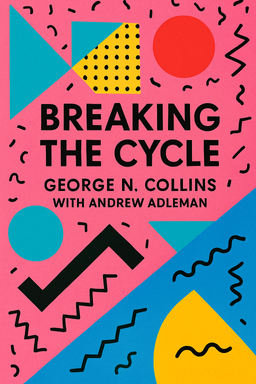
Breaking the Cycle cover

Breaking the Cycle

by George N Collins with Andrew Adleman

Breaking the Cycle provides practical exercises to help sex addicts distance themselves from compulsive behaviors. By focusing on personal introspection, mindfulness, and communication, this guide empowers individuals to reclaim their lives, prioritize well-being, and foster genuine relationships.

Breaking Free from the Grip of Sex Addiction

Have you ever found yourself repeating a behavior you know is destructive but just can’t seem to stop? In Breaking the Cycle: Free Yourself from Sex Addiction, Porn Obsession, and Shame, George N. Collins brings you face-to-face with the raw realities of sexual compulsion—and the liberating path out. Drawing from his own years of addiction and two decades of counseling experience, Collins argues that sexual addiction is not about lust or lack of morality but about emotional disconnection, shame, and unresolved childhood pain.

Collins contends that sex addiction thrives on the illusions produced by a compulsive mind—the mind’s incessant need to soothe itself through stimulation and fantasy. He insists that genuine recovery requires you to stop identifying yourself with your cravings, your obsessive thoughts, or even your past. “You are not your mind,” he repeats—a phrase that echoes throughout the book. By understanding the addictive mind as a set of automated thought patterns, you can begin to observe it, dialogue with it, and ultimately reclaim your power of choice.

From Shame to Awareness

Every story in this book—from Bob caught by his daughter at the computer, to Howard on a harrowing confrontation with a sex worker—illustrates how unacknowledged shame leads to destructive cycles. According to Collins, these behaviors don’t emerge out of nowhere. They are coping mechanisms developed to manage early experiences of neglect, fear, confusion, or emotional incest. As children, most addicts learned that vulnerability was dangerous or unwanted, so they replaced intimacy with sexual fantasy and secrecy.

To break that pattern, Collins urges readers to trace the roots of their compulsions—to uncover what he calls the “original emotional wound.” It might have emerged from abandonment, abuse, or even subtle parental manipulation. Healing comes not from repressing these memories but from bringing compassionate attention to them. Like a therapist guiding an investigation, Collins asks you to become your own detective, your own “C.S.I.” analyst, uncovering the story beneath your story.

How the Addictive Mind Works

Central to Collins’s philosophy is the discovery that much of what addicts think and feel is run by “subpersonalities”—fragments of the mind created in childhood. These parts, which he calls the “inner amphitheater,” replay old dialogues, fears, and defenses. One voice says “You deserve this pleasure,” while another whispers “You’re a freak.” The addict self lives among these voices, manipulating emotions to lure you back into the old pattern. The revolutionary move, Collins suggests, is to “turn on the lights” in the amphitheater—to see these voices for what they are and to separate your true self from the noise.

From there, Collins emphasizes the creation of new mental software. Recovery is not just abstaining; it’s rewriting the script. By practicing techniques like the “Red Light Guy,” “Blue Sky and High Heels,” and “First Thought Wrong,” you retrain the brain to respond differently to triggers. The addict’s impulses stop ruling your life when you recognize that they are just thoughts, not truths. In that awareness, freedom begins.

Why This Work Matters

Sex addiction is a modern epidemic, fueled by endless access to porn and fantasy through devices that never turn off. Yet Collins argues it’s not the technology—it’s the emptiness inside. Recovery means cultivating awareness, intimacy, and what he calls “your essential self”—a part of you untouched by fear or shame. From this place, you can experience what he calls “true intimacy,” a level of connection impossible through screens or sex for hire.

In essence, the book maps a spiritual and psychological transformation: from compulsion to consciousness, from secrecy to authenticity, from objectification to love. It’s part memoir, part therapy manual, and part spiritual guide. Along the way, Collins blends modern psychology with insights from teachers like Eckhart Tolle and Roberto Assagioli, grounding his techniques in both science and mindfulness. He closes with a call to “tell the young men”—to break generational cycles of secrecy and shame by modeling vulnerability and respect.

For anyone feeling trapped by compulsive behaviors or haunted by shame about desire, Breaking the Cycle offers more than recovery—it offers a roadmap back to the self, proving that no matter how far you’ve fallen, you can always choose again, and grow into the person you were meant to become.


Facing the Addict Within

Collins begins with the fundamental step of recovery: seeing the addiction for what it is. The book opens with Bob’s horrifying experience—caught by his young daughter while watching violent pornography. That moment of exposure becomes a literal and emotional bottom. The story captures the double life of many sex addicts: outwardly “nice guys,” inwardly ruled by compulsions. Collins’s message is clear: until you admit the addiction, you remain under its spell.

The Power of Denial

Sex addiction often hides behind moral rationalization (“I’m not hurting anyone”) or social normalization (“Everyone watches porn”). As Collins notes, denial itself is the addiction’s armor. Facing the addict within means dropping the stories and excuses the mind spins. The hallmark of addiction, he reminds us, is doing something over and over that brings suffering—but believing the next time will be different. Recognizing that pattern is the first light in the darkness.

Bottoming Out—or Climbing Out Early

Through stories like Bob and Howard’s, Collins dramatizes both the crash and recovery process. Some hit “low bottoms” that destroy families or careers. Others, like Howard, find intervention earlier—his counseling “field trip” with Collins to confront a sex worker illuminates the hidden pain behind the fantasy. By arranging real-world experiences that expose the lie of objectification, Collins teaches his clients—and his readers—what denial hides: every “perfect” sexual fantasy masks human pain. You don’t have to lose everything to wake up; you can choose to change now.

Once you accept that choice, you open space for the core message of the book: freedom is possible, but only if you are radically honest—with your counselor, your partner, and most crucially, yourself.


Turning on the Lights in Your Mind

After identifying the addiction, Collins invites you to enter your inner world—what he calls your “personal amphitheater.” It’s a vivid metaphor for the mind: you stand onstage under bright lights while voices whisper in the darkened audience. Some voices belittle you (“You’re not good enough”), others tempt you (“You deserve one more look”), and some echo your parents or childhood fears. This exercise mirrors techniques from psychosynthesis (Roberto Assagioli) and Internal Family Systems therapy, helping you turn on the lights and see which subpersonality is speaking.

Dialogue with the Addict Self

“Your addict is not your enemy,” says Collins, “but a child stuck in time.” Through inner dialogue, you learn to speak to that part of yourself rather than being controlled by it. In one story, Zane, a former voyeur, imagines confronting his subpersonality “The Looker” in a gymnasium. By demanding the Looker step into the light, Zane discovers his urge to stare traces back to boyhood curiosity and loneliness. This practice shrinks shame and transforms compulsive urges into understanding. You realize that your inner chaos isn’t madness—it’s a cast of neglected characters waiting to be acknowledged.

Writing Your Script Anew

Turning on the lights breaks the automatism of thought. Once you identify these voices, you can—in Collins’s words—“take the director’s chair.” You’re no longer living a recycled script written by childhood pain. You begin to rewrite. This is mindfulness in action, a hands-on application of what teachers like Eckhart Tolle call “watching the thinker.” The moment awareness enters the amphitheater, the addiction loses its hypnotic power.

This chapter marks a turning point: the reader moves from being a prisoner of compulsive thinking to being an observer. As Collins’s clients find, each conversation with their addict self ends the illusion of helplessness—and begins the practice of sovereignty.


You Are Not Your Mind

The boldest claim in Breaking the Cycle is also its simplest: “You are not your mind.” Collins, echoing Eckhart Tolle’s philosophy, reframes addiction as identification with thoughts. Your mind is like a library filled with euphoric recall—memories of sexual pleasure without the consequences. Each time you’re triggered, your brain opens that old book of illusions. But that book is not you.

Understanding Euphoric Recall

Euphoric recall is the mind’s deceitful memory loop—remembering the thrill without the crash. Addicts replay the first high, constantly chasing a phantom. Collins uses stories of clients like Larry, who stood outside a porn shop texting his counselor rather than going inside, to show how awareness defeats the cycle. When Larry stood still and observed his urges rather than obeying them, he reclaimed agency. The rush faded, and choice returned.

Watching Thoughts Like Clouds

Practicing awareness means noticing thoughts without believing them. “Mind talks all day,” says Collins, “but you don’t have to answer.” Just as a sky holds clouds without being the clouds, your consciousness holds thoughts without being defined by them. When you see your mind’s chatter as just weather, the storms lose their danger. This separation—between mind and essence—is the heart of freedom.

Addiction, then, is not a moral flaw—it’s a trance. To awaken, you must become more than the story your mind keeps telling. That realization, writes Collins, “is the difference between being enslaved and being free.”


Excavating Your Original Wound

Addiction, Collins warns, is a coping strategy for emotional pain. To heal it, you must uncover what he calls your “original emotional wound”—the early experience that fractured your ability to feel safe and connected. In chapter after chapter, he acts like a compassionate detective, guiding readers through their psychological crime scenes.

Becoming Your Own Investigator

Using a “C.S.I.” method, Collins prompts you to examine your childhood: How was love expressed or withheld? Were there secrets, shame, or distorted messages about sex? How did you soothe loneliness? Each question is designed to reveal the moment your story about love, power, or worth got corrupted. For many, the pattern begins with emotional neglect or confusion—what Collins identifies as “emotional incest,” where a parent oversteps boundaries and turns the child into a surrogate partner. That confusion often becomes eroticized, making adult intimacy terrifying.

Facing Pain Without Blame

Collins emphasizes that this exploration isn’t about blaming parents but understanding how pain became pattern. When you uncover your wound, you can finally choose new ways to cope. Writing exercises like the “unsent letter” help transform old anger into clarity. Clients like Keith, who dialogued with his inner “Hotshot,” learn to convert the raw energy of craving into adult responsibility. Healing, says Collins, means transforming shame into strength—a process of seeing the child in you, comforting him, and letting him grow up.

By facing your wound, you begin to see that your addiction was never about the porn, the affair, or the prostitute—it was about escaping a pain you didn’t yet know how to bear.


Mastering Triggers and Addictive Energy

Triggers are everywhere: a scent, a song, the sight of blue sky. In one striking story, Collins describes being overtaken by the sound of high heels and the color of the sky—two sensations that unconsciously linked to his old porn rituals. Instead of collapsing into the urge, he gripped his chair and asked, “What is this really?” until the illusion broke. The experience birthed his famous “Blue Sky and High Heels” technique—a tool for recognizing your triggers and demystifying them before they take control.

Disrupting Automatic Responses

Triggers, Collins explains, are stored patterns of euphoric recall. The brain associates cues (perfume, location, even music) with dopamine hits. By noticing these cues and labeling them—“This is my trigger” —you weaken their power. Combined with his Red Light Guy method, where touching your heart signals a conscious pause, each trigger moment becomes an opportunity for mastery rather than relapse. “You don’t have to pull the trigger,” Collins writes. “You can laugh at it.”

Converting Sexual Energy

Rather than repress desire, Collins teaches conversion—shifting the same energy that fuels fantasy into creativity, intimacy, and presence. When clients like Evan or Henry install their “Red Light Guy,” they train their brains to stop compulsive looking and instead admire, breathe, and choose differently. Over time, this becomes automatic, freeing them from constant shame. The trigger no longer runs you; you run the trigger.

This chapter turns relapse into practice. Each trigger faced with awareness becomes a mini-victory—a rehearsal for freedom.


Learning to Choose: The Power of 'What Else?'

The turning point in every addict’s story is the realization that you always have a choice. Collins insists that compulsion thrives on the illusion of inevitability—“I couldn’t help it.” The antidote is the question he teaches all his clients: What else? Each time your addict whispers, “just this once,” you ask, “What else can I do instead?” This simple question disrupts decades of conditioning.

Choice Points in Action

Consider Barry, who created a mental “Choice Point” software in his mind—an awareness that activates the moment he’s tempted. When his addict protested, Barry reminded himself: choosing intimacy with his wife was better than a temporary high. Other clients replace porn time with hobbies, exercise, or service work. The challenge isn’t to be perfect—it’s to practice awareness until new choices become habit.

From Discipline to Freedom

Addiction limits possibility; choice reopens it. Collins’s exercises—creating “useful lists,” tracking triggers, writing out alternate actions—help reprogram behavior. Soon, guilt-driven abstinence transforms into authentic desire for change. Each conscious decision builds integrity, forming what Collins calls “Choice Point consciousness”: the moment you realize compulsion is an option, not a command.

The question “What else?” may sound simple, but it’s revolutionary. It teaches the addict’s brain that life is bigger than its urges—and that freedom is always one choice away.


Taking a Stand and Becoming Your Own Hero

At the heart of Breaking the Cycle is courage—the willingness to confront the inner bully head-on. Collins calls this process Taking a Stand. After a sleepless night at a silent retreat, tormented by his “false self” shouting in his head, he finally yelled, “Kill me or shut the fuck up!”—and silence followed. That moment became his turning point: he realized he could face down any voice, including the addict’s.

Fighting in the Amphitheater

Taking a stand isn’t violent—it’s firm love. In one chapter, Steve literally urinates on a porn magazine left in the road as a symbolic act of defiance. Another client imagines himself in an MMA ring, battling his addict-self until his “True Self” wins. These vivid metaphors remind readers that the addict is not a monster but a habit—and habits yield to firm boundaries. Collins’s acronym HALT (Hurt, Angry, Lonely, Tired) teaches awareness of emotional triggers before relapse. The act of halting—literally stopping—becomes an act of self-respect.

From Shame to Heroism

Many addicts feel powerless; taking a stand restores dignity. Collins reframes recovery as an epic story: you are the protagonist confronting the villain of compulsion. Each time you resist, you reclaim authorship of your life. The hero’s reward isn’t perfection but peace—the relief of being fully awake, accountable, and real.

Declaring “I am not my addict” is your battle cry. From that stance, every struggle becomes a victory, and every boundary a bridge back to freedom.


How Good Can You Stand It?

By the later chapters, Collins shifts from recovery to thriving. Once you stop drowning in shame, he asks, “How good can you stand it?” This question reframes pleasure—not as indulgence but as capacity for peace, love, and intimacy. Most addicts, conditioned by punishment, don’t know how to sustain goodness. Their nervous systems expect chaos. Collins’s experiment—asking that question twenty-five times a day—forces the mind to tolerate joy.

From Avoiding Pain to Embracing Presence

Addiction is the avoidance of discomfort. Freedom is learning to inhabit stillness. Collins shows this through success stories: Leon, who finally listens to his inner silence and ends up serving humanity through his new career; Marshall, who discovers his purpose as a counselor after one quiet session of simply “being.” When you reconnect to your essence—the silent awareness beneath thought—you discover that real pleasure is not the chemical rush but the peace of being fully present.

Intimacy Over Objectification

True intimacy, Collins argues, is the opposite of addiction. It requires honesty, vulnerability, and connection. In heartfelt closing chapters, he coaches couples on rebuilding trust after betrayal, sharing triggers openly, and turning moments of weakness into laughter and closeness. His stories—like joking about a strip-club sign with his wife—show that humor and transparency can defuse shame. Intimacy becomes not what you get from others but how real you can be with them.

When Collins ends by urging men to “tell the young men,” he points to generational healing. The greatest reward for breaking the cycle isn’t just sobriety—it’s the ability to model wholeness, to live as evidence that joy and sexuality can coexist with integrity. Healing, he concludes, is not about how low you’ve sunk but about how good you can finally stand it to be.

Dig Deeper

Get personalized prompts to apply these lessons to your life and deepen your understanding.

Go Deeper

Get the Full Experience

Download Insight Books for AI-powered reflections, quizzes, and more.