
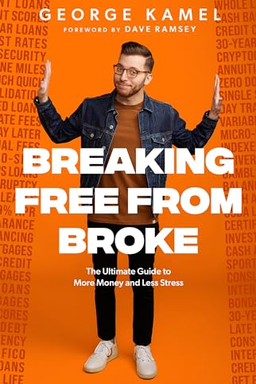
Breaking Free From Broke cover

Breaking Free From Broke

by George Kamel

In ''Breaking Free From Broke'', George Kamel reveals the financial philosophies that transformed his life from $40,000 in debt to a debt-free millionaire. Learn how to challenge traditional financial beliefs, break free from consumer traps, and achieve your financial dreams with actionable steps and a paradigm shift.

Breaking Free from a System Built to Keep You Broke

Why do smart, hardworking people still feel trapped by money stress? In Breaking Free from Broke, George Kamel argues that it’s not just about personal mistakes—it’s about a financial system deliberately designed to keep you dependent, indebted, and “average.” Through humor, research, and his own journey from debt-ridden millennial to Baby Steps millionaire, Kamel contends that freedom begins when you reject the toxic money culture and reclaim control of your income, choices, and peace.

The author’s central claim is that the average person’s financial struggle isn’t random. It’s a predictable outcome of myths perpetuated by credit card companies, lenders, schools, and marketing agencies that profit from consumer confusion. Kamel’s message echoes the teachings of his mentor Dave Ramsey but with a modern, witty twist designed for millennials and Gen Z: if being broke is “normal,” then normal sucks—and it’s time to do something radically different.

The Trap of “Average”

Kamel begins the book reflecting on his transformation from broke college graduate buried in student loans and credit cards to paying off his house by age thirty-two. He contrasts “average” Americans—those living paycheck to paycheck—with those who think and act differently about money. Average people depend on debt, believe credit scores signal success, and spend impulsively under the influence of marketing. But freedom starts when you reject debt, budget intentionally, and build real wealth. His personal narrative makes this message relatable: George went through Financial Peace University, cut up his credit cards, and used Dave Ramsey’s Baby Steps to become debt-free. This story anchors his larger philosophy that money success is simple—but countercultural.

Exposing the System

The first half of the book unpacks how the financial system manipulates consumers through what Kamel calls a “money matrix.” Chapters peel back layers surrounding credit scores, student loans, car loans, mortgages, and investing traps. He demonstrates that these industries thrive by normalizing debt and convincing you that borrowing equals freedom. In turn, your paycheck becomes someone else’s gain. By using data from Ramsey Research and national reports on household debt, he paints a startling picture: over half of Americans feel stuck or hopeless financially. He invites readers to see these chains for what they are – cultural myths dressed as wisdom.

Breaking Free: The Baby Steps Roadmap

Once the lie is exposed, Kamel’s solution is both practical and hopeful: seven straightforward steps known as the Ramsey Baby Steps. These are timeless principles—like saving for emergencies, paying off debt with the Debt Snowball, investing 15 percent of income, and living generously—that have helped millions escape debt slavery. He brings these steps to life through humor and modern examples (Uber hustles, budgeting apps, selling junk on Facebook Marketplace) that prove you can reclaim control regardless of income. His book makes the old-school Ramsey plan feel fresh and accessible for a new generation impatient with jargon and skeptical of corporate greed.

Money as a Means to Freedom

Yet, as Kamel notes, this book isn’t just about dollars—it’s about living a meaningful life. Money is simply a tool to build peace, patience, and purpose. The second half of Breaking Free from Broke explores the deeper virtues connected to financial wellness: budgeting as freedom, spending as self-control, margin as breathing room, debt as theft, savings as peace, wealth as patience, and generosity as joy. Each theme connects back to the “fruit of the Spirit” in Galatians 5, showing how emotional and spiritual health intertwine with financial responsibility.

Why It Matters

Kamel’s approach feels both spiritual and pragmatic. He reminds readers that the fight to break free isn’t about chasing luxury—it’s about reclaiming peace of mind. The system’s chains aren’t just economic; they’re psychological, keeping you anxious, distracted, and discontent. “Ignorance was bliss—until it was broke,” he writes, urging readers to wake up, renew their minds, and choose hope over cynicism. The payoff? True freedom where every dollar serves a purpose and money no longer controls you. This book ultimately teaches that becoming wealthy isn’t the goal—becoming whole is. If cynicism keeps you stuck, hope sets you free.


Chained to the System

Kamel opens his deep dive into America’s money problems with one unsettling truth: the financial system isn’t broken—it was built to keep you broke. In “Chained to the System,” he dissects how generations have been trapped by normalized debt and misinformation. Using humor and research, he argues that our debt dependence—from car loans to credit cards—is the result of cultural conditioning rather than necessity.

Debt as a Cultural Default

We’re told to “build credit,” buy houses on 30-year mortgages, and take student loans as “investments.” Kamel recalls his own upbringing in a world where borrowing was presented as progress. His Egyptian-Syrian parents quickly adopted the American debt culture after immigrating, believing it represented success. But Kamel shows how this mindset wrecks lives: over 78% of workers live paycheck to paycheck, and countless families depend on credit to “make ends meet.” He likens it to being passengers in an Uber “ride from hell,” driven by lenders who profit from your anxiety.

The System’s Hidden Drivers

Kamel breaks down culprits behind the “broke epidemic”: inflation, higher education costs, lobbying, corporate greed, and psychological manipulation through marketing. He points out that debt isn’t only a personal failure—it’s systemic. The industries that preach “financial empowerment” through credit cards or student loans thrive precisely because people stay trapped. He warns that economic inequality feeds on ignorance, and the antidote is financial literacy.

Choosing Freedom Over Victimhood

The chapter concludes with Kamel’s rallying cry: stop blaming external forces and start taking ownership. You can’t control Congress, inflation, or corporate corruption—but you can control your spending, your beliefs, and your habits. The first act of rebellion is awareness. Kamel uses Voltaire’s quote—“It’s hard to free fools from the chains they revere”—to remind readers that most people cling to debt because they see it as necessary. He urges readers to rebel against “normal” by creating a budget and following the Ramsey Baby Steps. Freedom, he insists, isn’t granted—it’s chosen.


The Credit Score Myth

In “Credit Scores,” Kamel tears apart one of America’s sacred financial myths: that a high credit score equals success. He calls it the “I-love-debt score,” a number built entirely on how well you borrow and repay money—not how well you manage or build wealth. This chapter exposes how the obsession with credit scores keeps millions chained in perpetual debt, thinking they’re doing well when they’re actually stuck.

The Modern Sisyphus

Like Sisyphus eternally pushing his boulder uphill, Americans chase credit points only to have them fall again with every payoff. Kamel humorously compares this to a hamster wheel disguised as a financial treadmill. Each factor of the FICO score—payment history, amount owed, new credit, credit mix—rewards debt usage, not financial health. You’re punished for paying off loans early, closing accounts, or living debt-free.

Freedom Without the Score

Kamel insists that it’s not only possible but empowering to live without a credit score. He personally became “credit invisible” after paying off all consumer debt and has since bought cars, rented apartments, and even purchased a home without it—through manual underwriting and paying in cash. He walks through practical alternatives: paying cash for cars, renting with debit cards, and applying for no-score mortgages with companies like Churchill Mortgage. These examples dismantle the myth that debt is required for adulthood.

The Real Measure of Financial Health

The chapter turns philosophical: financial health shouldn’t be measured by how much you owe but by what you own. As fellow Ramsey personality Rachel Cruze says, “If your credit score is higher than your bank balance, you’re headed in the wrong direction.” Kamel urges readers to trade the lender’s approval for personal peace. True financial success isn’t a number—it’s freedom from numbers altogether.


Cutting Up the Plastic

“Credit Cards” is both confession and call to arms. Kamel recounts how his shiny AmEx and Discover cards made him feel “rich” until $4,000 in debt shattered that illusion. Referencing Dave Ramsey’s quip—“The credit card is the cigarette of the financial world”—he exposes how convenience and rewards mask addiction. Through humor and research, he shows why credit cards aren’t tools of freedom but instruments of manipulation.

The Illusion of Rewards

The author explores how credit card companies profit from psychology. They offer 2% cash back while charging 22% interest. In 2023, Americans hit $1 trillion in credit card debt, revealing how “small” conveniences lead to massive costs. Kamel cites a Federal Reserve study showing that rewards programs redistribute $15 billion annually from poorer to wealthier users—a modern Robin Hood story in reverse.

Breaking Up with Plastic

Using humor and personal experience, Kamel walks readers through the “plastectomy” he performed during Ramsey’s Financial Peace University—physically cutting up his cards. He debunks common arguments for keeping cards: fraud protection, credit building, and rewards. Debit cards, he explains, now carry the same protections without debt. His mantra: “You play stupid games, you win stupid prizes.”

The Joy of Real Cash

Kamel challenges readers to take his 30-day “No Credit Card Challenge,” using only debit or cash. He promises they’ll spend less and feel more peace. The act isn’t about deprivation—it’s about clarity. Freeing yourself from credit culture forces you to rediscover what true affordability feels like: buying things with money you actually have. He argues that when the pain of spending returns, wisdom follows.


Student Loans and the Price of the American Dream

In “Student Loans,” Kamel dismantles the myth of “good debt.” He argues that the trillion-dollar student loan industry sold generations a fraudulent version of the American Dream. Through gripping history and heartbreaking stories, he reveals how policies, banks, and universities created an education bubble that cripples millions before they even begin adult life.

A System Built on Lies

Using a historical timeline, Kamel traces student loans from Eisenhower’s National Defense Education Act (1958) to Obama’s reforms. He recounts the formation of Sallie Mae—a lender originally backed by the government—turning into a private profit machine that now holds Americans hostage. The result: average graduates owe nearly $40,000 and spend decades paying it off, delaying dreams of homeownership or family.

Debt Disguised as Opportunity

Kamel pairs data with painful anecdotes—like Jessica, the biology major burdened with $100,000 in loans and stuck in low-wage jobs. Her story symbolizes how “education marketing” feeds false hope. Parents, counselors, and colleges become unwitting accomplices in encouraging debt as destiny. He challenges readers to reject that narrative and pursue affordable or debt-free paths through community college, scholarships, and part-time work.

Freedom Through Education (Not Loans)

Kamel’s alternative vision is practical and hopeful. He offers steps to pay off loans fast using the Debt Snowball and explains how future students can graduate debt-free through better planning. He implores parents to drop pride and let their kids choose affordability over prestige. The overarching message: knowledge should set you free, not sell you into servitude.


The Path to Financial Freedom

Later chapters pivot from diagnosis to transformation. “Breaking Free from the System” and “Budgeting Is Freedom” mark the turning point—where awareness becomes action. Kamel insists the cure for money stress isn’t complexity but discipline, hope, and practical habits. His answer to a chaotic world? A simple monthly budget and living like no one else until you can live like no one else.

Budgeting as Empowerment

Budgeting, Kamel says, isn’t restriction—it’s liberation. He equates a well-managed budget to “lane-keep assist”: guardrails that keep your life on course. Through zero-based budgeting, you assign every dollar a job, transforming chaos into clarity. Using the EveryDollar app (part of Ramsey Solutions), Kamel helps readers ditch passive “hope-so” money management for active planning.

Debt-Free Momentum

His Debt Snowball method—paying debts smallest to largest—focuses on behavior, not math. As each bill disappears, momentum builds. Citing research from Harvard Business Review and TIME, he shows why quick wins create lasting discipline. Once debt is gone, savings and giving follow naturally. Hope replaces hopelessness.

A New Definition of Wealth

True wealth, Kamel concludes, isn’t about net worth but emotional peace. It’s patience over haste, discipline over despair. He challenges readers to see money as oxygen—necessary but not ultimate. Managed correctly, it brings freedom to spend wisely, save confidently, and give generously. The destination is peace; the vehicle is intentional living.


Generosity and Legacy

“Generosity Is Joy” closes Kamel’s journey with surprising emotion. The book crescendoes with the story of Amir and Connie, who paid off nearly $1 million in debt and secretly paid off their children’s mortgages. Kamel calls this “outrageous generosity,” arguing that giving is not the reward for wealth—it’s the reason to build it.

The Science of Giving

Generosity, Kamel explains, rewires your brain. Studies show that giving releases dopamine and oxytocin—the chemicals of joy and connection. He calls generosity “the antidote to anxiety” and “a cure for cynicism.” The happiest people aren’t the richest—they’re the most giving. This echoes research from The Paradox of Generosity by Smith and Davidson, which also proves generosity creates wellbeing.

Types of Generosity

Kamel lists three forms: planned (tithing and routine donations), spontaneous (responding to needs), and outrageous (life-changing gifts that transform others’ futures). He stresses that even small giving matters: start with a few dollars, give consistently, and watch your heart change. “A little giving now paves the way for giving a lot later.”

Legacy Over Luxury

Ultimately, Kamel frames generosity as legacy. Citing Proverbs 13:22, he says, “A good person leaves an inheritance for their children’s children.” The last step in breaking free from broke is not counting money—but losing count of your blessings. True wealth is measured in impact, not possessions. Generosity, Kamel reminds us, is joy in motion.

Dig Deeper

Get personalized prompts to apply these lessons to your life and deepen your understanding.

Go Deeper

Get the Full Experience

Download Insight Books for AI-powered reflections, quizzes, and more.