
Idea 1
Finding Meaning in Everyday Life
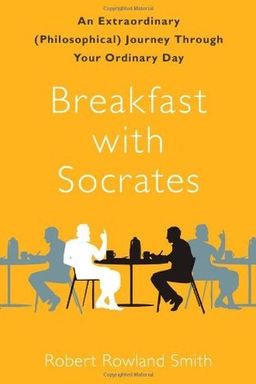
Have you ever wondered how much philosophy hides in your daily routines—from waking up and getting dressed to traveling to work and having dinner? In Breakfast with Socrates, Robert Rowland Smith argues that our ordinary actions are rich with philosophical, psychological, and cultural significance. He contends that the unexamined life, as Socrates declared, “is not worth living,” but that the modern way to examine life is to analyze our day, moment by moment. Everyday acts, Smith shows, contain insights from some of the greatest thinkers—from Descartes to Derrida, from Marx to Machiavelli—if we know how to look.
Smith’s core claim is that philosophy is not confined to dusty libraries or ivory towers; it is a living, breathing practice that accompanies us to the gym, to work, or even into the tub. By inviting philosophers to the breakfast table, he grounds grand ideas in morning coffee and morning commutes. The result is a book that functions as a thoughtful day-in-the-life—equal parts philosophical meditation and practical reflection on the meaning embedded in routine.
Philosophy in the Ordinary
Instead of abstract theories, Smith serves up tangible situations. When you wake up, he says, you are not simply opening your eyes but re-entering existence. When you argue with your partner or stand in line for coffee, questions of ethics, freedom, and identity arise. Our day becomes a map of philosophical inquiries: What does it mean to exist? Who am I when I’m at work? Why do I seek pleasure or company? From the first stretch in bed to the final dream of the night, Smith weaves thinkers from Socrates and Descartes to Freud and Foucault into modern life.
From Waking to Sleeping
Each chapter traces a familiar part of the day—waking up, getting ready, commuting, working, arguing, relaxing. In the morning, Smith brings Descartes into the bedroom: doubting that we exist until we think. As consciousness dawns, so does reason, with Kant challenging whether our perceptions are truly objective. Even religious ideas like resurrection are reflected in waking up, a resurrection of the small self from nightly death. By the time we reach the daily commute, Nietzsche whispers about the herd mentality, while Hobbes reminds us that every rush-hour crowd is a miniature war of all against all.
At work, Marx directs attention to power, money, and class—the difference between alienation and meaning—and Weber reframes success as the fruit of a Protestant work ethic. Even mundane irritants, like corporate hierarchy or bureaucracy, become windows on human purpose and social order. Later, when Smith brings us to lunch with our parents or into arguments with lovers, the lens widens to include psychology and emotion. Family meals reveal ancient dynamics of duty, dependency, and sacrifice. Lovers’ quarrels summon Freud and Schmitt, who reveal how conflict is actually a way of affirming our identity and our difference. Finally, when we collapse into sleep, Freud and Jung take over to explore what dreams hide beneath the eyelids—those unruly messages from the unconscious that make us strangers to ourselves.
Why Ordinary Philosophy Matters
What Smith ultimately argues is that everyday reflection is the key to transformation. We live most of our life in routines, and if we fail to bring awareness to those routines, we risk missing the meaning of our very existence. If Socrates had lived today, Smith imagines, he’d be drinking cappuccinos and asking why we live the way we do. The lesson: philosophy is not about escaping daily life but about returning to it more awake, compassionate, and conscious. Our real “examined life” is lived between breakfast and bedtime.
In this sense, Breakfast with Socrates sits within a broader tradition of accessible wisdom writing (akin to Alain de Botton’s works or Marcus Aurelius’s Meditations). It encourages readers to see the sacred in the simple—the metaphysical in “mundane” acts—and to use reflection as a daily spiritual practice. By the end, you realize that philosophy doesn’t float above life; it pervades it, right down to the toothpaste, the morning jog, and the final goodnight.
Key Takeaway: Life’s meaning is not revealed in rare moments of insight but in the patient reexamination of ordinary things. Philosophy is breakfast, not dessert—it’s how we begin to live thoughtfully.