
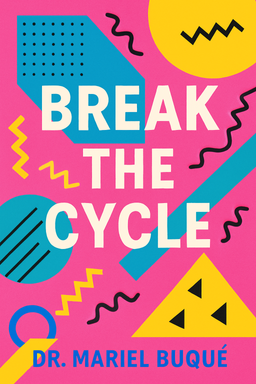
Break the Cycle cover

Break the Cycle

by Dr Mariel Buque

Break the Cycle by Dr. Mariel Buque explores the enduring impact of intergenerational trauma and provides a roadmap for healing. By embracing change, recognizing resilience, and practicing self-awareness, readers are guided toward a future of emotional freedom and growth, unburdened by past pains.

Breaking Intergenerational Trauma and Building Generational Peace

Have you ever wondered why certain fears, struggles, or patterns seem to run through your family—why your parents repeat their parents’ pain, and why you sometimes find yourself doing the same? In Break the Cycle, Dr. Mariel Buqué, a trauma-informed psychologist trained at Columbia University, argues that the answer often lies in intergenerational trauma—emotional pain passed from one generation to the next through both genes and learned behaviors. Her core contention is that you can be the person who stops that transmission, a cycle breaker transforming your inheritance of pain into a legacy of peace, abundance, and healing.

Buqué shares her story of three generations of women—her grandmother, mother, and herself—bonded by what she calls a “scarcity mindset” rooted in poverty and fear yet strong enough to survive and preserve. Her grandmother carried water for miles; her mother saved broken appliances out of fear of having nothing; and Buqué herself later realized she was saving things out of inherited guilt. Through that recognition, she learned what intergenerational trauma felt like: an emotional loyalty to pain disguised as love. This realization launched her mission to guide others to heal not just themselves but their lineage.

Understanding Intergenerational Trauma

As Buqué explains, trauma is the only category of emotional wounding that can cross generations—moving biologically through gene expressions and psychologically through learned experiences. Some of it is written into your biology: if your parents experienced trauma, their genetic code may have changed, leaving you more vulnerable to stress. The rest lives in your environment—through what families model, how caregivers respond, and how societies oppress. This twofold inheritance means trauma can live in your body, your behaviors, and your spirit, even if you never experienced the original events yourself.

The good news is that because this dual inheritance is learned and embodied, it can also be unlearned and transformed. Healing requires a multidimensional approach—mending mind, body, and spirit together rather than treating them as separate systems. Buqué blends modern psychology and ancestral practices, such as sound baths and holistic rituals, to help people release trauma encoded in all parts of their being. These methods aim not just to alleviate symptoms but to restore wholeness, an idea echoed in works like Bessel van der Kolk’s The Body Keeps the Score and Gabor Maté’s When the Body Says No, which describe the way stress embeds itself in the body until expressed or released.

The Cycle Breaker’s Path

In her model, Buqué divides healing into three acts. In Part One, What You Inherited, you become aware of the generational patterns in your family—learning how trauma resides in the body, how it transmits genetically, and how to identify its signs through tools like the Intergenerational Trauma Assessment. In Part Two, There Are Layers to This, you explore the sources that deepen these wounds, such as your nervous system’s triggers, your intergenerational inner child, cycles of abuse, and the way collective traumas (like colonization or economic inequality) infiltrate homes. Finally, in Part Three, Alchemizing Your Legacy, you grieve your lineage’s pain, embody generational resilience, and begin building an inheritance of love and ease for future generations.

Buqué insists that becoming a cycle breaker is a deliberate act of courage. You may never feel “ready”—healing rarely unfolds neatly—but deciding to start is enough. She encourages practical rituals, journaling, and what she calls “Breaking the Cycle” practices, which include everything from grounding through breathwork to writing ancestral letters or even sound bath meditation. Each chapter offers exercises to help integrate learning into practice, ensuring that transformation is embodied rather than intellectual.

Why This Work Matters

Buqué’s central message is both scientific and spiritual: your family’s pain is not your destiny, and your DNA need not dictate your emotional future. Healing intergenerational trauma allows both backward and forward healing—your progress liberates ancestors who suffered before you and protects descendants yet to come. She reminds readers that ancestral grief can coexist with ancestral strength. Just as trauma is inherited, so is resilience.

Ultimately, Break the Cycle is not a book just to read but to live. It’s a comprehensive roadmap for turning insight into practice—for gently facing inherited pain, grieving what was lost, and laying down the burdens you’ve carried unconsciously. As Buqué writes of her family’s evolution: “We are breathing life again into our lineage.” The invitation is simple yet profound: transform loyalty to pain into loyalty to peace. The work begins with you, and the legacy continues through everyone you touch.


Becoming a Cycle Breaker

Buqué opens her first chapter by naming you—a reader—as a cycle breaker, someone who chooses to interrupt harmful family patterns and lay down emotional burdens inherited through generations. She writes, “It’s up to us to break generational curses.” This identity, she explains, is both personal and collective: when you heal yourself, you send ripples of peace backward to ancestors and forward to descendants.

Owning the Title

Cycle breakers often don’t realize they are one. They simply feel an intuitive urge to do life differently—to stop perpetuating patterns of silence, fear, or shame. Buqué lists the lived qualities of cycle breakers: seeing generational wisdom even amid pain, disrupting trauma responses, accepting responsibility for maintaining cycles, and practicing spiritual grounding. You may already embody these traits without naming them. Recognizing yourself as such is the first act of liberation because it reframes struggle as purposeful change.

Navigating Readiness

Buqué stresses that no one feels fully prepared for deep healing. Readiness often arrives as a whisper—from dreams, intuition, or ancestral messages. She recounts her own pivotal dream in which her father’s voice said, “My child, it is time.” Similarly, one client saw an ancestor appear as a blue aura and heard the call to “fight the battle.” These moments mark unconscious readiness, the soul’s acknowledgment that transformation must begin even without certainty.

Holistic Practices and Rituals

Healing, Buqué emphasizes, is holistic—the mind, body, and spirit must heal together. She defines mental holism as “treating the whole person.” Her personal story about grieving her grandmother through the breaking of a cherished mug illustrates this multidimensional approach: she soothed her mind through self-compassion, her body through breathing, and her spirit through ancestral letter writing. That triad—mind, body, spirit—becomes the foundation for every practice in the book.

She introduces grounding and coping skills, such as the five-senses technique and the “cope-ahead” visualization exercise—imagining surviving a challenge to remind yourself that every problem is survivable. Because opening emotional doors can be triggering, Buqué emphasizes psychological safety: staying present without fleeing mentally or physically. Tools like sound bath meditation—vibrations that recalibrate the nervous system—help anchor calm during distress. These practices echo those described by Buddhist and Ayurvedic traditions emphasizing vibrational balance as part of emotional healing.

Healing in Community

Healing alone might feel overwhelming, so Buqué welcomes “co-healing partners.” These companions can be living people or ancestors whose presence feels safe. Healing must never involve those who trigger further harm; rather, it should unfold alongside those who embody psychological safety. This concept mirrors communal healing principles in Indigenous traditions, where wellness is sustained through collective ceremonies and mutual witnessing.

Breaking Generational Agreements

To begin your transformation, Buqué recommends a ritual called Break Your Generational Agreement. Write and destroy a symbolic contract releasing the unconscious agreement to keep cycles of pain alive, then sign a new contract committing to being the cycle breaker. This act of written promise turns intention into embodiment—an ancient psychological principle echoed in Gestalt therapy’s use of externalization to solidify inner change. She ends by reminding you that your ancestors are proud. The moment you tear the contract is the moment the cycle begins to end.


Your Intergenerational Higher Self

After recognition comes elevation. In this chapter, Buqué invites you to move beyond survival and connect with your intergenerational higher self—the wise, grounded version of you that integrates ancestral resilience and personal intuition. It’s not about being perfectly healed but consciously enlightened, living from a place of peace rather than perpetual reaction.

What the Higher Self Is

Your higher self is the inner consciousness that holds clarity and calm even in chaos. The intergenerational version carries the cumulative wisdom of your ancestors, transforming inherited pain into guidance. Buqué recalls her own moment of activation: at Columbia University, overwhelmed by racism and classism, she wanted to quit—until her mother reminded her, “You come from a lineage of strong and resourceful people. God has your back and so do we.” Those words became her mantra; they broke her “impostor syndrome,” a lie embedded through generations of exclusion.

Tapping Into Your Higher Self

To communicate with this wiser part of yourself, Buqué offers several portals:

  • Sitting in silence to clear mental clutter
  • Active meditation—walking, yoga, dance—to enter mindful movement
  • Dream analysis to decode subconscious ancestral messages
  • Nature connection, from barefoot walks to leaf-gazing exercises
  • Dialogues and journaling with your wiser self as if speaking face-to-face
  • Visualization—imagining your healed self or an ancestor offering guidance

Each practice opens sensitivity to intuition, compassion, and hope—the antidotes to intergenerational fear. As you practice, Buqué encourages patience and curiosity; wisdom may surface as a feeling, color, or voice rather than words.

The Empty Chair Technique

Buqué adapts Gestalt therapy’s empty chair technique into a three-chair model representing your wounded self, intergenerational higher self, and ancestral self. Moving between these positions—or imagining them—creates dialogue among your pain, your wisdom, and your lineage. You might speak forgiveness from your ancestral self or compassion from your higher self, merging the three into unity. This embodiment transforms abstract healing into physical, lived integration—a holistic union of mind, body, and spirit.

(In similar spirit, Deepak Chopra’s concept of the “Higher Self” and Alethia Luna’s writings on soul consciousness also regard enlightenment as returning to inherited wisdom rather than seeking external validation.) The invitation is simple: your ancestors’ insight already lives within you. Healing is not discovery—it’s remembrance.


Your Body Remembers Your Trauma

Buqué’s third major lesson: trauma is not just emotional memory—it’s biological reality. Your body stores every stressor through what neuroscientists call the allostatic load, the cumulative impact of chronic strain. Generations of hypervigilance, scarcity, and oppression can leave physical imprints—altered hormones, inflammation, and even genetic restructuring.

The Mind–Body Link

She explains that an estimated 60–80% of primary care visits stem from stress-related issues: insomnia, fatigue, digestive disorders, or heart trouble. When you live in survival mode, your body suppresses nonessential functions, including complex reasoning and healing. Emotional wounds, if ignored, manifest as chronic disease—a message of imbalance. Her training at Columbia’s holistic mental health fellowship showed that true healing integrates physical medicine with emotional therapy. She cites clients whose lung or autoimmune conditions improved only when their emotional grief was addressed alongside medical treatment.

Stories that Bring Science to Life

Her client Nola suffered idiopathic lung disease—no physical cause found—yet felt lifelong grief. When Buqué treated both her body and mind through group collaboration with physicians and nutritionists, Nola began to breathe easier. Buqué’s sister Lady, also with lung illness, mirrored that pain; both women had spent years in emotional survival, forced caregiving, and suppressed grief. The lungs, as Eastern medicine teaches, hold sorrow. Healing required releasing inherited grief and unlearning the burden of “saving everyone.”

Buqué also connects trauma to autoimmunity, depression, sexual health, and inflammation, illustrating how emotional stress rewires neurological and hormonal pathways. Yet because stress is bidirectional, healing the mind can heal the body. Meditation, movement, and even mindful tea rituals reduce inflammation and promote homeostasis.

Holistic Medicine and Ancestral Wisdom

Buqué honors her grandmother’s Lemongrass Healing Tea as ancestral medicine—a herbal anti-inflammatory ritual connecting generations. She encourages holistic practices from global traditions: Ayurveda, Chinese medicine, African-derived dancing, and Indigenous spirituality. Healing should feel personal and communal, she insists; even making tea mindfully can be sacred therapy.

Vagus Nerve Stimulation

Finally, she teaches how to detoxify stress through the ventral vagus nerve, the body’s relaxation channel. Humming ancestral songs while placing hands on heart and belly sends neurological signals of safety—a practice proven to activate serotonin, dopamine, and oxytocin. Imagine these vibrations traveling through generations, calming not only your body but also ancestral echoes of anxiety. When you hum, she writes, you liberate your lineage’s breath.


Mapping Generational Trauma

Once you recognize stress in the body, Buqué guides you to identify its family origins through intergenerational mapping. This means investigating both overt traumas—violence, poverty, displacement—and subtle emotional strains like silence or guilt. Understanding what you inherited gives you power to change it.

Unhealed Trauma and Strain

Buqué compares unhealed emotional wounds to untreated physical ones: they spread and infect all other parts of life. Many people carry “intergenerational strain,” a burden accumulated over centuries within body, mind, and spirit. Drawing on Indigenous and Afro-descendant cosmologies, she explains that psychological crises often signify spiritual gifts lost across generations—each person’s pain invites communal recovery. You carry hundreds of ancestral stories; understanding them turns sorrow into data, transforming grief into knowledge.

The Intergenerational Trauma Healing Assessment

Her practical diagnostic tool—the Intergenerational Trauma Healing Assessment—helps you catalog abuse, separation, addiction, cultural violence, illness, and silence within your family. Conducted within a safe, grounded environment, this reflective exercise encourages you to treat your lineage as research, analyzing patterns rather than blaming individuals. It includes mindfulness techniques and sound bath meditations to maintain calm while facing painful truths.

Creating Your Intergenerational Trauma Tree

Buqué’s visual “Trauma Tree” helps map inherited wounds. Each part of the tree symbolizes an aspect of familial trauma:

  • Leaves: individual family members and their traits, illnesses, or trauma responses
  • Trunk: how their pain shaped you directly or indirectly
  • Roots: the limiting beliefs internalized from those experiences
  • Soil: cultural and societal values maintaining those patterns

Working through this tree transforms abstract genealogy into therapeutic clarity, much like genograms used in systemic therapy (as discussed by Murray Bowen). By visualizing trauma as a living ecosystem, you can see where pruning and new growth must occur.

Releasing the Weight

Buqué reminds readers to pause often—grief and revelation are heavy. After completing the tree, journal about sensations and emotions: Where does your body hold the pain? How does your spirit respond? This reflective integration converts awareness into empathy rather than guilt. Healing, she concludes, begins when knowledge meets compassion.


Healing the Intergenerational Nervous System

In the book’s second part, Buqué deepens the biological explanation of trauma through the idea of an intergenerational nervous system—a shared emotional ecosystem within families. When one member is triggered, others often mirror the reaction. This explains why some households live in constant tension: survival mode becomes hereditary.

How the Nervous System Cycles Continue

Buqué outlines three branches of the nervous system: sympathetic (fight or flight), dorsal vagal (freeze or fawn), and ventral vagal (rest and safety). Families tend to recycle specific responses—one parent fights, another flees, a child freezes. These learned patterns form the core of the intergenerational nervous system. When trauma remains unaddressed, hyperarousal becomes normalized, narrowing everyone’s window of tolerance—the emotional range where stress feels manageable.

Inherited Triggers and Memories

Triggers reopen historic wounds, teleporting you back to unresolved pain. Buqué explains the concept of intergenerational memories through scent genetics: one client’s family felt nauseated by coffee because their grandfather was attacked near that smell. Such sensory memory, transmitted biologically, shows that the past literally lives in our bodies. Recognizing these triggers expands emotional awareness and halts automatic reaction.

Expanding the Window of Tolerance

To widen this window, Buqué teaches a modified Emotional Freedom Technique (EFT) combining breathwork, tapping on acupressure meridians, and chanting the Sanskrit sound “om.” Each tap—on head, eyes, collarbone—stimulates relaxation centers and releases stored emotions like shame or despair. The practice functions almost like neural reprogramming, reminding your body that safety is possible.

She also highlights how collective regulation builds resilience: families coregulate their emotions by calming together. When one person breathes more deeply, others unconsciously follow, a phenomenon supported by Daniel Siegel’s research on interpersonal neurobiology. Healing your nervous system becomes an act of communal repair.


Healing the Inner Child Across Generations

If physical inheritance shapes our bodies, emotional inheritance shapes our relationships. Buqué’s chapter on the intergenerational inner child bridges attachment theory with trauma transmission. Every adult carries the child they once were—and often the inner child their parents never healed.

How Childhood Stress Persists

Early caregiver relationships teach safety. When parents are empathic, children develop secure attachments. But trauma, neglect, or emotional immaturity distort this foundation, creating insecure or avoidant bonds that echo for generations. Buqué elaborates on “critical periods”—moments when stress hardwires into the brain and nervous system, particularly in infancy. Without repair, children normalize hypervigilance or shutdown behaviors.

The Intergenerational Adverse Experiences Questionnaire

To help readers trace these wounds, Buqué expands the traditional Adverse Childhood Experiences (ACE) study with an Intergenerational Adverse Experiences Questionnaire asking three questions: What happened to you? What happened before you? What happened around you? By contextualizing trauma within family and collective history, she ensures no pain is isolated. Her client Leon’s reflections on corporal punishment across generations revealed that inherited violence masqueraded as discipline—a cultural cycle he then dismantled.

Reparenting Yourself and Ancestors

Healing the inner child means showing yourself the love, safety, and validation you missed. Buqué suggests gentle daily rituals: affirmations, playful moments, watching childhood movies, and physical embraces. She also introduces intergenerational reparenting, where you offer compassion not only to your younger self but to ancestors. Holding childhood photos while reciting: “I release you from the pain of those who came before” becomes both prayer and therapy. Stories like Yara’s—who healed her abandonment wound by consistently showing up for her own children—demonstrate how inner child care transforms parenting itself.

In essence, reparenting turns pain into legacy. Each loving word to yourself rewrites generations of silence.


Turning Generational Pain into Resilience

After exploring layers of trauma, Buqué leads you toward its antidote: intergenerational resilience. Resilience is not simply “bouncing back”; it’s evolutionary adaptation—a way families transmute hardship into wisdom, creativity, and endurance.

What Resilience Really Means

Buqué defines resilience as “endurant strength inherited from those who learned how to survive.” Even generational trauma prepares descendants biologically and psychologically to endure similar stressors. That same mechanism can be redirected toward growth. Meditation, breathwork, and self-reflection strengthen neural pathways for self-regulation, leading to what psychologists call post-traumatic growth—a process documented by researchers Richard Tedeschi and Lawrence Calhoun.

Seven Dimensions of Growth

Buqué outlines seven areas of intergenerational post-traumatic growth:

  • Generating new strength through nervous system relaxation—teas, meditation, movement
  • Building safer social connections rooted in vulnerability
  • Cultivating balanced appreciation for life beyond trauma
  • Engaging in new goals that honor your healed self
  • Becoming spiritually grounded through rituals or prayer
  • Helping your lineage and community heal through shared practices
  • Supporting future generations with mindful parenting and advocacy

Embracing Imperfection

She illustrates growth through global metaphors: Rwandans rebuilding through kwihangana (inner strength), Cherokee wisdom embodied by Chief Wilma Mankiller’s buffalo metaphor, and the Japanese craft of kintsugi, repairing cracked pottery with gold to honor brokenness. Buqué herself creates a ceramic piece using Dominican Larimar stones to symbolize rebirth after her grandmother’s passing. Your cracks, she insists, are sacred—they mark transformation.

Through exercises like Surviving Trust—visualizing vulnerability while practicing muscle relaxation—you gently retrain your body to trust again. Each breath of safety expands your legacy—proof that healing can be inherited too.


Building a Legacy of Love

Buqué concludes by shifting the focus from recovery to creation: you are now the architect of your lineage’s future. Having broken the cycle, your task is to build an inheritance of intergenerational peace and love.

Defining Legacy

A legacy, she writes, is living aligned with a higher purpose—transforming survival into service. This act grants generational privilege, the privilege of knowledge and choice. You become a living ancestor whose wisdom future generations will study and emulate. Buqué shares her conversation with author Layla Saad, who asked, “How does one become a good ancestor?” Her answer: by contributing any measure of healing that helps humanity exist in greater balance. Your legacy begins with accountability for your part.

Cycle-Breaking Parenting

For parents, legacy means reimagining parenting through Parenting Back–Parenting Forward: nurturing your own inner child while raising children from a healed consciousness. Core principles include regulating their nervous systems through co-breathing, affirming their voice, modeling safety, never hitting, and apologizing when wrong. Even small acts—like Yara showing consistent presence—rewrite family narratives. Buqué’s exercises help parents create households of emotional safety instead of fear.

Collective Legacy

Legacy building also requires community advocacy. Whether mentoring youth or campaigning for equity, each action contributes to dismantling systemic trauma. As her clients demonstrate—families healing together through dance therapy or nervous-system hums—collective joy becomes a generational template. Her family’s ritual of breathing through old triggers now symbolizes the transformation of guilt into gratitude.

Alchemizing the Legacy

Her final metaphor is culinary: the Dominican practice of cooking sancocho during power outages—a communal act of turning scarcity into abundance. Buqué invites you to imagine filling your metaphorical pot with healing ingredients: love, consistency, advocacy, ancestral letters, and mindfulness. The fire beneath represents purpose—the energy that keeps your lineage warm. By savoring this collective stew, you release past depletion and feed future generations with sustenance born of transformation.

Ultimately, your legacy is defined not by what you endured but by how you chose to heal—and how your healing lets others rest in peace. As Buqué’s mother declared after sixty-five years of carrying guilt, “Estoy en mi era de paz”—I am in my era of peace. That is the inheritance we are meant to leave behind.

Dig Deeper

Get personalized prompts to apply these lessons to your life and deepen your understanding.

Go Deeper

Get the Full Experience

Download Insight Books for AI-powered reflections, quizzes, and more.