
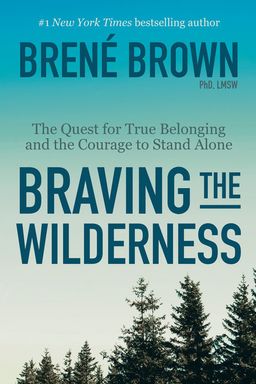
Braving the Wilderness cover

Braving the Wilderness

by Brene Brown

Braving The Wilderness by Brene Brown challenges conventional ideas of belonging, illustrating how self-acceptance and courage can lead to genuine connections. Through research and storytelling, Brown provides insights into overcoming isolation and transforming societal divisions into opportunities for growth.

Braving the Wilderness: The Courage to Truly Belong

Have you ever been surrounded by people, yet felt completely alone? Brené Brown’s Braving the Wilderness invites you to consider a radical idea: that true belonging doesn’t come from fitting in—it comes from belonging to yourself, even when that means standing alone. Brown argues that in a fearful and polarized world, we’ve forgotten what it looks like to stand in our integrity and connect through love rather than conformity. Braving the wilderness is both a metaphor and a map for returning to real connection in a culture that thrives on division.

At the heart of her argument is a paradox: you are only free when you realize you belong nowhere and everywhere. Inspired by Maya Angelou’s words, Brown sets out to redefine belonging. Through her research on vulnerability, courage, empathy, and connection, she discovers that true belonging isn’t granted by others—it’s cultivated by learning to stand alone, speak your truth, and live with a wild heart.

Belonging vs. Fitting In

Brown starts with her own story of growing up feeling like an outsider—excluded from parties, misunderstood by peers, and even judged by family. These early experiences taught her to become an expert chameleon, changing her colors to fit in. But later, her research revealed a painful truth: fitting in is not belonging. Belonging happens only when people accept you for your authentic self; fitting in is when you adjust to be accepted by them. This distinction becomes the foundation of Brown’s journey.

The pain of not belonging can shape a lifetime. Brown describes how rejection led her to study shame and vulnerability, and how those wounds, when owned, can become portals to empathy and courage. In your own life, experiences of exclusion—whether in family, work, or community—can either harden your heart or teach you compassion. Brown’s message is clear: transformation begins when you stop chasing approval and start believing you’re enough.

Standing Alone in a Divided World

Once we belong to ourselves, Brown says, we’re called to stand alone—to brave the wilderness of uncertainty and criticism. The “wilderness” symbolizes the space outside of ideological bunkers, where authenticity requires courage. From political polarization to social media echo chambers, our modern world pressures us to pick sides. But brave hearts refuse false dichotomies. They choose integrity over popularity.

Brown’s encounter with Oprah and Maya Angelou is a turning point. Angelou’s advice—“Do not be moved”—becomes Brown’s rallying cry. Plant your feet. Live from your values. When you stop betraying yourself to please others, you discover that you can belong everywhere and nowhere at once. It’s a vulnerable but liberating place to stand.

The Four Practices of True Belonging

Through her research, Brown identifies four paradoxical daily practices that define true belonging:

  • People are hard to hate close up. Move in. We heal divide and prejudice through personal connection rather than distance.
  • Speak truth to bullshit. Be civil. We resist fear and misinformation with honesty and respect.
  • Hold hands with strangers. True belonging requires recognizing our shared humanity.
  • Strong back. Soft front. Wild heart. Courage and vulnerability must coexist.

Each practice is explored through heartfelt stories—from funerals in Texas to conversations at leadership conferences to Viola Davis’s journey of owning her pain. Through these examples, Brown teaches that love and belonging aren’t soft ideals—they are acts of resistance against fear and cynicism.

Why This Matters

We are, Brown writes, in a spiritual crisis of disconnection. Fear drives us apart, and loneliness—what neurologist John Cacioppo calls “perceived social isolation”—is killing us faster than smoking or obesity. To heal, we must find the courage to walk into the wilderness, knowing it will test our hearts but teach us freedom. When you belong to yourself, you don’t need permission to be authentic. You give yourself the slip, the blessing, the right to show up exactly as you are.

Core Message

True belonging is not about joining a group—it’s about showing up whole and standing alone when needed. It’s the courage to be yourself in a world that demands conformity. As Maya Angelou said, “You are only free when you realize you belong no place—you belong every place—no place at all.”

In Braving the Wilderness, Brown offers both a challenge and a comfort: the wilderness is wild, but it’s where your belonging begins. When you trust your wild heart, you’re no longer chasing acceptance—you’re creating connection grounded in truth, compassion, and courage.


The Quest for True Belonging

Brown’s exploration of true belonging stems from years of qualitative research and personal reckoning. She defines true belonging as a spiritual practice, not a social achievement. It’s not about joining the right club or aligning with the right ideology—it’s about carrying belonging in your heart wherever you go. That idea sounds simple but is profound in practice: belonging starts with yourself.

Belonging to Yourself

To belong to yourself means believing in yourself deeply enough that you can show up with authenticity, even when no one agrees. Brown insists that we are connected by a greater power—love and the human spirit—that endures beyond our factions. When we forget that connection, we lose compassion and empathy; we stop seeing each other as human.

She draws from her concept of spirituality in The Gifts of Imperfection: spirituality is recognizing that we are all inextricably linked through love and compassion. This shared humanity once grounded our communities, but in an era of fear-driven division—political, social, and ideological—that bond has frayed. True belonging becomes the antidote to that spiritual disconnection.

The Four Paradoxical Practices

Brown discovered that people who cultivate true belonging share four paradoxical daily practices:

  • They choose proximity over judgment: “People are hard to hate close up. Move in.”
  • They honor truth without cruelty: “Speak truth to bullshit. Be civil.”
  • They embrace universal humanity: “Hold hands with strangers.”
  • They balance courage and vulnerability: “Strong back. Soft front. Wild heart.”

Each phrase reflects both psychological rigor and spiritual depth. They are not slogans but daily moral exercises that help you stay whole when the world splits into sides.

Finding Freedom in the Wilderness

The “wilderness” is a recurring metaphor in Brown’s work, symbolizing uncertainty and vulnerability. It’s an untamed place where we confront ourselves stripped of belonging cues. You can’t control the terrain, but you can learn to trust your footing. True belonging doesn’t mean escaping loneliness; it means facing it and choosing integrity anyway.

Joseph Campbell’s wisdom illuminates this idea: if you can see the path laid out before you, it’s not your path. You make your path step by step. In other words, there’s no shortcut to authenticity—you must walk your own wilderness.

True Belonging Defined

“True belonging is the spiritual practice of believing in and belonging to yourself so deeply that you can share your most authentic self with the world and find sacredness in both being part of something and standing alone in the wilderness.”

Standing alone is the price; freedom is the reward. To brave the wilderness means learning to trust yourself so wholly that rejection doesn’t shatter you—it shapes you. When you stop chasing conditional belonging, you start living from unconditional presence.


The High Lonesome Crisis of Connection

Brown frames our modern disconnection as a “high lonesome” crisis—a term borrowed from bluegrass music’s haunting sound that merges sorrow and beauty. We’re living in an era where political division, fear, and blame have replaced compassion and conversation. The sound of our culture is high and lonesome: full of pain that could unify us, but instead isolates us.

Loneliness and Sorting

Pulling from sociologist Bill Bishop’s The Big Sort, Brown reveals how Americans have literally and ideologically sorted themselves into echo chambers—geographically and online. We seek comfort among like-minded people but end up lonelier. In 1976, only 25% of counties voted in presidential landslides; by 2016, it was 80%. Yet loneliness rates doubled from 20% to over 40%. This paradox—that tribalism breeds isolation—is central to her argument.

Neuroscientist John Cacioppo’s research supports this: loneliness isn’t about being alone but feeling disconnected. Our brains register loneliness as danger—triggering self-protection that makes connection harder. When we deny that we’re lonely, we worsen the pain. The cure isn’t more tribes; it’s more vulnerability and quality relationships.

Fear as Fuel

Brown argues that fear is the core driver of disconnection. Terrorism, violence, and media outrage have conditioned us to live in fear of one another. We rally not through love but through blame. Fear hardens into ideology, forming bunkers where we mistake shared hatred for safety. Fear wins when we stop seeing our shared humanity.

This spiritual crisis requires courage—the courage to step outside manufactured safety and engage with empathy. When we replace blame with listening, judgment with curiosity, the “high lonesome” sound becomes a song of connection rather than despair.

Braving the Wilderness Together

Brown writes, “True belonging has no bunkers.” You can’t belong while hiding behind walls. The wilderness—our lives outside comfort zones—demands vulnerability over certainty. Her use of songs like Townes Van Zandt’s “If I Needed You” and the metaphor of soldiers’ hollers drive home the point: art, pain, and courage unite us when ideology divides.

Key Insight

Connection begins where we stop trying to be safe and start being real. Loneliness isn’t weakness—it’s a call back to shared humanity.

When you brave this wilderness of fear and rage, you find that belonging doesn’t mean agreement—it means compassion. You can disagree deeply without dehumanizing. That’s the high lonesome transformation Brown calls you to make.


People Are Hard to Hate Close Up

Brown’s first practice of true belonging is deceptively simple: People are hard to hate close up. Move in. In an age when social media and politics thrive on outrage, moving toward those you disagree with is radical courage. Why? Because distance fuels stereotypes and contempt, while nearness forces empathy.

Moving In Through Pain

It’s easier to stay angry from afar than to face someone’s humanity up close. Brown quotes James Baldwin: “Once hate is gone, you will be forced to deal with pain.” Anger is often a shield against vulnerability. Whether it’s politics or personal relationships, we cling to hate because empathy means confronting heartbreak.

Her example of Antoine Leiris, whose wife was murdered in the Paris attacks, shows what it means to transform pain into courage. His viral letter—“You will not have my hate”—demonstrated that the highest act of strength is refusing dehumanization. Pain demands care, not cruelty.

Boundaries and Safety

Moving in doesn’t mean tolerating abuse. Brown clarifies that empathy requires clear boundaries—physical and emotional safety are non-negotiable. Dehumanization begins with language, and she shows how both political sides use it—from “basket of deplorables” to “Democrats aren’t human.” The antidote is moral courage: speaking truth without stripping dignity.

She draws on philosopher Michelle Maiese’s concept of moral exclusion: once people fall outside our moral concern, cruelty becomes possible. True belonging means refusing that exclusion, even in disagreement.

Rehumanizing the World

Brown’s story of interviewing Viola Davis exemplifies rehumanization. Davis transformed childhood trauma and shame into empathy and transparency. Her mantra — “I’m doing the best I can. I will allow myself to be seen.” — embodies moving closer even when vulnerability hurts. In Davis’s words, “Thick skin keeps everything from getting out too.”

Lesson

Distance magnifies hate; proximity humanizes it. Empathy grows when you stop protecting yourself from discomfort and start seeing pain as connection.

When you move closer—to people, to truth, to your own emotions—you dismantle hatred's illusion. Braving this closeness may hurt, but it’s where belonging begins.


Speak Truth to Bullshit, Be Civil

Brown’s second practice tackles the polluted conversations of our times: learning to speak truth to bullshit while being civil. Drawing from philosopher Harry Frankfurt’s On Bullshit, she distinguishes lies from bullshit. A liar denies truth, but a bullshitter ignores it altogether. The latter is far more dangerous—it erodes shared reality.

False Dichotomies

Fear and ideology thrive on false choices—“you’re either with us or against us.” Brown cites this as emotional manipulation used by everyone from political leaders to personal relationships. Factually, it’s a false dilemma; psychologically, it’s a weapon. Courage begins when you challenge the framing itself, asking, “Are these really the only two options?”

She recounts debates around gun ownership and her ability to reject extremes: “I support responsible gun ownership, but not the NRA.” Civility isn’t weakness; it’s a commitment to truth without demeaning. Choosing to stand between tribes—choosing nuance—is how you brave the wilderness.

Civility and Connection

The Institute for Civility defines civility as “claiming and caring for one’s identity without degrading someone else’s.” Brown embraces this: we can disagree without contempt. Curiosity, generosity, and accountability form the BRAVING checklist that keeps honesty grounded in trust.

Her corporate story about halting a team decision shows the cost of civility. Suzanne, her COO, dared to raise a hand and say “no” to Brené’s excitement—practicing integrity over comfort. It was terrifying, but it built trust. Civility demands courage from leaders, not compliance from teams.

Practice

Be generous in debate. Ask “Tell me more” before you counter. Base truth on evidence and empathy, not ideology. Civility turns conflict into transformation.

Speaking truth to bullshit while being civil isn’t about politeness—it’s about courage. When you stand in truth and respect, you model belonging that transcends sides.


Hold Hands with Strangers

True belonging demands recognizing our inextricable human connection—even with strangers. Brown’s third practice reminds us that collective joy and pain are sacred. They awaken our shared humanity and restore faith in something greater than division. When we show up at weddings, concerts, funerals, or protests not to broadcast but to feel together, we heal collectively.

Collective Joy and Pain

Brown’s examples—from Liverpool fans singing “You’ll Never Walk Alone” to mothers weeping after the Sandy Hook tragedy—illustrate Durkheim’s concept of collective effervescence: moments when we lose ourselves in community emotion and touch the sacred. These experiences aren’t trivial; they create meaning, decrease loneliness, and strengthen empathy.

Shared emotion, however, can be counterfeit when driven by hate. Brown warns against “common enemy intimacy”—bonding through contempt instead of compassion. When political tribes unite around what they despise, they mistake outrage for belonging. True belonging unites through love, not exclusion.

The Ministry of Presence

Showing up for others’ pain is healing. Brown highlights funerals as the number one trust-building act. Presence, not perfection, makes grief bearable. Quoting Sheryl Sandberg’s Option B, she reminds us that collective pain doesn’t erase sorrow—it transforms isolation into courage. Crying with strangers is a holy act.

Core Idea

When we dare to join others in real moments of joy and grief, our hearts expand beyond fear. Empathy becomes action—and the world feels sacred again.

Holding hands with strangers is how we practice faith in humanity. Step into concerts, mourning circles, communal meals. You’ll remember that belonging isn’t who you know—it’s how deeply you feel with others.


Strong Back, Soft Front, Wild Heart

Brown’s final practice captures the essence of courage and compassion: develop a strong back, a soft front, and a wild heart. Borrowing from Buddhist teacher Joan Halifax, this metaphor means living with integrity and empathy at once—standing firm without becoming hard. It’s both physical and spiritual work.

Strength and Flexibility

A strong back represents boundaries, honesty, and resilience. Brown’s BRAVING framework guides you through it: boundaries, reliability, accountability, vault, integrity, nonjudgment, generosity. These elements create trustworthy relationships both with others and yourself.

Practicing them requires courage to say no, admit mistakes, and protect confidentiality. Jen Hatmaker’s story—publicly supporting LGBTQ inclusion despite backlash—embodies this courage. She walked into the wilderness alone, but found authentic community waiting there. The wilderness may leave you limping, Brown says, but that limp becomes a mark of wisdom.

Soft Front and Wild Heart

A soft front is openness—vulnerability replaced for armor. It means choosing to be transparent even when you’ve been hurt. Trauma teaches us to harden; healing teaches us to soften. A wild heart, meanwhile, holds paradoxes: tough and tender, joyful and grieving, fierce and kind. It’s the capacity to witness pain without losing joy.

Joy and gratitude become moral practices. Brown argues that when you’re grateful for what you have, you honor what others have lost. The wild heart balances awareness of injustice with celebration of life. You can fight for justice and still dance.

Wild Heart Practice

Stop seeking evidence that you don’t belong. You will always find it if you look for it. Protect your wild heart from constant evaluation—especially your own.

To brave the wilderness is to live with a strong back, a soft front, and a wild heart. It’s knowing that belonging doesn’t mean safety—it means truth. And the wild heart whispers: you are the wilderness.

Dig Deeper

Get personalized prompts to apply these lessons to your life and deepen your understanding.

Go Deeper

Get the Full Experience

Download Insight Books for AI-powered reflections, quizzes, and more.