
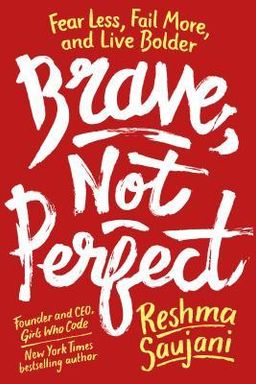
Brave, Not Perfect cover

Brave, Not Perfect

by Reshma Saujani

Brave, Not Perfect by Reshma Saujani redefines success for women, urging them to abandon perfectionism in favor of bravery. Through inspiring stories and practical advice, Saujani empowers women to embrace failure, cultivate resilience, and achieve their dreams without succumbing to societal expectations.

Brave, Not Perfect: The Courage to Live Boldly

What would your life look like if you stopped worrying about being perfect and started being brave instead? In Brave, Not Perfect, Reshma Saujani—founder of Girls Who Code—argues that women are socialized from childhood to be cautious, obedient, and flawlessly competent in everything they do. This conditioning has created generations of women who chase perfection instead of courage, often silencing their own ambitions to avoid failure or judgment. Saujani contends that real fulfillment comes not from doing everything perfectly, but from daring to act bravely even when we might fail.

Through compelling research, personal stories, and practical strategies, Saujani builds a blueprint for rewriting our inner code—from perfection to bravery. She traces how girls are taught to please others and avoid failure, how those behaviors evolve into adult perfectionism that stifles risk-taking, and how choosing bravery leads to authentic success, joy, and freedom. The book takes readers from understanding this “perfect-girl” conditioning to actively unlearning it through daily acts of courage. It’s both a cultural critique and an empowerment manual.

The Perfect Girl Training

Saujani begins by dissecting how society trains girls to be agreeable, pretty, and flawless while boys learn to take risks and accept failure. In classrooms, parents and teachers often praise girls for being quiet and polite while encouraging boys to explore and try again when they fail. This difference builds a lifelong split: boys are rewarded for bravery, girls for perfection. By the time these girls become women, the fear of making mistakes has become paralyzing.

The Cultural Roots of Perfection

Pop culture compounds the problem. Young girls are inundated with images of “effortless perfection”—from flawless Instagram feeds to princess movies that equate beauty and passivity with virtue. As Saujani shows, even supposedly empowering messages like “Girls can do anything” morph into crushing pressure to “do everything,” flawlessly. Studies she cites reveal that social media, toy marketing, and school expectations embed perfectionism deeply into girls’ identities, leading to anxiety and burnout (Rachel Simmons calls this the crisis of modern girlhood in The Curse of the Good Girl).

How Perfection Mutates in Adulthood

When those girls grow up, perfectionism mutates into workplace burnout, body insecurity, and chronic dissatisfaction. Saujani describes women who excel academically yet avoid promotions or leadership roles because “it’s safer to stay competent than to risk failing.” Social approval replaces bravery as the ultimate reward. She argues that while perfection might earn short-term praise, bravery brings long-term fulfillment. Perfection gives you comfort; bravery gives you growth.

From Perfection to Bravery

Saujani’s core idea is simple but profound: perfection is a cage, bravery is freedom. She invites readers to trade obedience for authenticity by cultivating small daily acts of courage—speaking up, setting boundaries, taking risks, and embracing failure as data, not disaster. Drawing from psychology and mindfulness research (notably Carol Dweck’s “growth mindset”), she argues that bravery can be trained like a muscle. Over time, bravery becomes both habit and identity.

Why It Matters

This shift doesn’t just change individual lives—it reshapes society. When women choose bravery, they challenge old gender norms and open pathways for others to do the same. From the girls who made headlines for speaking up in coding classes to public figures like Serena Williams, Elizabeth Warren, and Beyoncé, Saujani shows that every act of courage—whether global or deeply personal—ripples outward, inspiring others to stand tall. Being brave isn’t about being unafraid; it’s about acting despite fear.

By the end of Brave, Not Perfect, you learn that the real victory is not how perfectly you live your life but how boldly you show up for it. Saujani’s message is clear: bravery is not reserved for soldiers or superheroes—it’s a daily practice for every woman who dares to say “enough,” rewrite her story, and step into the arena of imperfection with confidence and purpose.


How We Learn to Be Perfect

From the very start of life, Saujani shows that girls are conditioned to please others and avoid mistakes. Parents lovingly reinforce politeness and obedience, while teachers praise neatness and good behavior. Boys, in contrast, are encouraged to climb higher, fall harder, and toughen up. By age eight, girls internalize that being liked matters more than being brave. Psychologist Catherine Steiner-Adair notes that this is when girls’ inner critics appear—the voices that whisper, “Don’t mess up.”

The Cult of Niceness

For girls, niceness becomes a survival tactic. Saujani’s stories of young Erica and Hallie demonstrate how early perfectionism takes root. They overextend themselves to please teachers and friends, terrified of disappointing anyone. As adults, this compulsion evolves into overwork, exhaustion, and people-pleasing. Saying yes when we mean no becomes the default mode. As Saujani’s coach says, “The work isn’t figuring out why they don’t like you—it’s learning to be okay with it.”

Cultural Reinforcement

Pop culture adds layers to this psychological training. Toys teach girls fine motor and social skills—crafting, language, caretaking—while boys’ toys build spatial reasoning vital for STEM fields. Princess stories encourage passivity; slogans like “Pretty Like Mommy” reinforce looks over capability. Saujani cites studies showing that preschool girls who engage in “princess culture” become less confident in physical strength and leadership.

Social Media Perfectionism

By adolescence, Instagram replaces the mirror. Girls curate their identity into a brand, splitting themselves between their public persona and private self. Posts must be polished—because authenticity risks criticism. Psychologist Catherine Steiner-Adair found that after just nine minutes of scrolling through other profiles, girls’ anxiety spikes. Comparison becomes relentless; validation is measured in likes. This digital “effortless perfection” worsens the mental health crisis already hitting young women.

Saujani concludes that these cultural and institutional patterns have installed a fixed code: girls associate self-worth with approval, not authenticity. But, she insists, all code can be rewritten. Just as a programmer revises an imperfect script, women can debug their perfectionism by consciously learning to be brave and imperfect again.


Perfectionism’s High Cost

When perfect girls grow up, their training backfires. Saujani reveals five myths that keep women chained to perfection. These illusions—polish equals perfection, perfection ensures happiness, flaws mean disaster, perfection equals excellence, and failure is unacceptable—drive women to exhaustion. Instead of building confidence, they build anxiety.

The Illusion of Control

We polish our exteriors to mask insecurities, convinced that if we look flawless, no one can judge us. But, as Saujani’s friend Marta discovers, even years of dieting and makeup can’t erase feelings of inadequacy. Former Secretary Hillary Clinton noted that Barack Obama could “roll out of bed and put on a suit,” while she had to spend hours perfecting her appearance. This disparity shows that women’s energy goes to performance, not power.

The Happiness Trap

We believe happiness arrives when everything is perfect—career, family, body. Yet Saujani cites data showing women’s happiness has declined despite greater opportunities. Fulfilling social expectations doesn’t translate to joy. The pursuit of perfection isolates us from genuine connection because we’re too busy projecting control to be real.

Perfection vs. Excellence

Saujani separates “excellence” from “perfection.” Excellence celebrates growth; perfection condemns mistakes. Excellence is iterative, forgiving, and creative—qualities inherent to bravery. In contrast, perfectionism paralyzes, halting progress. Psychologist Thomas Greenspan’s research supports this: perfectionist professors published less than their peers because obsession blocked productivity.

Her message is uncompromising: perfection doesn’t just waste time, it kills possibility. By focusing on what could go wrong, we quit before we start. Bravery, not flawlessness, is the real key to success.


Why Bravery Changes Everything

Saujani redefines bravery as the willingness to act despite fear—not the absence of it. She asks women to expand the concept beyond traditional male heroism (the soldier or firefighter) to include emotional courage: saying no, speaking up, embracing vulnerability. Bravery becomes the lifeblood of authenticity.

Redefining the Brave Woman

From Serena Williams challenging sexism on the tennis court to women of the #MeToo movement speaking truth to power, bravery now means refusing silence. Saujani recalls her own act of defiance—declining an invitation from Ivanka Trump’s White House after the Muslim ban—to illustrate how standing in your truth attracts “your people.” Courage isn’t always glamorous; sometimes it costs invitations, money, and comfort. But it builds integrity.

Brave Like Women

We don’t need to “have balls” to be courageous; we can be brave like women. Emotional intelligence, empathy, and collaboration—traits often considered feminine—are forms of strength. Studies Saujani cites show women crowdfunding projects succeed more than men because their pitches use inclusive, emotional language. These same traits, when reframed, become leadership advantages.

Bravery liberates everything: relationships, careers, parenting. It allows you to admit mistakes without shame, ask for help, model authenticity for your children, and pursue dreams that perfection once strangled. It’s not a gendered virtue; it’s human—and utterly vital.


Building a Bravery Mindset

You can’t think your way into bravery—you have to live it. Saujani’s sixth chapter offers a toolkit for training your bravery muscle. It’s part psychology, part philosophy, and wholly practical. She proposes strategies anyone can apply, ranging from taking care of your wellbeing to reframing fear itself.

Keep Your Tank Full

Exhaustion kills courage. As Arianna Huffington notes, we can’t be brave if we’re burned out. Saujani urges women to prioritize their health—sleep, exercise, meditation, and downtime—and treat self-care as radical bravery. Saying no to burnout means saying yes to sustained courage.

Claim the Power of “Yet”

Borrowing from Carol Dweck’s growth mindset research, Saujani insists on reframing limitations with the word “yet.” You’re not bad at negotiating—you’re not good at it yet. Adding “yet” converts shame into progress. Mistakes stop being verdicts; they become stepping stones.

Drama vs. Wisdom

Her coach Rha Goddess teaches women to differentiate between “drama” and “wisdom.” Drama screams excuses; wisdom speaks calmly. Before saying no to a risk, ask, “Is this my drama or my wisdom talking?” That question alone filters out fear disguised as logic.

By identifying your “ledge”—the one thing that truly scares you—and asking what frightens you more (doing it or regretting it), Saujani helps transform fear from an obstacle into a compass. Bravery becomes not reckless action, but guided intention.


Getting Comfortable with Imperfection

After understanding bravery, Saujani teaches how to practice it daily through imperfection. You build tolerance for failure by deliberately seeking feedback, trying things you might fail at, and starting before you feel ready. These exercises break the psychological addiction to approval.

Ask for Feedback

It’s counterintuitive, but seeking criticism builds resilience. Saujani describes asking her husband for feedback only to hear, “You kind of sucked.” While painful, it helps her improve and detach self-worth from performance. Psychologist Angela Duckworth calls this “grit”—the courage to endure feedback and use it for growth.

Start Before You’re Ready

Bravery thrives on momentum. Don’t wait for perfect timing or skills. Saujani herself started Girls Who Code without knowing how to code. Like Cecile Richards joining Planned Parenthood, bravery often means learning as you go. Waiting for readiness guarantees stagnation.

Choose Failure

In startup culture, failure is data. Saujani wants women to “fail early and often” like Silicon Valley innovators. Each flop deepens resilience. Instead of asking, “What if I fail?” ask, “What will I miss if I never try?”

The key lesson: perfection kills joy; imperfection opens possibility. Practicing bravery through mistakes transforms fear into fuel for future growth.


Breaking the Need to Please

One of bravery’s toughest tests, Saujani writes, is unlearning the habit of pleasing others. Women are trained to be liked. But people-pleasing is the enemy of authenticity. This chapter dismantles that conditioning and provides strategies for saying no, asking for what you want, and persisting when told to be quiet.

Trust Yourself

Accommodating others often means ignoring intuition. Actress Bridget Moynahan learned this when she followed someone else’s advice for an audition and lost the role. She realized bravery means trusting yourself even when experts disagree. Perfection seeks approval; bravery trusts instinct.

“No Fucks Given” Role Models

To normalize bravery, Saujani suggests collecting stories of women who don’t care what others think—Madonna, Beyoncé, Amy Schumer, Frances McDormand, Maxine Waters. These examples reset your mental model from “approval” to “authenticity.”

Say No and Persist

Learning to say no—and mean it—is radical self-respect. Equally brave is the act of persistence. When Senator Elizabeth Warren was told to “be quiet,” she refused. Saujani calls this “Nevertheless, Persist”—a mantra for reclaiming space, time, and power.

By the end of this chapter, you realize that not being liked by everyone is freedom. When you stop making yourself universally acceptable, you become authentically unforgettable.


Sisterhood and Collective Bravery

Saujani’s final step in transforming individual bravery into cultural change is solidarity. Bravery scales when women support women. Drawing on Shalene Flanagan’s marathon teamwork, she advocates building ‘Team Brave’—a network where women uplift rather than compete.

Show the Mess

Authenticity invites connection. Saujani applauds founders like Danielle Weisberg and Carly Zakin (TheSkimm) who reveal behind-the-scenes struggles instead of pretending perfection. Sharing flaws helps others breathe easier and embrace their own imperfection.

Support the Sisterhood

She condemns the “bitch culture” where women tear each other down and reframes generosity as bravery. Celebrate others’ wins, mentor newcomers, give honest feedback, and connect peers. When one woman rises, all can rise. The shift from competition to collaboration creates a ripple effect of courage.

Perfection isolates; bravery connects. Saujani’s vision of collective courage turns personal growth into social transformation—creating a world where women dare boldly and lift everyone along the way.

Dig Deeper

Get personalized prompts to apply these lessons to your life and deepen your understanding.

Go Deeper

Get the Full Experience

Download Insight Books for AI-powered reflections, quizzes, and more.