
Idea 1
The Cost of Comfort: A World Without Humanity
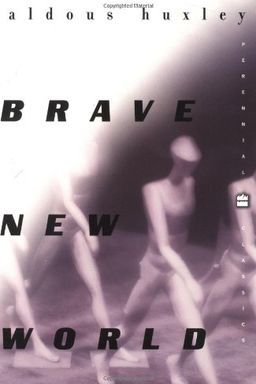
Would you trade suffering—and love, art, or individuality—for perfect comfort and social stability? Aldous Huxley’s Brave New World asks you to face that question directly, offering one of literature’s most chilling thought experiments. Written in 1932, the novel transports us to the World State, a futuristic society that has achieved peace and abundance by engineering people into rigid castes, conditioning their desires, and erasing pain—and, in the process, erasing what it means to be truly human.
Huxley argues that the ultimate danger of scientific progress isn’t the technology itself, but a civilization willing to sacrifice freedom, beauty, and truth for comfort and control. His vision fuses political satire, social critique, and philosophical reflection into a prophetic warning about modern materialism and conformity. The book asks not just whether a world without suffering is desirable—but whether it’s even human.
The Machinery of Utopia
The story opens at the Central London Hatchery and Conditioning Centre, where humans are mass-produced in test tubes and trained to fill predetermined social roles: Alphas rule, Epsilons labor. The guiding motto—“Community, Identity, Stability”—captures the World State’s philosophy. Happiness isn’t natural; it’s manufactured through genetic engineering, psychological conditioning, and the use of soma, a drug that guarantees instant pleasure and escape from pain.
But behind this apparent progress lies moral emptiness. Families are abolished (“mother” is a scandalous word), art and religion are destroyed, and individuality is treated as a disease. The citizens are perpetually entertained by feelies—motion pictures that stimulate sight, hearing, and touch—leaving no space for reflection or genuine emotion. The irony is cruel: people are content not because they are happy, but because they are programmed to be incapable of unhappiness.
Rebellion and the Price of Freedom
Huxley contrasts this artificial paradise with the inner world of those who rebel. Bernard Marx, an insecure Alpha, questions the system; Helmholtz Watson, a writer frustrated by the triviality of his work, yearns for real passion and meaning. Their encounter with John “the Savage,” a man raised among a primitive tribe, exposes the gulf between natural humanity and manufactured society. John becomes a living mirror of Huxley’s argument—he feels love, beauty, and suffering with full intensity, qualities the World State denies its citizens.
When John enters this sleek modern civilization, his horror reflects ours. He quotes Shakespeare passionately (“O brave new world that has such people in’t!”), only to discover that Huxley’s brave new world is governed by moral and spiritual poverty. John’s revolt—his desperate attempt to reclaim purity through self-punishment and solitude—ends tragically, underscoring the book’s darkest insight: when comfort becomes the highest ideal, humanity destroys itself for peace.
Why Huxley’s Warning Still Matters
The novel resonates with modern issues: mass media manipulation, consumerism, and the psychological engineering of desire. What makes Huxley’s critique powerful is its recognition that tyranny can arise not from violence but from pleasure. Unlike Orwell’s 1984, which depicts oppression through fear, Brave New World envisions a society enslaved by entertainment, drugs, and convenience. The result is a dictatorship without cruelty—because its citizens love their servitude.
The book forces you to question the easy promises of technology and consumption. Do we, like Huxley’s citizens, escape discomfort through distraction—scrolling, streaming, medicating—rather than confronting truth? Huxley doesn’t offer solutions, only a haunting image of what happens when humanity’s highest values are traded for simple happiness. His “brave new world” isn’t a vision of the future; it’s a reflection of the present—a mirror asking whether we too are learning to prefer comfort to conscience.