
Idea 1
Reinventing How We Work in a Complex World
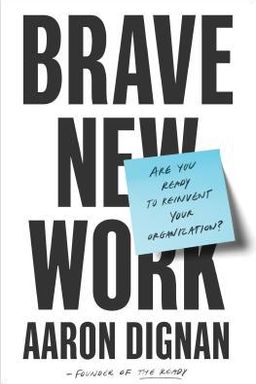
Have you ever looked around your workplace and thought, “This can’t be the best way to work”? If so, you’re not alone. In Brave New Work, Aaron Dignan argues that modern organizations are drowning in bureaucracy, paralyzed by control, and unfit for the complexity of the twenty-first century. He contends that while technology, markets, and societies have evolved, the way we manage work remains stuck in the industrial-age mindset of control, predictability, and hierarchy. The central question he raises is simple but revolutionary: What if organizations could run themselves?
Dignan believes that organizations everywhere are constrained by what he calls the Legacy Operating System—a set of outdated assumptions, roles, and structures inherited from the early days of Scientific Management (the world of Frederick Taylor and his stopwatch). These assumptions—like the belief that people can’t be trusted, that the world can be predicted, and that control equals success—are embedded deep in how we set budgets, hold meetings, make decisions, structure authority, and measure performance. But in a world filled with volatility, uncertainty, complexity, and ambiguity (known as VUCA), those assumptions no longer serve us. The result? Leaders are exhausted, employees are disengaged, and organizations are failing to adapt. His proposed alternative is to replace the mechanistic paradigm of command and control with an Evolutionary Operating System (OS) built for continuous learning, experimentation, and adaptivity.
The Broken System of Work
Dignan opens with a relatable story: a $3 million meeting that no one wanted to attend. After challenging executives to cancel it, he reveals how deeply embedded waste has become in corporate life. This anecdote symbolizes what he calls our addiction to bureaucracy—the endless meetings, overplanning, and risk-avoidance that keep organizations spinning their wheels. To emphasize how absurd modern work is, he cites the Simple Sabotage Field Manual—a World War II document used by the CIA to teach citizens how to disrupt enemy institutions. Its sabotage techniques (like referring all matters to committees and reopening settled decisions) eerily resemble today’s office culture. The sobering realization is that our workplaces have unintentionally institutionalized sabotage as standard procedure.
Much of this dysfunction stems from outdated management models. Dignan illustrates this with the century-old org chart of the Union Pacific Railroad—a pyramid that perfectly mirrors the hierarchies still in use today. Despite tech revolutions from the internet to space rockets, management hasn’t evolved. The reason? We’re trapped in assumptions that prioritize compliance over creativity and obedience over autonomy. Our organizations are designed as signal-controlled intersections (managed through bureaucratic lights and rules) rather than roundabouts (driven by trust, simple guidelines, and shared judgment). The result: control and stagnation instead of flow and autonomy.
The Evolutionary Alternative
The solution, Dignan suggests, is to redesign our organizational “operating system.” Just as computers have code running under the surface, our teams run on unwritten rules about authority, meetings, strategy, and resources. He identifies twelve domains on his OS Canvas—including purpose, authority, structure, strategy, resources, meetings, membership, and compensation—that can be intentionally reinvented to create freedom, transparency, and adaptive capacity. This reframing enables organizations to see work as a living system rather than a machine.
Dignan’s concept of Evolutionary Organizations captures those companies already thriving in this new paradigm—examples like Buurtzorg, a Dutch nursing agency with no managers and tiny self-governing teams; Morning Star, where employees design their own roles and salaries; and Handelsbanken, which abandoned traditional budgeting decades ago yet consistently outperforms peers. These firms embody two foundational mindsets: they are People Positive (trusting that humans are resourceful, motivated, and capable of self-management) and Complexity Conscious (recognizing that uncertainty and emergence are normal, requiring adaptability rather than control). These mindsets empower teams to continuously revise how they work, giving rise to self-organizing, resilient, and high-performing cultures.
Why This Matters
The book’s moral is both hopeful and demanding: our organizational paralysis is not inevitable—it’s designed. We can redesign it. Work isn’t broken because people are lazy or unmotivated; it’s broken because we’ve built it on false assumptions. In Dignan’s view, becoming brave enough to reinvent work requires leaders and teams to shift from managing people to designing systems that let people manage themselves. He challenges readers not only to critique bureaucracy but to start experimenting locally with new ways of working—small, “safe-to-try” changes that compound into transformation. This approach rejects the grand, top-down redesigns of traditional change management and replaces them with continuous participatory evolution.
Ultimately, Dignan invites you to imagine organizations as living organisms rather than machines—capable of sensing tensions, learning through feedback, and growing through iteration. His rallying cry is for courage and curiosity: “Before we’re done, you’ll wonder why anyone would want to keep working in captivity.” Brave New Work is not simply a call for efficiency; it’s a manifesto for humanizing work itself. In an era where adaptability is survival, Dignan’s framework offers a map—drawn not for control, but for evolution.