
Idea 1
The Science and Psychology of Hidden Persuasion
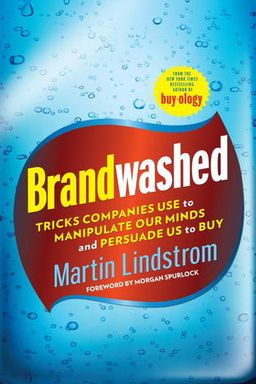
From the moment you exist—even before you are born—companies are competing for your attention. In Brandwashed, branding expert Martin Lindstrom reveals the tactics marketers use to manipulate your senses, emotions, habits, and even biology to shape what you buy and believe. His central claim is straightforward yet unsettling: many of your preferences are engineered rather than chosen. Through neuroscience, behavioral psychology, and real-world case studies, he demonstrates that marketing today operates at near-clinical precision—targeting your memory, fear centers, cravings, and social instincts to turn ordinary consumption into unconscious loyalty.
How Marketers Hack the Human Mind
Lindstrom draws on research from fetal sensory learning to fMRI scans of adult brains to show that branding is not primarily about logic—it’s about emotion and memory. From prenatal sound and flavor exposure to adult nostalgia, he shows that persuasive design exploits the way your brain forms durable associations. Every purchase, he argues, is partly a memory trigger: scents, colors, rhythms, and sounds reconnect you with emotional moments that marketers have carefully seeded or revived.
The book unfolds as a psychological detective story, combining laboratory insight with field observation. You move from fetal conditioning to childhood attachment, from viral contagion to digital data mining. Each step exposes another layer of how commerce invades cognition—often without your consent.
Prenatal, Childhood, and Emotional Imprinting
In the earliest phase, Lindstrom chronicles how brands exploit prenatal sensory development. Studies by Julie Menella and Peter Hepper revealed that fetuses remember what their mothers eat or hear. Companies like Kopiko distributed candies to pregnant women to shape later taste preferences. As you age, the same conditioning scales up through childhood priming and ‘pester power,’ when children become micro‑influencers within the family. Logos embed themselves visually in toddlers’ brains long before literacy, creating lifetime emotional familiarity.
Emotions as Commercial Currency
Fear, guilt, longing, and desire—all primal emotions—become currencies that brands trade. During health scares or social instability, corporations reframe anxiety as an opportunity: antibacterial wipes during pandemics, fortified cereals during immunity panics, or spiritual beverages promising purity. Fear short-circuits rational thought (activating the amygdala) and moves people toward immediate remediation—the product on the shelf.
Desire operates in equal measure. Through the case of Axe deodorant or Calvin Klein perfumes, Lindstrom shows how sexuality, fantasy, and identity formation are intentionally mapped through research and testing to stimulate insecurities or aspirations. Advertising doesn’t sell hygiene or fragrance—it sells versions of yourself you long to inhabit.
The Manufactured World of Authenticity and Meaning
When fear or fantasy isn’t enough, nostalgia and spirituality provide a comforting counterweight. Supermarket displays mimic rural markets; global beverages boast mountain or temple origins; “natural” and “handmade” labels compensate for mass production. Lindstrom calls it inauthentic authenticity—manufactured imperfection designed to feel genuine. Whether through retro logos, 1970s jingles, or “vintage” packaging, these sensory artefacts transport you to safer, remembered times. Neuroscience supports it: nostalgia raises mood and reinforces belonging, making it a potent motivational anchor.
From Social Contagion to Stealth Persuasion
Human beings are social imitators. Lindstrom shows that roughly 5% of individuals can sway entire crowds—the basis for viral marketing. Whether in engineered fads like Zhu Zhu Pets or the staged Morgensons experiment (an undercover family who “recommended” brands in their community), social proof converts trust into sales more efficiently than any advertisement. Today, that persuasion extends online, where algorithms echo peer validation through likes, trends, and influencer buzz, often blurring genuine recommendation with commercial placement.
Craving, Addiction, and the Marketplace Trap
The boundary between marketing and manipulation dissolves most starkly in cravings and addiction. From lip balm formulas that perpetuate dryness to high‑sugar foods that rewire reward circuits, the line between pleasure and dependency is narrow by design. Digital retailers adopt the same neurochemical playbook: gamified flash sales, countdowns, and near‑miss mechanics generate the dopamine surges that once kept gamblers at slot machines. The product may change, but the outcome is the same—habitual compulsion dressed as entertainment.
Data Mining and the Post‑Privacy Consumer
Finally, Lindstrom reveals the invisible infrastructure connecting all these techniques—data. Every loyalty card, smartphone, and online search enriches behavioral models that predict not only what you will buy but when. Personalized coupons, dynamic pricing, and geo‑targeted alerts convert your digital footprint into continuous marketing exposure. What once required focus groups now happens automatically, in real time, at planetary scale.
Core takeaway
The modern consumer landscape runs on engineered emotion, memory, and data. Recognizing these invisible levers—fear, nostalgia, belonging, craving—allows you to reclaim agency in a marketplace designed to act before you think.
Across Brandwashed, Lindstrom invites you to see marketing not as artful persuasion but as behavioral architecture. It mirrors a world where the boundaries between personal life and the marketplace have dissolved, where identity is both the target and the product. Awareness becomes the first—and perhaps only—defense against being unconsciously sold.