
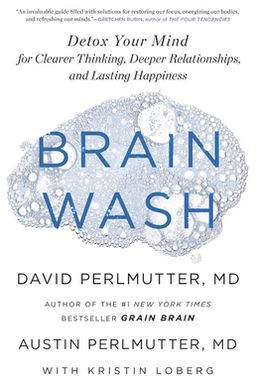
Brain Wash cover

Brain Wash

by David Perlmutter MD, Austin Perlmutter MD, Kristin Loberg

Brain Wash unveils how modern life''s instant gratifications hijack our brains, leading to dissatisfaction. Medical experts David and Austin Perlmutter provide a 10-day program to detox your mind, build healthier habits, and achieve lasting happiness.

Reclaiming the Brain from Disconnection Syndrome

Why do so many of us feel anxious, unfocused, and strangely disconnected in a world more connected than ever? In Brain Wash, neurologist Dr. David Perlmutter and his son Dr. Austin Perlmutter argue that modern life—fueled by digital overload, processed foods, lack of sleep, and chronic stress—is literally rewiring our brains for impulsivity and disconnection. They call this state Disconnection Syndrome.

According to the authors, our brains have two competing forces: the impulsive, fear-driven amygdala, and the rational, empathetic prefrontal cortex. A healthy brain allows the prefrontal cortex to remain in charge, giving us control over moods, impulses, and decisions. But our current lifestyle overstimulates the amygdala and weakens our prefrontal cortex. As a result, we become reactive, addicted, and isolated—even when surrounded by people and screens. The authors show that this neurological disconnection underlies everything from obesity and depression to polarization and climate apathy.

The Modern Hijacking of Our Brains

The book traces how modern forces—social media, ultraprocessed food, poor sleep, and constant stress—exploit our brain’s ancient reward circuitry. The dopamine-driven quest for instant gratification, once vital for survival, now traps us in habits that keep us distracted and unwell. The authors explain how each of these factors sabotages the brain: social media hooks our attention for profit; refined carbs inflame the body and alter mood; chronic blue light and lack of deep sleep erode memory and emotional balance. The result is a population living in survival mode—overfed, underslept, and digitally overstimulated.

The Perlmutters liken this to a cultural and biological “brainwashing,” but one we can reverse. They propose a new brain wash—a deliberate restoration of balance through diet, mindfulness, movement, and reconnection.

The Brain’s Tug-of-War: Amygdala vs. Prefrontal Cortex

At the heart of their thesis lies the battle between two ancient neural systems. The amygdala governs fight-or-flight instincts, fear, and reward seeking. It craves sugar, gossip, and novelty. The prefrontal cortex, on the other hand, enables empathy, foresight, and rational choice. When life is balanced, the prefrontal cortex acts as a wise parent guiding a reckless child. But under chronic stress, the amygdala seizes the wheel. We become impulsive consumers, unable to delay rewards or empathize with others. (Daniel Goleman makes a similar distinction in Emotional Intelligence between the reactive limbic brain and the thoughtful neocortex.)

Stress hormones, inflammation, and lack of restorative sleep all sabotage the prefrontal cortex, both functionally and physically. Modern life rewires the brain away from connection and self-control. That, the authors insist, is the real pandemic of our time.

A Blueprint for Brain Reconnection

In their “Ten-Day Brain Wash,” the Perlmutters lay out a practical path to reclaim the brain’s higher functions. Each day tackles a different dimension of reconnection: detoxing from digital devices, rebuilding empathy, spending time in nature, adopting an anti-inflammatory diet, restoring sleep, exercising, meditating, and deepening personal relationships. The process concludes with reflection and continuity strategies to maintain the transformation.

This program, they assert, can reignite neural plasticity—the brain’s natural ability to rewire itself. They draw from neuroscience showing that lifestyle factors directly influence BDNF (brain-derived neurotrophic factor), a molecule that promotes growth and repair of neurons. Through deliberate lifestyle design, we can reverse disconnection syndrome, improve well-being, and become more compassionate humans.

Why This Matters Now

The personal stakes are clear: disconnection impairs judgment, fuels anxiety, and dulls empathy. But the collective stakes are just as dire. A society dominated by amygdala-minded individuals becomes polarized, materialistic, and environmentally destructive. The same neural patterns that drive personal addiction also drive cultural dysfunction. Repairing the human brain, therefore, is synonymous with healing the planet. As the authors conclude: “Happy, connected people make for a happy planet.”

What follows in their book is not merely health advice—it’s a neurological manifesto for an age of overwhelm. You’ll discover why empathy protects the brain, how sleep literally washes toxins away, why nature and exercise awaken higher consciousness, and how food determines the quality of your thoughts. Above all, Brain Wash invites you to choose reconnection—to take back your brain and rediscover the joy of being fully human.


Disconnection Syndrome: The Modern Mental Crisis

The opening chapters explore what the authors call Disconnection Syndrome—a condition born of modernity’s paradox: constant connectivity but chronic isolation. Smartphones, convenience foods, and 24/7 media overstimulate our reward circuits while starving our capacity for meaning and empathy. The Perlmutters show how this disconnection leads not just to mental distress but to physical disease.

How Technology and Lifestyle Hijack Your Brain

According to data presented in the book, Americans spend over six hours a day glued to screens—more than twenty years of their lives. Each ping and notification delivers a micro-dose of dopamine, conditioning us to crave constant stimulation. Meanwhile, ultraprocessed foods flood our systems with sugar, raising inflammation and impairing neurotransmission. Chronic stress and sleep debt only deepen the damage. The result? A population of individuals wired for anxiety, inertia, and dependence.

Disconnection Syndrome manifests as eight traits: impulsivity, anxiety, depression, poor empathy, sleeplessness, isolation, constant distraction, and poor decision-making. Each one stems from the amygdala overpowering the prefrontal cortex. The brain shifts from reflective to reactive mode—a pattern researchers call top-down control failure.

The Economics of Disconnection

The authors emphasize that these trends are not random. They’re profitable. Major industries—including processed food, tech, and entertainment—depend on exploiting our limbic vulnerabilities. Each notification or ad is engineered to hijack your attention for corporate gain. As the book bluntly puts it, “Your thoughts and decisions are sold to the highest bidder.”

This commercial manipulation drains both mental resources and physical health. Obesity, diabetes, and depression—all skyrocketing—are byproducts of a system designed to keep us consuming, scrolling, and craving. By understanding this, readers can begin to reclaim agency and awareness.

Toward Reconnection: The First Step

The remedy begins with awareness. You can’t heal what you don’t see. The Perlmutters invite you to step back from the noise and notice how digital habits and food cravings shape your feelings and thoughts. Whether through mindful observation or simple behavioral boundaries—like turning off notifications or swapping refined grains for whole foods—small acts of awareness begin to reawaken the prefrontal cortex. Awareness, they contend, is the first spark of reconnection.

(Notably, this mirrors Eckhart Tolle’s insight from The Power of Now: that stepping out of unconscious habits is the beginning of awakening. For the Perlmutters, the neurological equivalent of that awakening is rebuilding top-down brain control.)


The Hijacked Reward System

In Chapter 3, the Perlmutters map the brain’s pleasure circuitry and describe how modern life turns this survival mechanism against us. The ancient reward pathway—involving dopamine release from the ventral tegmental area to the nucleus accumbens and prefrontal cortex—once motivated finding food, connection, and reproduction. Today, junk food, digital likes, and online shopping hijack that system.

How Dopamine Drives Craving

Contrary to popular myth, dopamine doesn’t create pleasure—it creates wanting. It’s the neurochemical of anticipation. When dopamine spikes repeatedly, the brain compensates by reducing receptor sensitivity, producing diminished returns and compulsive repetition. The more you scroll or snack, the less satisfied you feel. This “tolerance loop” mirrors drug addiction and drives overconsumption and impulsivity.

The authors highlight examples from everyday life: the endless pull to refresh social media feeds or cravings for sugary food after a stressful day. Each hit rewires neural pathways, strengthening habits of immediate gratification. Over time, the prefrontal cortex—the seat of long-term planning—loses control to the amygdala.

Stress and the Fear Circuit

Stress floods the body with cortisol and adrenaline, fueling chronic inflammation and keeping the amygdala hyper-alert. Under prolonged stress, neurons in the prefrontal cortex wither while those in the amygdala grow stronger. This explains why anxiety, anger, and addiction thrive in high-stress societies. The Perlmutters liken it to surrendering the steering wheel of your life to a fearful autopilot.

The Breaking-News Effect

They extend this biology to media consumption: 24-hour news floods the amygdala with danger cues. “Breaking news” and clickbait amplify fear to hijack attention. One study they cite shows that even 15 minutes of negative news increases anxiety. Over time, this primes the brain for pessimism—a phenomenon echoed by psychologist Martin Seligman’s work on learned helplessness.

Combating this cycle requires conscious exposure control—limiting sensational media, engaging in calm, factual sources, and balancing information with gratitude or nature time. These practices help redirect blood flow—literally and metaphorically—back toward the prefrontal cortex.

Through this lens, addiction is not about moral weakness but about neural imbalance. The first act of reform, then, is not judgment but rebalancing the brain’s biochemistry through lifestyle design.


Empathy: The Antidote to Narcissism

In one of the book’s most inspiring chapters, “The Gift of Empathy,” the authors reveal how empathy is both a hallmark of human evolution and a casualty of digital-age disconnection. They distinguish two forms: affective empathy (feeling another’s emotions) and cognitive empathy (understanding another’s perspective). Both depend on a healthy prefrontal cortex.

The Rise of the Narcissism Epidemic

Drawing from psychologist Sara Konrath’s research, the authors cite that empathy among college students has dropped 40% since 2000, even as narcissism has surged. Social media, with its curated imagery and constant validation loops, fosters what they call “digital narcissism”—relationship shallowness masquerading as connection. Narcissists thrive on likes, but true empathy thrives on face-to-face understanding.

They explain that narcissism correlates with elevated cortisol and diminished activity in empathy-related regions like the anterior cingulate and prefrontal cortex. The stressed, impulsive brain literally cannot care deeply for others. The more disconnected we become, the more self-centered we feel, feeding a vicious cycle of isolation and fear.

The Neurology of Compassion

Empathy, in biological terms, is not a soft virtue—it’s neuroprotective. Studies show that practicing kindness and gratitude increases BDNF and reduces inflammation. Acts of compassion and volunteering light up the brain’s reward circuits more sustainably than self-focused pleasures. As the authors write, “Helping others is the original human upgrade.”

They recount how building empathy reshapes not only individual well-being but collective health. On a societal level, empathy fosters the cooperation that allowed civilization to flourish. On a personal level, it reverses depression and loneliness by reconnecting us with meaning beyond the self.

(This echoes the findings of Matthieu Ricard in Altruism and the Dalai Lama in The Art of Happiness: compassion and well-being are neurologically intertwined.)


Nature and Connection: Rewilding the Brain

In “It’s Not Man Versus Nature,” the Perlmutters explore humanity’s estrangement from the natural world. We evolved outdoors, yet now spend 90% of our time indoors. The cure, they argue, is rewilding the brain—reconnecting with the rhythms and microbiology of the natural world to heal both inflammation and isolation.

The Science of Nature Therapy

Nature exposure—what the Japanese call Shinrin-yoku or “forest bathing”—lowers blood pressure, cortisol, and inflammatory cytokines. One cited study showed that a weekend in the woods elevated natural killer immune cells for a week afterward. Phytoncides, plant-derived compounds in forest air, act like aromatherapy for the immune system.

Beyond chemistry, awe itself reshapes neural activity. Standing beneath a vast sky or ancient redwood synchronizes the parasympathetic nervous system and activates the prefrontal cortex. People who report regular experiences of awe are more altruistic and less materialistic.

The “Green Pill” Prescription

Doctors in several countries now “prescribe” nature: 30 minutes outdoors daily to prevent depression, diabetes, and cardiovascular disease. The Perlmutters integrate this into the Brain Wash Program: weekly nature immersion and green-space exposure as essential to detox digital overload. Even viewing greenery or keeping a window plant reduces anxiety and speeds recovery from surgery (a finding inspired by Dr. Roger Ulrich’s famous 1984 hospital study).

In short, the authors reframe nature not as a luxury but as medicine—a biological mirror that returns us to balance.


Food as Neurological Information

Few factors influence brain health as profoundly as diet. The Perlmutters argue that modern processed food is a form of “biological warfare,” an industrial experiment gone wrong. By flooding our systems with sugar and synthetic additives, it inflames the gut, disrupts neurotransmitters, and damages executive function.

The Inflammatory Loop

Every bite sends biochemical messages to our genes—a process known as epigenetic signaling. Refined carbs trigger inflammatory cytokines and glycation (sugar binding to proteins), which in turn suppress BDNF and shrink the prefrontal cortex. The result: brain fog, impulsivity, and depression. Conversely, healthy fats (omega-3s, olive oil, avocado) and fiber-rich plants boost BDNF, stabilize blood sugar, and nurture the microbiome.

Microbiome and Mood

Our gut bacteria co-author our emotions—producing neurotransmitters like serotonin and dopamine. Imbalances in the microbiome cause intestinal permeability (“leaky gut”) that releases inflammatory compounds into the bloodstream and brain. Thus, mental health begins in the gut. Fermented foods like kimchi and yogurt, along with prebiotic fibers from garlic and onions, support this ecosystem and thereby improve mood stability.

The Brain Wash Diet

Their dietary protocol emphasizes real, unprocessed foods: vegetables, healthy fats, wild fish, and minimal sugar. They encourage treating meat as a condiment, eating one plant-based meal daily, and following a 12-hour fasting window aligned with circadian rhythms. Each shift signals safety and balance to the nervous system, calming cravings and restoring cognitive clarity.

As they put it, “Food is not just fuel—it’s information that tells your brain who you are becoming.”


Sleep: The Overnight Brain Cleanse

“Sweet Dreams,” one of the book’s centerpiece chapters, reframes sleep from a passive rest state to an active cleaning process. Chronic insomnia, they write, is both symptom and cause of disconnection syndrome. Without deep sleep, we lose memory, immunity, and emotional regulation.

The Glymphatic System

Recent research has uncovered the brain’s self-cleaning mechanism: the glymphatic system. During deep sleep, cerebrospinal fluid flushes away debris like beta-amyloid, the protein implicated in Alzheimer’s. One sleepless night is enough to increase amyloid buildup, while years of poor sleep accelerate cognitive decline.

Inflammation and Hormonal Chaos

Sleeping less than six hours predicts higher risk for diabetes, heart disease, and depression—all inflammatory conditions tied to an overactive amygdala. Sleep-deprived brains also make poorer dietary choices: imaging shows hyperactive appetite centers and dulled self-control. The more tired you are, the more likely you are to crave sugary comfort foods.

The Blue-Light Problem

Artificial light—especially blue wavelengths from screens—suppresses melatonin, the hormone that cues rest. The authors link nighttime illumination to higher rates of obesity, depression, and even cancer. Their fix: limit screen exposure an hour before bed, wear amber glasses, dim lights, and prioritize natural sunlight in the morning to reset the circadian clock.

Their motto is blunt: “If you want to wash your brain, you need sleep. No pill can substitute for the night shift inside your skull.”


Movement and Meditation: Rebooting the Mind

Chapters 9 and 10 champion two practices—exercise and mindfulness—as neurological reset buttons. Exercise grows the brain; meditation cleans it. Both reconnect you to presence and agency, counteracting digital distraction and emotional chaos.

Exercise: The Brain Rebuilder

Humans evolved as movers, not sitters. Physical activity boosts BDNF, strengthens the prefrontal cortex, and lowers inflammatory markers like C-reactive protein. The authors describe exercise as “a first aid kit for damaged neurons.” Even a 20-minute walk enhances executive function, creativity, and mood. In contrast, sedentary living atrophies white matter pathways and fuels depression.

Meditation: The Mental Reboot

Mindfulness meditation thickens the cortex, shrinks the amygdala, and improves emotional regulation. Harvard neuroimaging studies show that just eight weeks of practice alters gray matter density in regions tied to compassion and focus. The Perlmutters advocate 12 minutes daily as sufficient to rewire stress responses. Combined with breathwork, this activates the parasympathetic system—our biological “relax” mode.

Together, movement and meditation build a brain resilient to distraction. They make space for clarity and calm, the twin hallmarks of reconnection.


The Ten-Day Brain Wash

In the book’s second half, the Perlmutters synthesize their insights into a 10-day blueprint to restore cognitive harmony. Each day introduces a keystone habit designed to re-engage the prefrontal cortex and detox from disconnection habits.

  • Day 1: Digital Detox – Remove unnecessary notifications, set phone-free zones, and apply the “T.I.M.E.” rule: activities must be Time-restricted, Intentional, Mindful, and Enriching.
  • Day 2: Gratitude and Empathy – Keep a gratitude journal and thank someone daily.
  • Day 3: Nature Connection – Spend 30 minutes outdoors or near greenery.
  • Day 4: Food Reset – Eliminate processed sugar and refined carbs; embrace whole, anti-inflammatory foods.
  • Day 5: Sleep Alignment – Establish a wind-down routine and aim for 7+ hours.
  • Day 6: Exercise – Move for at least 20–30 minutes daily.
  • Day 7: Meditation – Practice 12 minutes of mindfulness.
  • Day 8: Relationships – Connect meaningfully with someone face-to-face or by voice.
  • Day 9–10: Reflection and Integration – Assess which habits worked and plan sustainable continuation.

The authors stress honesty and commitment: behavioral change begins with self-truth. Even small improvements in these areas can dramatically lower inflammation markers, enhance mood, and restore cognitive control. Their goal isn’t perfection but sustained evolution.

(This mirrors James Clear’s behavioral approach in Atomic Habits: small, consistent actions compound into transformational outcomes.)


Connection and Purpose: Healing the World by Healing Ourselves

In the book’s conclusion, the Perlmutters emphasize that the ultimate purpose of the brain wash is not merely personal wellness but global healing. When individuals reconnect to empathy and agency, they create ripple effects that transform families, workplaces, and societies.

The Science of Connection

They reference the Harvard Study of Adult Development—an 80-year exploration of what makes people happy—which found that close relationships, not wealth or fame, best predict health and lifespan. Isolation, by contrast, raises mortality risk as much as smoking. Connection, literally, is medicine: hugging, eye contact, and empathy release oxytocin and endorphins, lowering inflammation and strengthening immunity.

Reconnection as a Social Movement

The authors invite readers to extend their reconnection outward—to communities, nature, and planet. They quote Nietzsche: “Invisible threads are the strongest ties,” arguing that empathy, gratitude, and cooperation represent humanity’s evolutionary advantage. A disconnected culture cannot sustain a connected planet; only by healing the mind can we heal our environment.

By merging science and spirituality, Brain Wash offers a vision of integrated health—neuroscience for the soul. The final message resounds: “We need you. We need one another.”

Dig Deeper

Get personalized prompts to apply these lessons to your life and deepen your understanding.

Go Deeper

Get the Full Experience

Download Insight Books for AI-powered reflections, quizzes, and more.