
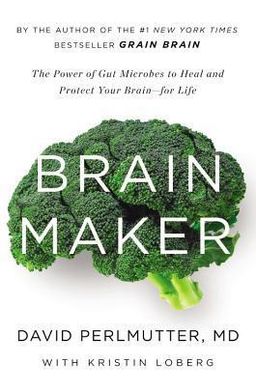
Brain Maker cover

Brain Maker

by Dr David Perlmutter with Kristin Loberg

Brain Maker reveals the profound connection between gut health and brain function. By understanding and optimizing your gut microbiome, you can prevent diseases like Alzheimer''s and improve overall health. Simple dietary changes can transform your well-being and offer new hope for conditions like autism.

Reclaim Your Brain by Reclaiming Your Lifestyle

How can you keep your brain young, vibrant, and clear in a world filled with sugar, stress, and sleepless nights? In The Grain Brain Whole Life Plan, neurologist Dr. David Perlmutter argues that modern living has turned into an assault on the human brain—and that the path to lasting health starts with transforming every part of daily life, from what you eat to how you sleep and even how you think. His core contention is simple but radical: your brain’s destiny isn’t fixed by genetics, but shaped by your choices, especially those involving diet and lifestyle. The foods you eat, the microbes in your gut, and the way you respond to stress either fuel inflammation and disease, or protect you from them.

Rather than treating brain disorders with drugs, Perlmutter urges you to prevent them through food and lifestyle changes that cool inflammation, balance microbiota, and steady hormones. The book expands on his earlier works, Grain Brain and Brain Maker, integrating cutting-edge research from neurology, microbiology, and epigenetics into a holistic plan for health. His argument goes far beyond diet: physical movement, emotional balance, gratitude, sleep hygiene, detoxification, and thoughtful relationships are equal pillars of brain protection.

Why Food Is the Brain’s True Medicine

At the heart of Perlmutter’s approach is what he calls “food as information.” Every bite you take sends signals to your DNA, activating or silencing genes through epigenetic mechanisms. This means your genes aren’t destiny—you can literally teach your body new ways of behaving. Food carries instructions that regulate inflammation, oxidative stress, and metabolism, while also shaping the trillions of microbes in your gut microbiome. You can think of your diet as a remote control for your brain’s health.

Perlmutter’s research as a neurologist revealed that brain diseases—like Alzheimer’s, Parkinson’s, depression, ADHD, and even chronic headaches—often trace back not to mysterious internal failures, but to systemic inflammation triggered by poor diet and lifestyle. “Four Americans will die from the food they eat in the next eighteen minutes,” he warns, referencing the startling toll of processed carbs and sugars on health.

Lifestyle, Not Just Diet: The “Whole Life” Connection

The book’s subtitle is key—this isn’t just a grain-free meal plan, but a blueprint for total renewal. Perlmutter calls out six central goals that form the foundation of his Whole Life Plan:

  • Reduce and control chronic inflammation
  • Turn your body into a fat-burning machine
  • Balance your gut bacteria and heal the intestinal wall
  • Balance hormones like insulin and leptin
  • Take control of your own genes through epigenetics
  • Find emotional and lifestyle balance through sleep, gratitude, and connection

Each pillar reinforces the others. Food shifts gene expression; exercise increases the brain’s growth hormone, BDNF; and good sleep literally clears metabolic toxins from the brain’s tissue (Perlmutter notes research showing sleep deprivation increases Alzheimer’s risk). Gratitude and social connection modulate stress hormones and reduce inflammation on a cellular level.

Rethinking Fats, Carbs, and Modern Nutrition

Much of the book challenges conventional wisdom about nutrition. Instead of fearing fat, Perlmutter insists that fat is fuel—especially the kinds found in olive oil, eggs, nuts, and grass-fed meats. A high-fat, low-carb diet trains your body to burn fat for energy, releasing ketones that sharpen mental clarity and protect neurons. This ketogenic state is not a fad, he says, but evolutionary design. “99.99 percent of our genes were formed before agriculture.” That means human metabolism evolved to thrive on fat, not processed grains and sugars.

In the same vein, he declares an all-out war on gluten and sugar. These ingredients, now ubiquitous in Western diets, ignite inflammation and erode the gut lining, causing a phenomenon known as “leaky gut.” Once toxins and proteins like gliadin breach this barrier, the immune system goes into attack mode, spurring autoimmune disorders and even neurological issues. His recommendation: evict gluten entirely, even if you don't have celiac disease.

A Doctor’s Evolution

Perlmutter tells readers that early in his career, neurology was a field of despair—he diagnosed diseases he could not cure. The moment of transformation arrived when he realized that prevention and lifestyle intervention held more promise than any pharmaceutical weapon. He now describes neurology as a discipline being reborn through nutrition and microbiome science.

Ultimately, The Grain Brain Whole Life Plan challenges you to stop thinking of health as isolated fixes—a pill for pain here, a therapy for memory loss there—and instead picture your body as an interconnected ecosystem. What affects your gut affects your brain; what affects your mood affects your metabolism. The book’s power lies in making this interconnectedness both scientific and personal, showing that by changing how you live, you can rewrite your biological story—one meal, one breath, one thought at a time.


Inflammation: The Hidden Brain Killer

One of Perlmutter’s most striking claims is that chronic inflammation is the common thread connecting virtually every degenerative disease—from Alzheimer’s and arthritis to obesity and depression. You might think inflammation only flares up when you’re injured or fighting an infection, but when it stays switched on indefinitely, it quietly destroys tissues, including those in your brain.

Systemic Fire, Cellular Damage

Perlmutter compares long-term inflammation to leaving a water hose on to fight a tiny fire—eventually the pressure and constant soaking cause more damage than the fire itself. In biochemical terms, this chronic “on” state activates immune proteins called cytokines, which corrode brain cells and trigger mood disorders. He points to emerging science showing how depression can often be traced to inflammatory processes rather than serotonin imbalances.

What Fuels the Fire?

The villains are familiar: refined carbohydrates, gluten, sugar, and processed foods. These ingredients spike blood sugar, producing insulin surges that lead to fat storage and promote free radicals. Over time, this causes the gut lining to falter, unleashing toxins into the bloodstream. Perlmutter also indicts lack of sleep, chronic stress, and inactivity—all of which intensify inflammation through hormonal disruption.

Key Principle

“Every road to chronic illness begins with inflammation,” Perlmutter writes. “And every road away from it begins with simple daily choices.” The Grain Brain plan’s anti-inflammatory pillars—diet, sleep, exercise, and stress reduction—are, in his view, medicine more powerful than any prescription.

To cool the invisible fire, he prescribes an anti-inflammatory diet rich in omega-3 fats, antioxidants like turmeric, and prebiotic fiber. Exercise and deep sleep, he adds, are natural anti-inflammatory agents. The result isn’t just better brain health but a total systemic renewal of energy, focus, and emotional stability.


Become a Fat-Burning Machine

When you reduce carbohydrates dramatically and turn up your intake of healthy fats, your metabolism shifts from burning glucose to burning fat. Perlmutter calls this transformation “the preferred state of human biology.” In evolutionary terms, our ancestors relied on fat and ketones for energy during food scarcity. Modern diets, however, have forced us into constant carbohydrate dependence—an energy rollercoaster that fatigues the brain and body.

Ketosis and Brain Power

In a ketogenic state, your liver converts fatty acids into ketones, a cleaner and more efficient fuel source for neurons. Studies on patients with epilepsy, bipolar disorder, and Alzheimer’s disease reveal how ketosis stabilizes neural metabolism and promotes mitochondrial growth. Perlmutter reminds readers that both the heart and the brain perform 25% better when running on ketones instead of glucose.

Eat Fat, Lose Fat

Despite decades of “low-fat” propaganda, eating fat doesn’t make you fat. Sugar and carbohydrates do. Each sugary meal spikes insulin, prompting your body to store fat and deactivating fat-burning enzymes. Healthy fats, on the other hand, trigger satiation and steady energy. Perlmutter encourages abundant olive oil, avocados, butter from grass-fed cows, eggs, and nuts while pulling back from grains and starches.

When you train your metabolism to burn fat, he says, you experience mental clarity, stabilized mood, and effortless weight loss. This is your body returning to its natural state—efficient, calm, and focused.


Healing the Gut, Healing the Brain

Perlmutter devotes entire chapters to the astonishing link between the gut and the brain—a concept once dismissed as pseudoscience but now widely validated. Your intestinal microbiome is home to over 100 trillion organisms that outnumber your cells ten to one. These microbes manufacture neurotransmitters, regulate immunity, and even impact mood and cognition.

The Microbiome–Brain Axis

When gut bacteria fall out of balance—a condition called dysbiosis—the intestinal barrier becomes permeable, leading to “leaky gut.” Toxins and undigested proteins seep into the bloodstream, igniting inflammation that travels to the brain. This underlies disorders like anxiety, depression, and even Parkinson’s. As microbiologist Dr. Alessio Fasano (cited in the book) asserts, “The number one factor shaping the microbiome is diet.”

Restoring Balance

To heal the gut, Perlmutter promotes two main strategies: probiotics (“the good bacteria”) and prebiotics (fiber that feeds them). He recommends daily consumption of fermented foods—yogurt, kefir, sauerkraut, kimchi—and prebiotic sources like onions, garlic, leeks, and asparagus. Fiber fuels beneficial microbes to produce short-chain fatty acids that protect the gut lining and regulate appetite.

Key Insight

Your gut’s health sets your inflammatory baseline—essentially, how likely you are to feel well or unwell. Fix the gut first, Perlmutter insists, and everything else falls into alignment.

The takeaway: a healthy gut is a peaceful brain. Within days of improving your diet and microbiome, Perlmutter promises sharper memory, higher energy, and better immunity.


Hormones, Insulin, and Leptin: The Appetite Reset

One of the deepest lessons of the book is that your endocrine system—your network of hormones—is the body’s remote control for hunger, energy, and emotional stability. Perlmutter zeroes in on insulin, leptin, and ghrelin, calling them the “trinity of metabolism.” When these hormones misfire, your appetite spirals and your brain slows.

Insulin Resistance and the Brain

After decades of high-carb eating, many people develop insulin resistance—cells stop responding to insulin’s message to absorb sugar, forcing the pancreas to pump out more. This hyperinsulinemia not only promotes obesity but clogs the brain’s durability systems. Citing NYU professor Melissa Schilling’s research, Perlmutter explains that excess insulin competes with enzymes that should be clearing amyloid-beta plaques, making diabetes and Alzheimer’s “two sides of the same coin.”

Leptin Sensitivity and Fullness

Leptin tells your brain when you’ve had enough. But constant sugar intake leads to leptin resistance, making you feel starved even when you’re full. The cure? Reset through high-fat, low-carb eating and quality sleep. Exercise, Perlmutter notes, enhances leptin signaling and helps restore balance.

By calming these hormonal storms, you replace cravings with control and switch your biology from a fat-storing mode to a fat-burning one—without relying on willpower.


Epigenetics: Taking Control of Your Genes

Can lifestyle actually change your genes? Perlmutter says yes—and this may be the most empowering idea in the book. Through epigenetics, your environment and habits control how genes express themselves. You might inherit risk patterns for heart disease or dementia, but your diet, behavior, and mindset decide whether those risks activate.

The Nrf2 Pathway: The Master Switch

One mechanism stands out: the Nrf2 pathway, a ‘master regulator’ gene that triggers production of antioxidants and detox enzymes. Normally dormant, Nrf2 can be activated by foods like broccoli, turmeric, green tea, and DHA-rich fish. Once active, it protects cells against toxins and inflammation. Perlmutter calls Nrf2 “our built-in defense technology.”

Telomeres and Longevity

He also highlights telomeres—the caps at the ends of chromosomes that determine how fast we age. Shortened by stress and sugar, lengthened by omega-3s, fiber, and exercise, telomeres are a measurable reflection of how well you’re living. In his words, “you can protect your DNA by protecting your daily routines.”

Practical Tip

Eat to turn on your protective genes. Every bite of salmon, every cup of turmeric tea, and every consistent night of sleep sends a signal to your DNA: repair, restore, rejuvenate.

Through epigenetics, Perlmutter reframes aging as a choice—one made through your everyday patterns, not random genetic fate.


Sleep, Calm, and Connection: The Missing Nutrients

Beyond food, Perlmutter emphasizes that a rested, grateful, and socially connected life is medicine for the brain. Sleep restores the body’s “detox mode,” clearing metabolic waste from nerve cells. Deep rest releases growth hormone and resets insulin sensitivity. Meanwhile, stress reduction and gratitude calm inflammation just as effectively as diet.

Repairing Through Rest

Sleep deprivation, he warns, can double your Alzheimer’s risk. He advises protecting sleep as “non-negotiable sacred time,” keeping consistent hours, avoiding caffeine and electronics late at night, and treating sleep apnea aggressively. He likens sleep to diet for the mind: necessary and nourishing.

Gratitude and Social Connection

One touching moment in the book comes after Perlmutter survives a health crisis and realizes the healing power of human love. He observes that compassion, gratitude, and support networks physically rejuvenate the body by lowering cortisol and activating brain regions linked to resilience. Gratitude, he says, is like a muscle—you strengthen it by using it daily.

He also discusses research from the University of North Carolina showing that relationships, from adolescence to old age, improve inflammatory markers and extend lifespan. “Love,” he concludes, “is biochemistry in its highest form.”

Together with movement and mindful living, these emotional nutrients complete his Whole Life Plan—proving that brain health starts not just with what you eat, but with how you live and love.

Dig Deeper

Get personalized prompts to apply these lessons to your life and deepen your understanding.

Go Deeper

Get the Full Experience

Download Insight Books for AI-powered reflections, quizzes, and more.