
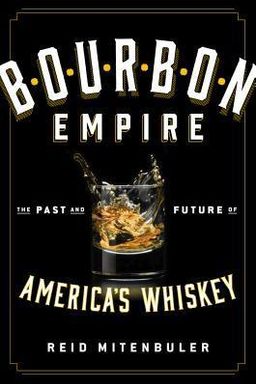
Bourbon Empire cover

Bourbon Empire

by Reid Mitenbuler

Bourbon Empire takes readers on a captivating journey through the history of America''s iconic whiskey. Discover how bourbon survived Prohibition, overcame scandals, and evolved into a symbol of American resilience and innovation, all while shaping politics and society.

The Story in the Bottle: Bourbon as America’s Mirror

When you lift a glass of bourbon, you’re not just sipping a whiskey—you’re tasting the intersection of ecology, technology, politics, and myth. In Bourbon Empire, Reid Mitenbuler argues that bourbon’s story is America’s story in miniature: a blend of entrepreneurial innovation, moral contradiction, and self-invented tradition. He traces how a frontier survival drink became a global luxury commodity wrapped in patriotic myth.

From Corn to Commerce

Bourbon’s roots begin in the New World’s soil. Early experimenters like Captain George Thorpe adapted European distillation to American corn, creating an early corn-based spirit out of necessity. That geography mattered: the continent’s abundance of maize shaped the emerging whiskey’s flavor, economics, and identity. On the frontier, converting perishable grain into transportable spirit meant survival and trade advantage.

The frontier ethos—self-reliance, adaptability, and experimentation—established the foundation for bourbon’s enduring appeal. It created not just a drink but a small-batch metaphor for America’s self-image: practical yet mythic, local yet ambitious.

Politics, Regulation, and Rebellion

Mitenbuler threads bourbon through the creation of American institutions. The Whiskey Rebellion of the 1790s was the country’s first test of federal authority under Alexander Hamilton’s tax policy, while Jefferson’s defenders framed whiskey as the democratic farmer’s product. These battles over spirits reformulated into questions of identity—central power versus local freedom, industrial scale versus agrarian ethos.

In later centuries, political forces still shaped bourbon’s destiny: gilded-age corruption (the Whiskey Ring), reform movements that culminated in Bottled-in-Bond laws, and the overwhelming swing toward Prohibition. Each phase redefined what counted as ‘pure’ or moral whiskey, weaving law and business into taste and trust.

Mythmaking and Marketing

If bourbon once symbolized necessity, post–Prohibition marketers reinvented it as nostalgia. Corporate leaders like Lewis Rosenstiel and brands like Old Forester and Maker’s Mark turned authenticity into a marketing instrument. The 1964 congressional resolution naming bourbon a ‘distinctive product of the United States’—carefully engineered by lobbyists—codified not just trade protection but cultural branding. Today, labels evoke frontier heroes, family legacies, and small-batch integrity—even when those narratives mask multinational ownership.

Bourbon’s genius lies in this duality: its myths are both commercial strategy and genuine cultural artifact. You taste with imagination as much as palate, and the stories that accompany bourbon shape value far beyond flavor.

Cycles of Fall and Reinvention

Mitenbuler shows bourbon’s resilience through collapse and reinvention. The Prohibition era turned legitimate distillers into bootleggers or ruin; organized “dry” politics conquered a disunited industry. Yet even bootlegger George Remus’s illegal empire exposed the flexible line between outlaw cunning and corporate consolidation—a pattern that reemerged when companies like Schenley and Seagram inherited post-Repeal dominance.

The midcentury vodka craze nearly erased bourbon’s cultural cachet, but the later craft revival restored interest through authenticity and storytelling. From Maker’s Mark’s elegant reboot to micro-distillers experimenting with ancient grains and odd techniques, bourbon reinvented itself by combining heritage with innovation—sometimes honestly, sometimes cynically.

What Bourbon Teaches You

To study bourbon is to study American capitalism, showing how industries survive through identity as much as quality. The book reveals a cycle of invention, regulation, manipulation, and renewal that mirrors America’s broader industrial and moral evolution. Bourbon isn’t just a drink—it’s an ongoing case study in how nations distill their contradictions into something that feels authentic, even when it’s manufactured.

Core insight

Bourbon’s evolution—from survival spirit to national export—shows that authenticity is rarely pure. It’s a dynamic negotiation between story and substance, myth and manufacture, that defines how you perceive value, tradition, and nationhood itself.


Frontier Science and the Birth of Bourbon

Bourbon begins in experimentation rather than deliberate invention. When Captain George Thorpe distilled native corn into a spirit in 1619, he started a distinctly American chain reaction. Unlike barley or rye from Europe, corn thrived in Virginian and Kentucky climates, yielding higher sugar conversion and shaping the whiskey’s defining sweetness. Ecology predestined bourbon to be corn’s spirit.

The Early Mechanics

Early distillation was crude. Wild yeasts, manure-heated fermentation, and copper pot stills produced inconsistent ‘white dog’—a clear, potent liquid lacking refinement. Over time, aging in wooden barrels transformed harsh ethanol into a balanced, amber liquor. The charred oak amplified vanilla, smoke, and caramel—flavors that became bourbon’s signature identity.

Kentucky’s limestone-filtered water and seasonal temperature swings further deepened that transformation. Its mineral content nurtured yeast; its summers and winters pulsed whiskey through cask wood faster than the cooler Scottish climate. Nature plus necessity made bourbon what it is.

The Science Arrives

In the 1800s, chemist James Crow revolutionized consistency. Using thermometers and hydrometers, he quantified fermentation and cleaning, minimized bacterial contamination, and perfected sour mash fermentation. Crow’s methods made whiskey reproducible, leading to higher uniformity and branding potential. ‘Old Crow’ was more than a product; it was proof that science could make mystique measurable.

Key idea

Bourbon’s development embodies America’s shift from folk craft to empirical industry—an evolution fueled by tinkering minds and frontier pragmatism as much as regional climate.

The interplay of soil, wood, and instrument gave bourbon its identity: a local craft with scientific refinement that still whispers of campfires and copper stills. Each sip carries both chemistry and legend.


Rebellion, Reform, and the Battle for Purity

Bourbon’s rise intersected with America’s political growing pains. Taxation, corruption, and purification campaigns looped into cycles that dictated what whiskey could mean. From Hamilton’s excise tax sparking the Whiskey Rebellion to the reformist zeal that birthed Bottled‑in‑Bond, whiskey became a vessel for arguments over who controls commerce—and morality.

The Whiskey Rebellion: Power vs. People

Frontier farmers saw Hamilton’s excise duty as tyranny. Paying a cash tax on a barter economy felt oppressive, spurring armed revolts. Washington’s personal march westward to quash the rebellion wasn’t just symbolic—it affirmed federal sovereignty. Yet culturally, the sympathy for the rebels endured, linking whiskey with defiance and local liberty.

Purity, Fraud, and Regulation

Later centuries brought new tests. Industrial growth and Gilded‑Age corruption (the Whiskey Ring, Whiskey Trust) turned whiskey into a political scandal. Reformers like Edmund Taylor Jr. and Harvey Wiley fought back. The Bottled-in-Bond Act of 1897 standardized age and proof; the Pure Food and Drug Act of 1906 outlawed adulteration and mislabeled blends. Together, they redefined whiskey as a trustworthy national product.

Takeaway

Every American whiskey law doubles as a cultural manifesto: it tells you what the country believes about honesty, authority, and consumer protection at that moment.

By the early 20th century, purity had become both marketing and morality. The government’s move from punitive taxation to protective regulation laid groundwork for modern identity laws—and for the crisis of Prohibition to come.


Prohibition and the Reinvention of Legitimacy

Prohibition was both a moral crusade and a business failure. The Anti‑Saloon League, Women’s Christian Temperance Union, and charismatic activists like Carrie Nation weaponized social fears—immigration, crime, and family breakdown—into organized reform. Distillers, fragmented and complacent, underestimated this disciplined opposition. They had the money; reformers had the message.

The Fall of the Industry

By 1920, the 18th Amendment outlawed alcohol commerce. Bourbon makers disintegrated into chaos: some closed, others exploited ‘medicinal whiskey’ loopholes. Lawyer George Remus built an empire buying distilleries and siphoning legal stocks into black markets, blurring law and crime. His rise and violent fall—culminating with his wife’s murder—symbolized both the absurdity and volatility of Prohibition economics.

Meanwhile, the government’s denatured industrial alcohol program poisoned illicit supplies, killing thousands. A policy meant to promote morality instead turned deadly, showcasing how demand will always find supply, legal or not.

From Ruin to Renewal

When Repeal arrived in 1933, survivors like Schenley and Brown‑Forman controlled enormous aged inventories—positioning them to dominate. Regulators imposed a three‑tier distribution system (producer, distributor, retailer) to curb monopolies. Marketing shifted to restore dignity: the Distilled Spirits Institute preached respectability with clean advertising codes and gentlemanly imagery.

Lesson

Mitenbuler shows that Prohibition didn’t end vice—it restructured power. It converted bootlegging ingenuity into corporate consolidation, and decadent immorality into sanitized brand image.

Bourbon’s post‑Repeal makeover redefined it not as rebellion but as refinement—a gesture of social healing and strategic forgetting.


Wartime Whiskey and the Politics of Aging

World War II and the Korean crisis transformed bourbon into a strategic resource. Distilleries pivoted from spirits to industrial alcohol for rubber, explosives, and antifreeze—patriotism meeting production. Companies like Schenley designed high‑proof stills for the war effort, cementing industry-government ties that would later shape tax policy and marketing strategy.

The Forand Bill: Lobbying Matures

Post‑war overstocking nearly bankrupted Schenley’s Lewis Rosenstiel. Expecting rationing, he had aged hundreds of millions of gallons; when it didn’t arrive, he faced crushing taxes. His response? Lobby Congress. The 1958 Forand Bill extended the bonding period from eight to twenty years, deferring taxes and effectively rewarding large stockpilers. It also allowed distillers to mature bourbon longer, transforming surplus into ‘premium aged’ marketing gold.

Rosenstiel’s lobbying established bourbon’s modern luxury aesthetic—the idea that age equals quality. His campaigns linked bourbon’s supposed traditional purity with federal endorsement, solidifying its patriotic rebranding.

Exporting the American Spirit

Bourbon soon faced Scotch abroad. To elevate status, U.S. distillers gained diplomatic protection via the 1964 congressional resolution calling bourbon “a distinctive product of the United States.” Schenley shipped cases to embassies; Beam bottled in Germany to serve troops; and Four Roses courted European and Japanese markets. Bourbon traded its frontier grit for cosmopolitan polish, learning that diplomacy and branding could age flavor as effectively as oak.

Observation

Rosenstiel’s maneuver shows how political lobbying and marketing language converge: the same legal sentence can function as both economic relief and cultural manifesto.

Through war, legislation, and rebranding, bourbon moved from barrels to embassies—an emblem of both economic shrewdness and national pride.


Decline, Revival, and the New Craft Myth

By mid‑century, bourbon faced its most existential threat: vodka. Neutral in flavor and modern in look, vodka fit postwar sensibilities and youth culture. Bourbon became the drink of fathers and formality. Producers responded poorly—introducing ‘light whiskey’ and lower proofs that alienated loyalists without capturing new fans. Distilleries shuttered; legends faded.

The Seeds of Return

Cultural cycles turned again. Maker’s Mark pioneered upmarket repositioning with its red wax and wheated smoothness, proving that authenticity and craft presentation could entice modern drinkers. Its success was a triumph of restraint and storytelling. Later, the 1980s and 2000s saw a flood of craft distilleries—Corsair, Balcones, Westland—embracing experimentation while invoking ancestral roots.

Yet Mitenbuler warns that the new craft movement often repeats old illusions: sourcing mass‑made whiskey while advertising handmade myth. Transparency—age statements, mash bills, origin honesty—has become the new authenticity currency.

Craft vs. Commerce

Small producers face capital, time, and distribution challenges, often selling out to majors like Suntory or Diageo once traction builds. The pattern mirrors bourbon’s history: genuine craft arises, gets commodified, and becomes another story on a label. The best independents survive by telling the truth about process and scale—understanding that honesty is more sustainable than legend-making.

Modern insight

Bourbon’s revival isn’t just about rediscovering recipes—it’s about rediscovering integrity. In a world trained by advertising, transparency itself becomes the rarest craft.

The rise, fall, and rise of bourbon proves that taste alone doesn’t drive culture—stories do. The next chapter, Mitenbuler suggests, belongs to drinkers who can love the stories without being fooled by them.

Dig Deeper

Get personalized prompts to apply these lessons to your life and deepen your understanding.

Go Deeper

Get the Full Experience

Download Insight Books for AI-powered reflections, quizzes, and more.